
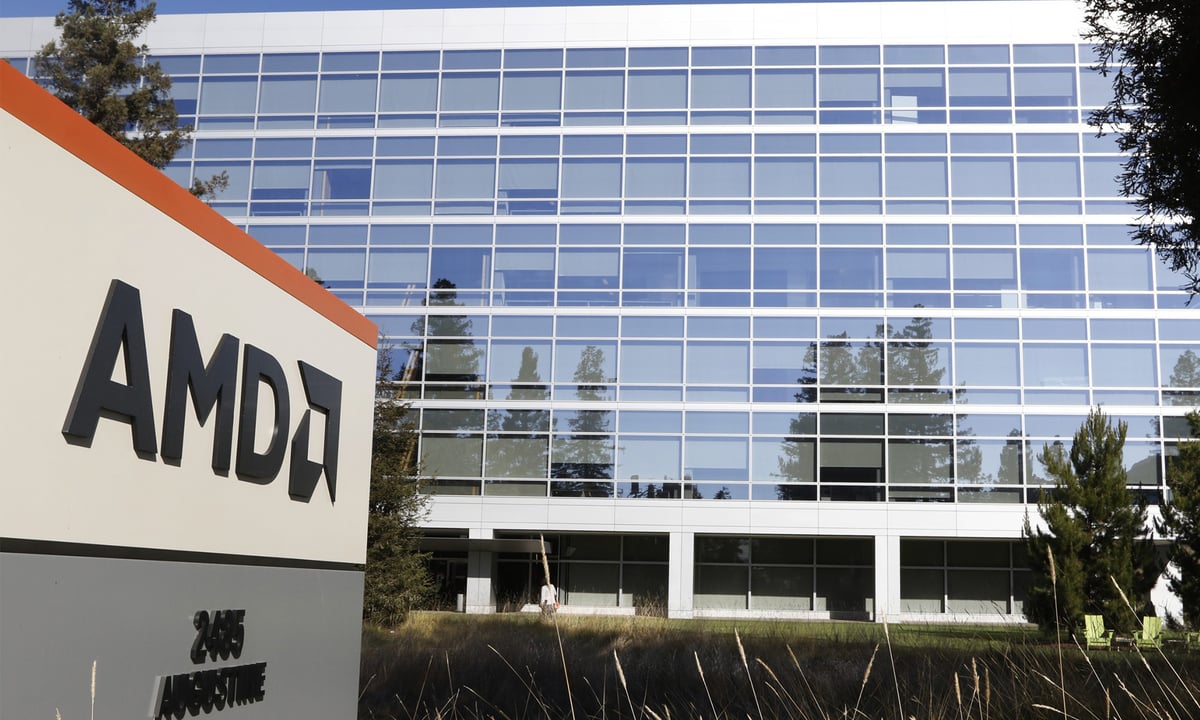
AMD and Apple Emerge as AI Bargains Amid Tech Sector Pullback
Artificial intelligence stocks have faced significant headwinds recently, pressured by geopolitical tensions and macroeconomic uncertainty that have sent the broader technology sector into retreat. Yet amid this volatility, two established technology giants—Advanced Micro Devices ($AMD) and Apple ($AAPL)—are attracting attention from investors seeking to capitalize on the downturn. While both companies operate in distinctly different segments of the tech ecosystem, their positioning within the AI revolution and current valuation levels present compelling opportunities for those willing to deploy capital during the sector's weakness.
The case for both companies rests on fundamental business drivers that extend well beyond near-term sentiment swings. AMD stands to benefit from accelerating adoption of its processors in data center environments, where demand for AI computing power continues to surge despite broader market concerns. Apple, meanwhile, sits atop an installed base of 2.5 billion devices that represent an enormous platform for monetizing artificial intelligence-powered features. Understanding the distinct investment thesis for each company reveals why some analysts view this pullback as a buying opportunity rather than a warning sign.
Key Details: The Investment Case for AMD and Apple
AMD's path to growth centers on its dominance in data center semiconductors. The company has captured significant market share in processors that power cloud infrastructure, and this position becomes increasingly valuable as enterprises accelerate their AI deployments. The data center segment represents one of the most robust growth vectors in the semiconductor industry, with spending expected to remain elevated as companies build out the computational infrastructure necessary to support large language models and other AI applications.
The company's earnings trajectory reflects this opportunity. Analysts project strong earnings growth driven by sustained demand from hyperscalers like Amazon, Microsoft, and Google, who continue to invest heavily in AI infrastructure. This visibility into future performance provides a stabilizing foundation even as cyclical pressures affect other parts of the semiconductor industry.
Apple's opportunity lies in its unparalleled position to monetize AI across its ecosystem. With 2.5 billion active devices in circulation globally—including iPhones, iPads, Macs, and wearables—the company possesses an unmatched platform for deploying AI-enhanced features. The potential for new AI-driven services, productivity enhancements, and personalized experiences represents a vast frontier for revenue generation and margin expansion.
Unlike competitors that must build consumer bases from scratch or convince enterprise customers to adopt new technologies, Apple can leverage existing user loyalty and deep integration across its hardware and software ecosystem. This installed base advantage is particularly powerful in the context of AI, where scale in user data and continuous improvement cycles drives competitive advantage.
Market Context: Why the Tech Sell-Off Creates Opportunity
The current weakness in technology stocks, particularly those exposed to AI, stems from multiple pressures that have little bearing on long-term business fundamentals. Geopolitical risks, including semiconductor export restrictions and trade tensions, have created uncertainty. Macroeconomic concerns about interest rates, inflation, and recession risks have prompted portfolio rebalancing away from growth-oriented sectors toward defensive positions.
However, these cyclical pressures often obscure secular trends that reward patient investors. The AI revolution remains in its infancy, with adoption curves expected to accelerate over the coming years as:.
- Enterprise applications mature and ROI becomes measurable
- Infrastructure investment by major cloud providers continues scaling
- Consumer-facing AI features drive hardware upgrade cycles
- Regulatory clarity gradually reduces uncertainty around AI deployment
The semiconductor industry specifically remains highly cyclical, and AMD has demonstrated resilience through previous downturns by maintaining market share and technological leadership. The current cycle, driven by AI demand rather than traditional computing upgrades, may prove more durable than historical precedent suggests.
Apple operates with structural advantages that insulate it from sector-wide weakness. The company's brand strength, ecosystem stickiness, and services revenue stream provide revenue diversification that pure-play semiconductor or software companies lack. During periods of tech sector weakness, Apple has historically proven less volatile than indices suggest due to its customer retention and recurring revenue model.
Investor Implications: Positioning for AI's Next Phase
For equity investors, the current environment presents a classic risk-reward scenario. The downside protection comes from fundamental business strength—AMD's market-leading position in growth markets and Apple's unmatched installed base and ecosystem integration. The upside comes from market multiple re-expansion as geopolitical and macroeconomic pressures ease, combined with earnings accretion from AI monetization.
The key metrics investors should monitor include:
- AMD's data center revenue growth rates and gross margins
- Apple's services growth and adoption rates for new AI features
- Competitive positioning against NVIDIA ($NVDA) and other AI-focused competitors
- Enterprise AI spending trends as reported by cloud infrastructure providers
- Hardware upgrade cycles driven by AI feature availability
For risk-tolerant investors with medium to long-term investment horizons, accumulating positions in AMD and AAPL during sector weakness aligns with historical patterns where technology sector corrections create entry points before major structural shifts.
Should geopolitical tensions moderate and macroeconomic indicators stabilize, the same factors creating today's pessimism could reverse rapidly. Market sentiment shifts can be abrupt, and investors who accumulate quality positions during downturns often benefit significantly when sentiment restores. The technology sector's historical tendency to trade on narrative and momentum means that positioning before consensus shifts can generate outsized returns.
Looking Ahead: The Inflection Point
The artificial intelligence revolution represents one of the most significant structural shifts in technology since the internet's mainstream adoption. AMD and Apple occupy different but equally important positions within this transformation. The current tech sell-off appears to represent a cyclical correction within a secular growth story, creating an opportunity for investors to acquire quality assets at reduced valuations.
While no investment is risk-free, and broader economic conditions could deteriorate further in coming months, the fundamental case for both companies rests on durable trends that transcend temporary sentiment swings. As the market eventually recognizes the durability of AI demand and the competitive positioning of leading players, investors who deployed capital during periods of weakness typically realize superior returns.
The question for investors is not whether AI will transform technology—that transition is well underway. Rather, it's whether they can maintain conviction in high-quality positions during inevitable periods of sector weakness, and whether they can identify companies best positioned to benefit from the shift.