
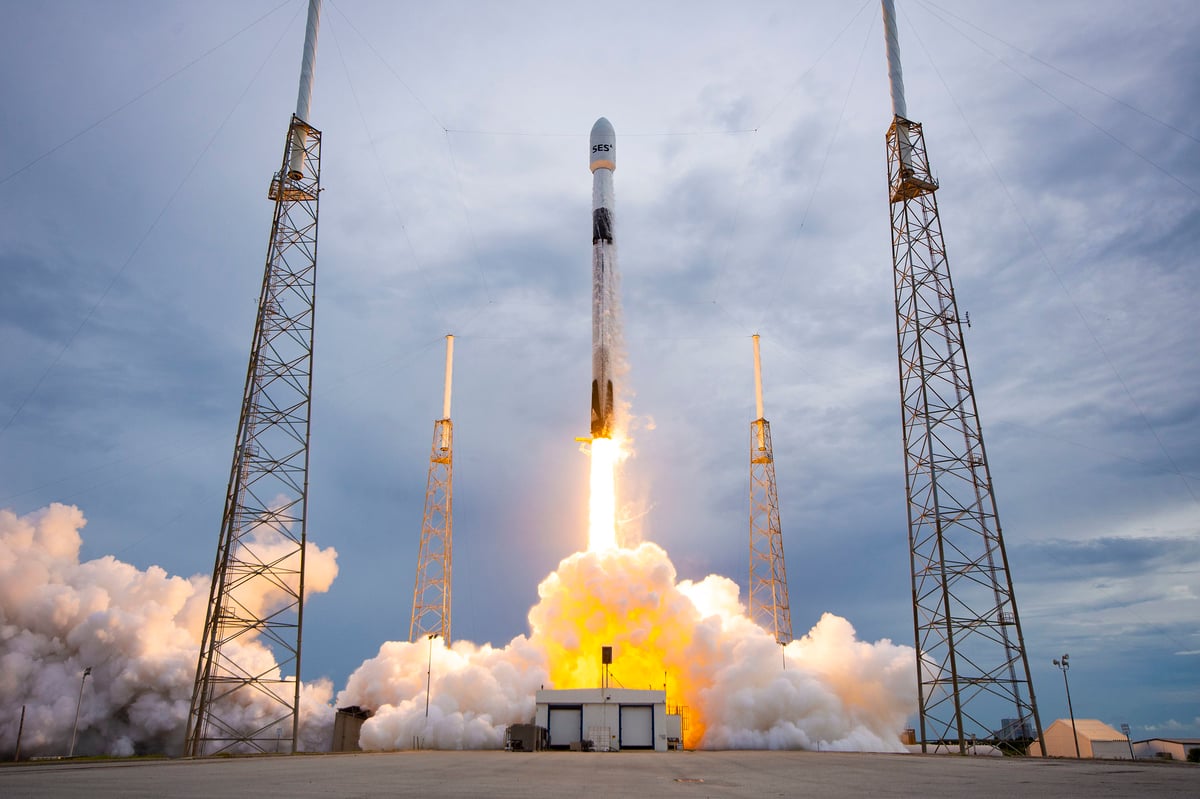
SpaceX Eyes $2T Valuation in Record IPO, But Valuation Multiples Raise Red Flags
SpaceX has confidentially filed for an initial public offering, setting the stage for what could become the largest IPO in history. The aerospace and satellite company is targeting a $2 trillion valuation following a planned merger with Elon Musk's xAI, positioning itself to raise up to $75 billion in fresh capital. However, financial analysts are sounding alarm bells about the company's astronomical valuation multiples relative to its current financial performance and growth trajectory.
The proposed transaction represents an unprecedented moment for space exploration and artificial intelligence convergence, yet it raises fundamental questions about whether market sentiment can justify such a premium valuation in an era of elevated interest rates and profit-focused investing.
Key Details of the Proposed Offering
SpaceX's financials tell a mixed story. The company generated $15-16 billion in annual revenue, growing at approximately 20% year-over-year—a respectable pace for a mature aerospace company, but hardly exceptional by technology sector standards. However, the lion's share of revenue originates from Starlink, the satellite internet division, which has emerged as the commercial cash engine powering the broader SpaceX enterprise.
At the proposed $2 trillion valuation, SpaceX would command valuation multiples that dwarf even the most richly-valued technology companies:
- Price-to-Sales (P/S) ratio: 130x — meaning investors would pay $130 for every dollar of annual revenue
- Price-to-EBITDA ratio: 250x — suggesting the company would need centuries of current earnings to justify its market capitalization
- For comparison, $NVDA (NVIDIA) trades at roughly 50-70x sales, while $TSLA (Tesla) typically ranges between 8-12x sales despite commanding significant growth premiums
These multiples represent a fundamental disconnect between SpaceX's proven financial performance and market expectations embedded in its proposed valuation. Even companies with 50%+ annual revenue growth rarely command P/S ratios exceeding 40-50x outside of speculative market environments.
Market Context: Timing and Competition
SpaceX's IPO timing arrives amid a complex backdrop for satellite and space technology companies. The commercial space industry has matured considerably since the company's founding in 2002, with increased competition from traditional aerospace contractors pivoting toward space services, established satellite operators, and emerging Chinese competitors.
The merger with xAI introduces additional complexities. While artificial intelligence has captured investor imagination and driven valuations skyward across the technology sector, combining a capital-intensive aerospace business with an AI development company raises questions about operational synergies and management focus. Musk's track record of juggling multiple ventures—including Tesla, The Boring Company, and now xAI—alongside his active role at SpaceX creates legitimate concerns about bandwidth and execution priorities.
Historically, Musk has demonstrated a pattern of aggressive timeline commitments that frequently slip or require substantial capital infusions. From Tesla's Full Self-Driving capabilities to Mars colonization deadlines, investors have witnessed repeated instances where announced timelines extended years beyond initial targets. This history becomes relevant when evaluating SpaceX's growth assumptions embedded in its valuation.
The satellite broadband market, while growing, faces headwinds including:
- Increasing competition from traditional telecom providers expanding rural coverage
- Regulatory uncertainty around spectrum allocation and orbital debris management
- High customer acquisition costs in a price-sensitive consumer market
- Capital intensity of maintaining and upgrading satellite constellations
Investor Implications: Risk vs. Reward
For institutional and retail investors, SpaceX's IPO presents an unfavorable risk-reward proposition at current valuation levels. The company's fundamentals—while solid—do not support 250x earnings multiples, particularly given the macroeconomic sensitivity of consumer broadband services and satellite launch services.
Key considerations for investors:
Downside scenarios appear significant:
- A market correction in unprofitable or overvalued technology companies would likely impact SpaceX shares disproportionately given the valuation premium
- Competition in satellite internet could compress Starlink's growth trajectory below current assumptions
- Regulatory intervention regarding spectrum, orbital debris, or satellite operations could increase compliance costs
- Economic recession would likely defer satellite broadband adoption and reduce commercial space launch demand
Upside scenarios require aggressive assumptions:
- Starlink capturing substantially higher subscriber penetration in developed and emerging markets
- xAI successfully monetizing AI services at margins exceeding current technology sector averages
- SpaceX securing exclusive government contracts that haven't been publicly disclosed or committed
- Revolutionary breakthroughs in reusable rocket technology reducing launch costs below current trajectories
From a capital allocation perspective, investors seeking exposure to space technology or satellite services could achieve better risk-adjusted returns through established aerospace contractors like $LMT (Lockheed Martin) or $RTX (Raytheon Technologies), which trade at more reasonable valuation multiples while offering stable dividend income and proven management execution.
Volatility considerations: During market downturns, richly-valued growth stocks typically experience sharper drawdowns than the broader market. SpaceX's 130x price-to-sales ratio suggests the stock would be extraordinarily vulnerable in a market correction, potentially experiencing declines of 50%+ during periods of rising interest rates or economic contraction.
Forward Outlook
While SpaceX remains an operationally impressive company with genuine technological achievement and real revenue generation, the proposed IPO valuation appears fundamentally disconnected from financial reality. The $2 trillion valuation requires investors to believe in transformative growth scenarios that have not been publicly substantiated, while ignoring Musk's historical pattern of timeline delays and cost overruns.
A more rational valuation—perhaps $500-750 billion—would better reflect the company's current growth rate, profitability trajectory, and capital requirements while maintaining a premium for its technological differentiation and Starlink's market position. At such valuations, SpaceX would offer a more compelling risk-reward proposition.
Investors should approach this IPO with skepticism, waiting for either more realistic valuation assumptions or demonstrated financial performance that can justify current expectations. The space industry's long-term growth prospects remain attractive, but SpaceX's asking price has exceeded what prudent capital allocation should bear in the current interest rate environment.