
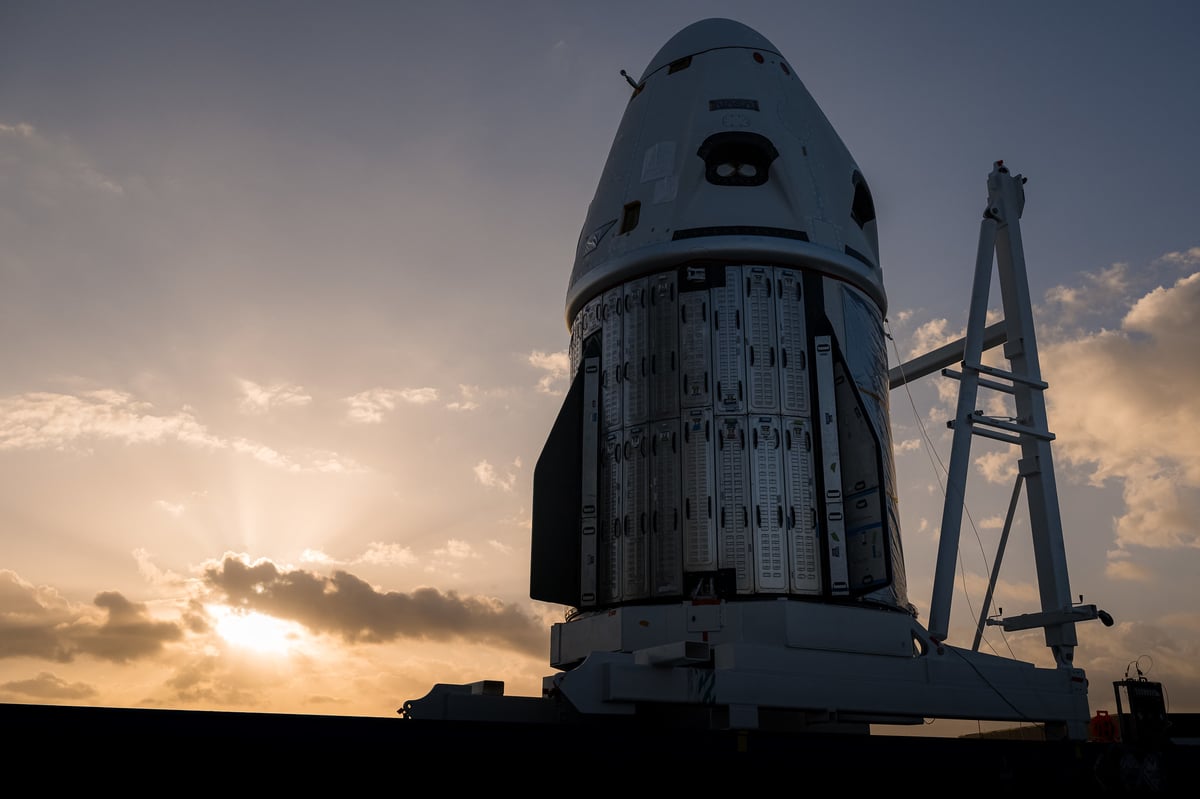
SpaceX's Blockbuster IPO Could Reshape Tech Valuations
SpaceX, Elon Musk's rocket and satellite company, is preparing for what could become one of the most significant initial public offerings in tech history. The aerospace venture is reportedly seeking a valuation of approximately $2 trillion while aiming to raise up to $75 billion in fresh capital. This IPO represents a watershed moment for the space technology sector and stands to create substantial windfalls for major stakeholders already holding significant stakes in the company.
The proposed valuation would place SpaceX among the world's most valuable companies, comparable to some of the largest technology firms on the public markets. The capital raise alone would dwarf most traditional IPOs, reflecting both the company's ambitions and investor appetite for exposure to the growing space economy. For shareholders with existing stakes in SpaceX, the transition to public markets promises to unlock significant paper gains and provide liquidity for the first time.
Major Winners Positioned to Capitalize
Alphabet's Potential Windfall
Alphabet Inc. ($GOOGL), Google's parent company, stands positioned to realize extraordinary returns on its SpaceX investment. The tech giant holds approximately 7% of SpaceX, a stake that could be worth over $100 billion based on the anticipated $2 trillion valuation. This represents one of the most successful venture investments in corporate history, with Alphabet having built this position over multiple funding rounds as SpaceX evolved from a startup into a dominant force in commercial spaceflight.
For Alphabet, the SpaceX windfall comes at a strategically important moment as the company faces regulatory scrutiny and competitive pressures in its core advertising and cloud businesses. The gain would provide substantial capital for reinvestment, shareholder returns, or strategic acquisitions. Additionally, Alphabet benefits from SpaceX's Starlink satellite internet service, which could complement the company's broader connectivity and technology infrastructure initiatives.
Nvidia's Supplier Opportunity
Nvidia Corporation ($NVDA), the semiconductor giant that has dominated the artificial intelligence chip market, is positioned to capture significant revenue opportunities from SpaceX's operations and growth trajectory. As a major supplier of advanced AI chips to SpaceX and its newly acquired xAI division, Nvidia stands to benefit from the aerospace company's expansion plans and computational requirements.
SpaceX's acquisition of the xAI division—Musk's artificial intelligence venture—creates additional demand for Nvidia's cutting-edge processors. The convergence of satellite operations, rocket technology, and AI capabilities creates substantial chip requirements across multiple business segments. As SpaceX scales operations following an IPO, procurement of advanced semiconductors from Nvidia is likely to accelerate, providing a steady revenue stream for the chipmaker.
Key positioning factors for Nvidia:
- Primary supplier of AI chips to SpaceX operations and xAI
- Growing semiconductor demand from satellite and space technology
- Established relationship positioned to expand with IPO capital deployment
- Potential for long-term supply contracts as SpaceX grows public company operations
Market Context: The Space Economy's Inflection Point
The anticipated SpaceX IPO reflects a fundamental shift in how capital markets value space technology and commercial spaceflight. For decades, space exploration was primarily the domain of government agencies. SpaceX's emergence as a profitable, commercially viable enterprise has transformed the sector into an attractive investment category.
The broader space economy—encompassing satellite communications, space tourism, space manufacturing, and lunar operations—is estimated to be worth hundreds of billions of dollars. SpaceX's dominance in launch services, its Starlink satellite constellation, and its ambitious Mars colonization objectives position the company as the sector's flagship enterprise. An IPO at the proposed valuation would validate years of investor confidence and attract increased capital toward competing space ventures.
Competitive dynamics in commercial spaceflight remain highly concentrated, with SpaceX holding substantial advantages in cost per launch, launch frequency, and technological capability. Competitors like Blue Origin and Rocket Lab are pursuing public market listings of their own, suggesting a broader wave of space economy capitalization may follow SpaceX's debut.
Investor Implications: Broader Market Significance
The SpaceX IPO carries implications extending far beyond the aerospace sector. For Alphabet shareholders, the unlocking of the $100 billion+ stake value could catalyze significant capital allocation decisions, from increased buybacks to major acquisitions or special dividends. The realization of this asset's value would substantially boost Alphabet's reported net worth and provide flexibility for strategic initiatives.
For Nvidia investors, the expanded relationship with SpaceX underscores the semiconductor giant's critical role as infrastructure provider to next-generation technology initiatives. As AI becomes embedded across industries and applications—including space and satellite operations—Nvidia's position as the primary supplier of advanced processing power becomes increasingly valuable and defensible.
The IPO also sends broader signals about valuation multiples in technology and aerospace sectors. A $2 trillion valuation for SpaceX would imply substantial premium multiples relative to traditional aerospace contractors, reflecting markets' confidence in commercial space economics and Musk's execution track record.
Investors should monitor several key developments:
- Timing and formal announcement of the SpaceX IPO
- Final valuation and capital raise structure
- Alphabet's disclosure of SpaceX stake management and capital deployment plans
- Nvidia's public guidance on SpaceX-related revenue opportunities
- Market reception and post-IPO performance of SpaceX shares
Looking Ahead: Validation of the Space Economy
SpaceX's transition to public markets represents validation of a fundamental thesis: commercial space operations are economically viable, scalable, and capable of generating substantial returns on capital. The company's development from startup to industry titan under Musk's leadership provides a template for how ambitious technological ventures can achieve profitability and market dominance.
For major stakeholders like Alphabet and suppliers like Nvidia, the IPO creates both immediate gains and long-term opportunities. Alphabet gains liquidity from its transformational early investment, while Nvidia positions itself to capture sustained semiconductor revenue from space and AI operations. The broader market implication is clear: the space economy is transitioning from experimental to commercial phase, with significant capital flows and competitive dynamics reflecting this evolution.
As the space sector matures and capitalizes, investors should expect continued volatility and opportunity within the ecosystem. SpaceX's IPO may ultimately prove a watershed moment—not only for the company itself, but for how technology investors evaluate infrastructure, AI capabilities, and next-generation economic platforms.