
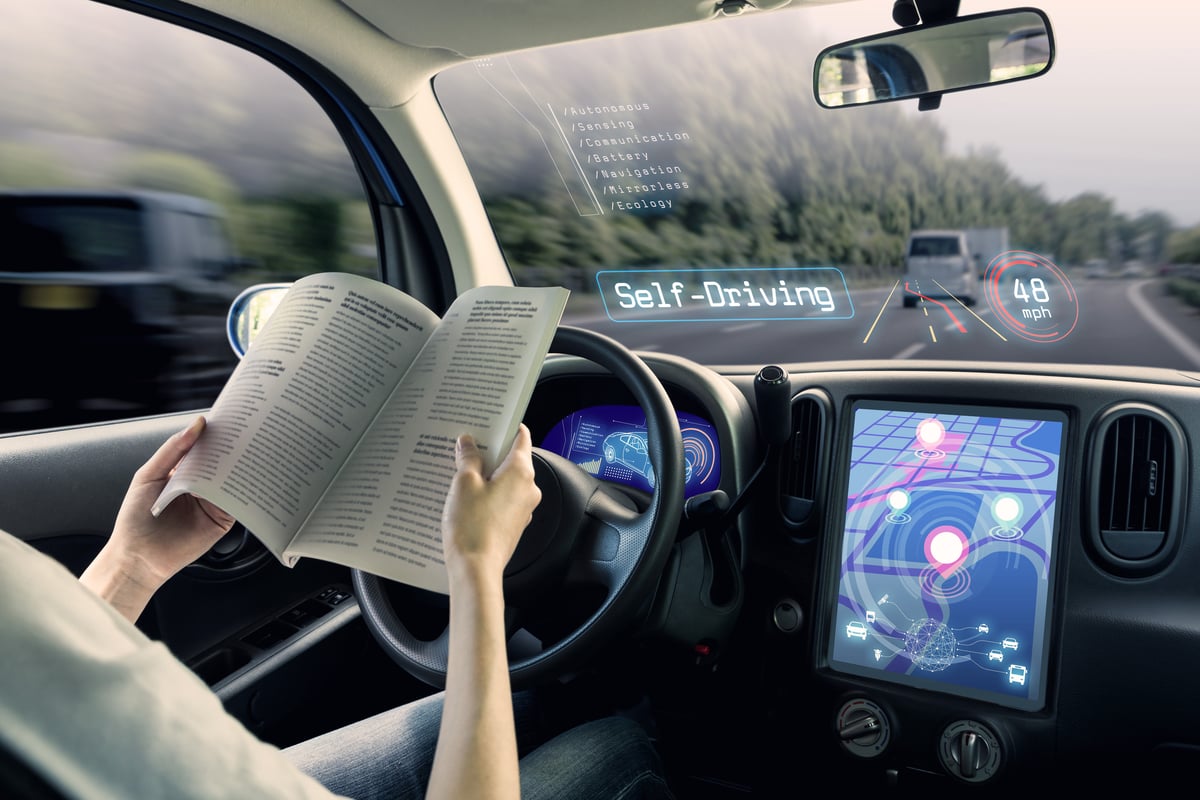
The Strategic Shift Away from In-House Autonomous Development
Uber Technologies ($UBER) has made a calculated strategic decision that fundamentally reshapes how it approaches the autonomous vehicle revolution. Rather than investing billions in developing proprietary self-driving technology—a path that has proven extraordinarily costly for competitors—the ride-hailing giant has chosen to partner with specialized autonomous vehicle developers including Waymo and Rivian. This approach represents a significant departure from the capital-intensive model that dominated Silicon Valley thinking a decade ago, where vertical integration seemed like the only path to competitive advantage.
The decision reflects a mature recognition of market realities: building autonomous vehicle technology requires sustained, massive capital expenditure with uncertain timelines and enormous technical risks. Uber has already learned painful lessons about the challenges of in-house autonomous development. The company's own self-driving division, Uber ATG (Advanced Technologies Group), encountered significant obstacles before the company pivoted its strategy. By partnering instead, Uber sidesteps these pitfalls while positioning itself to capture the enormous value that will flow to the platform controlling the distribution network—not necessarily the technology provider.
The Economics of Partnership Over Development
The financial mathematics supporting Uber's partnership approach are compelling. Building a credible autonomous vehicle program requires:
- Sustained R&D investments in the billions of dollars annually
- Regulatory navigation and safety validation across multiple jurisdictions
- Fleet testing infrastructure and real-world deployment costs
- Talent acquisition competing directly with well-funded specialists like Waymo (backed by Alphabet and deep technical expertise) and Rivian (with its own automotive manufacturing capabilities)
- Years of development before reaching commercial viability
By contrast, Uber's partnership model allows the company to:
- Maintain lean capital allocation focused on core platform operations and profitability
- Leverage existing network effects from its massive user base and driver community
- Benefit from specialized expertise without building those capabilities internally
- Accelerate time-to-market by adopting proven technologies rather than developing from scratch
- Reduce technology risk by letting partners bear development uncertainty
This mirrors a broader trend in technology markets where platform owners focus on distribution and user experience rather than underlying technology development. Uber possesses something autonomous vehicle developers need: the world's largest on-demand transportation platform with unmatched brand recognition, user loyalty, and operational scale.
The partnership approach also insulates Uber from the capital requirements that have burdened autonomous vehicle pure-plays. While companies investing in proprietary autonomous technology face years of negative returns before commercialization, Uber can maintain its path toward consistent profitability while positioning itself to immediately leverage autonomous fleet capabilities when partners achieve commercial readiness.
Market Context: The Autonomous Vehicle Landscape Evolves
Uber's strategy must be understood within the broader autonomous vehicle ecosystem, which has matured significantly since the early 2020s. The autonomous vehicle sector has experienced a significant recalibration, moving away from the "robot taxi everywhere by 2025" narrative toward more realistic timelines and limited-geography deployments.
Waymo, the leading commercial autonomous vehicle operator, has focused on specific urban markets with controlled routes and weather conditions. Rivian, the electric vehicle manufacturer, is pursuing autonomous capabilities for its vehicle fleet. Meanwhile, traditional automakers like General Motors (through Cruise) and Tesla continue developing self-driving capabilities, though progress has been slower and more methodical than early predictions suggested.
This environment creates natural advantages for Uber's platform approach:
- Specialized developers can focus resources on core technological challenges
- Uber can integrate multiple autonomous partners, diversifying technology risk
- Scale of adoption becomes tied to Uber's ability to match autonomous vehicle supply with platform demand
- Regulatory approval benefits from Uber's established relationships with transportation authorities
For investors analyzing the rideshare sector, this represents a significant competitive advantage. While Lyft ($LYFT) and other competitors struggle with unit economics, Uber can maintain profitability today while building optionality for future margin expansion as autonomous vehicle adoption scales.
Investor Implications: Margin Expansion Without Capital Burden
The partnership strategy carries profound implications for Uber shareholders. The company's path to sustained profitability has historically been constrained by driver supply economics—the platform must compete for driver availability through rates and incentives, which compress margins.
Autonomous vehicle adoption changes this equation fundamentally. As self-driving fleets gradually replace human drivers in certain geographies and use cases, Uber's take rate economics improve dramatically. Instead of paying driver commissions and incentives, the platform captures value by taking a percentage of autonomous fleet revenue or by owning the autonomous assets themselves—decisions that remain flexible under the partnership model.
Crucially, Uber avoids the massive capital intensity that would otherwise burden its balance sheet. If the company had pursued proprietary autonomous development, shareholders would have faced:
- Billions in annual R&D spending with highly uncertain payoff timelines
- Potential writedowns if autonomous development proved more difficult than anticipated
- Competitive pressure to match specialized developers' technology capabilities
- Distraction from core profitability objectives
The partnership approach allows Uber to maintain its disciplined capital allocation while preserving optionality. Should autonomous vehicle adoption accelerate faster than expected, Uber can deepen partnerships or acquire autonomous vehicle technology. If adoption proceeds slowly, Uber has not over-invested in a technology that may not deliver returns on traditional timelines.
For the broader rideshare and mobility ecosystem, Uber's strategy signals that the future belongs to platform operators who control distribution, not necessarily to technology developers. This has competitive implications for Lyft and international competitors who lack Uber's scale and bargaining power with autonomous vehicle developers.
Looking Forward: Optionality and Execution Risk
Uber's partnership strategy represents a pragmatic evolution from the company's earlier ambitions in autonomous vehicle development. Rather than building proprietary technology, Uber has positioned itself as the natural destination for autonomous vehicle deployment at scale—leveraging its platform, brand, and user ecosystem.
The success of this approach depends on several factors: partners must achieve genuine commercial viability and safety records, regulatory environments must evolve to permit widespread autonomous deployment, and Uber's platform must retain relevance as transportation technologies shift. These represent real execution risks that investors should monitor.
However, the financial logic is sound. By partnering rather than building, Uber avoids the capital intensity and development risk that have constrained other transportation technology initiatives. Instead, the company maintains profitability, preserves capital for strategic investments, and positions itself to capture significant margin expansion when autonomous vehicle adoption reaches scale. For investors seeking exposure to the autonomous vehicle opportunity without the risk of pure technology plays, Uber's platform model offers compelling optionality. The question is no longer whether autonomous vehicles will arrive, but how Uber will extract maximum value once they do—and the partnership strategy appears optimized for exactly that outcome.