
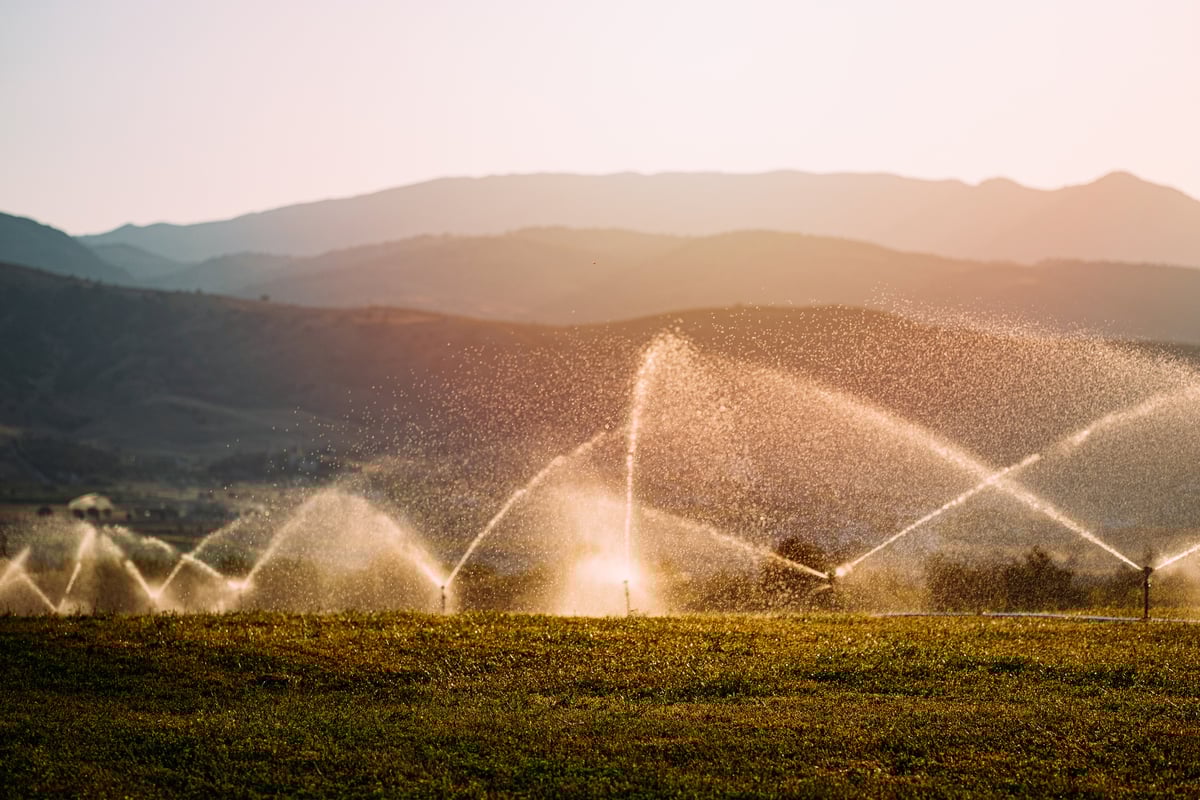
Agricultural Equipment Maker Offers Value Despite Near-Term Headwinds
Lindsay Corporation ($LDC) has become an intriguing contrarian play for value-oriented investors following a 12% stock decline triggered by softer-than-expected earnings. The market's punitive reaction appears disproportionate to the underlying business fundamentals, as the selloff stems primarily from cyclical agricultural pressures rather than structural deterioration in the company's core operations. The irrigation equipment and infrastructure products manufacturer's current valuation—trading at 19x earnings compared to its five-year historical average of 25x—combined with a robust project pipeline and long-term structural growth drivers, positions $LDC as a compelling opportunity for investors with sufficient conviction to look through near-term commodity headwinds.
Key Details: Strong Fundamentals Masked by Cyclical Weakness
The earnings disappointment that triggered the stock's decline reflects transient market conditions rather than business model erosion. Lindsay Corporation faces temporary headwinds from multiple directions:
- Low commodity prices depressing farm economics and equipment purchasing power
- Tight agricultural credit conditions constraining farmer capital availability
- Cyclical agricultural cycle operating below peak demand levels
However, beneath these near-term pressures lies a company with genuine competitive advantages and growth catalysts:
Strong Project Backlog: The company maintains a substantial backlog of work that provides revenue visibility and demonstrates sustained customer demand despite current cyclical weakness. This backlog acts as a buffer against near-term market volatility and suggests confidence from customers regarding future water management investments.
Major Middle East/North Africa Region Project: A significant contract from the MENA region represents substantial revenue potential and demonstrates Lindsay's ability to win large-scale infrastructure projects in strategically important markets. This geographic diversification beyond domestic agricultural cycles reduces earnings volatility and taps into emerging market infrastructure spending.
Valuation Disconnect: At 19x earnings, the stock trades at a material discount to both its own historical valuation multiple and to comparable peers in the industrial equipment and infrastructure sectors. This discount—applied to a company with meaningful growth catalysts—suggests limited downside protection but substantial upside potential if sentiment normalizes.
Market Context: Structural Tailwinds Overpower Cyclical Headwinds
The market's fixation on near-term agricultural weakness obscures the powerful long-term drivers supporting Lindsay's business thesis. Global macroeconomic and geopolitical trends create durable demand for the company's core products and services:
Water Scarcity as Existential Driver: Increasingly acute water limitations across major agricultural regions worldwide—from the American West to the Middle East to India—demand more efficient irrigation systems. Lindsay's irrigation technology and water management solutions directly address this structural shortage, positioning the company as a beneficiary of inevitable capital reallocation toward water conservation infrastructure.
Food Security Imperatives: Global population growth, geopolitical fragmentation disrupting traditional agricultural supply chains, and the need for regional food self-sufficiency are driving governments and private sector investment in domestic agricultural productivity. Enhanced irrigation infrastructure represents a critical component of agricultural modernization strategies, particularly in developing economies investing in irrigation-dependent farming systems.
Infrastructure Spending Tailwinds: U.S. infrastructure legislation and international development initiatives continue to allocate substantial capital toward water infrastructure, roads, and bridges—sectors where Lindsay maintains competitive positioning through its infrastructure products division.
These structural trends operate independently of commodity price cycles or short-term credit conditions, suggesting that current cyclical weakness represents a temporary discount on permanently elevated long-term demand.
Investor Implications: Significant Upside Potential at Current Levels
The 12% decline following earnings has created a meaningful gap between Lindsay's valuation and fundamental intrinsic value, particularly when accounting for the company's long-term growth catalysts. Several scenarios suggest material upside from current levels:
Conservative Peer Valuation Scenario: If Lindsay re-rates to trading multiples of comparable industrial equipment and infrastructure companies—typically operating in the 22-27x earnings range—the stock could appreciate 14-16% from current depressed levels simply from multiple expansion, independent of earnings growth.
Normalized Multiple Scenario: Should the company trade at its five-year historical average of 25x earnings, investors could realize 32% upside. This scenario assumes the market eventually recognizes that current weakness is cyclical rather than structural.
Full Structural Recognition Scenario: If capital markets fully internalize the compounding effects of water scarcity, food security imperatives, and infrastructure modernization—potentially justifying premium valuations reserved for secular growth stories—upside could reach 23% or higher.
The risk-reward asymmetry appears favorable for investors with a 2-3 year time horizon. The stock's current price offers substantial margin of safety, with limited downside from already-depressed valuation levels, while structural tailwinds provide optionality for material capital appreciation as cyclical conditions normalize.
Investor Suitability: This opportunity suits investors with:
- Conviction in structural water management megatrends
- Tolerance for near-term volatility from agricultural cycle gyrations
- Capital deployment flexibility across a 2-3 year horizon
- Belief that markets are temporarily overshooting on cyclical weakness
The current market dislocation offers a window to accumulate Lindsay Corporation shares at valuations rarely available given the company's competitive positioning and structural tailwinds. As agricultural cycles inevitably turn and global water challenges intensify, the market will likely reassess $LDC's true value proposition, rewarding early investors willing to look beyond current commodity-driven headlines.