
Rivian and Oklo Emerge as Decade-Long Plays on AI-Driven Transformation
As artificial intelligence reshapes entire industries and demands unprecedented computational resources, two companies are positioning themselves at the forefront of this technological revolution. Rivian Automotive ($RIVN) and Oklo Inc. ($OKLO) have emerged as compelling long-term investment opportunities for investors willing to look beyond near-term market volatility and volatility, each offering distinct exposure to the AI-powered economy of the next decade.
The thesis is straightforward yet compelling: the AI revolution requires both the infrastructure to power it and the autonomous vehicles to deploy it. Rivian provides a low-valuation entry point into electric vehicles with substantial AI capabilities embedded in its product roadmap, while Oklo's small modular reactor technology addresses a critical bottleneck—the massive energy requirements that will constrain AI infrastructure expansion without innovative power solutions.
The Valuation Opportunity and AI Investment in Electric Vehicles
Rivian Automotive trades at a striking 3.2x price-to-sales ratio, a valuation metric that appears undervalued relative to the company's strategic positioning in the autonomous vehicle and EV markets. This valuation stands as a potential entry point for investors, particularly when considering the company's aggressive investment in artificial intelligence capabilities designed to power autonomous driving systems.
The EV manufacturer's heavy commitment to AI development represents far more than incremental vehicle improvements. Key investment areas include:
- Autonomous driving stack development utilizing advanced AI models for vehicle perception and decision-making
- Computational architecture embedded in Rivian vehicles to enable next-generation autonomous capabilities
- Data collection infrastructure to continuously improve AI systems through real-world driving conditions
- Integration with emerging AI frameworks to leverage breakthroughs in machine learning and neural networks
Rivian's positioning in the premium EV segment, combined with its technological ambitions in autonomous systems, suggests the company is betting heavily on a future where AI-powered vehicles command significant market premiums. The low valuation multiple indicates that market expectations may not fully price in the long-term value creation potential from these autonomous capabilities.
Energy Infrastructure as the AI Bottleneck
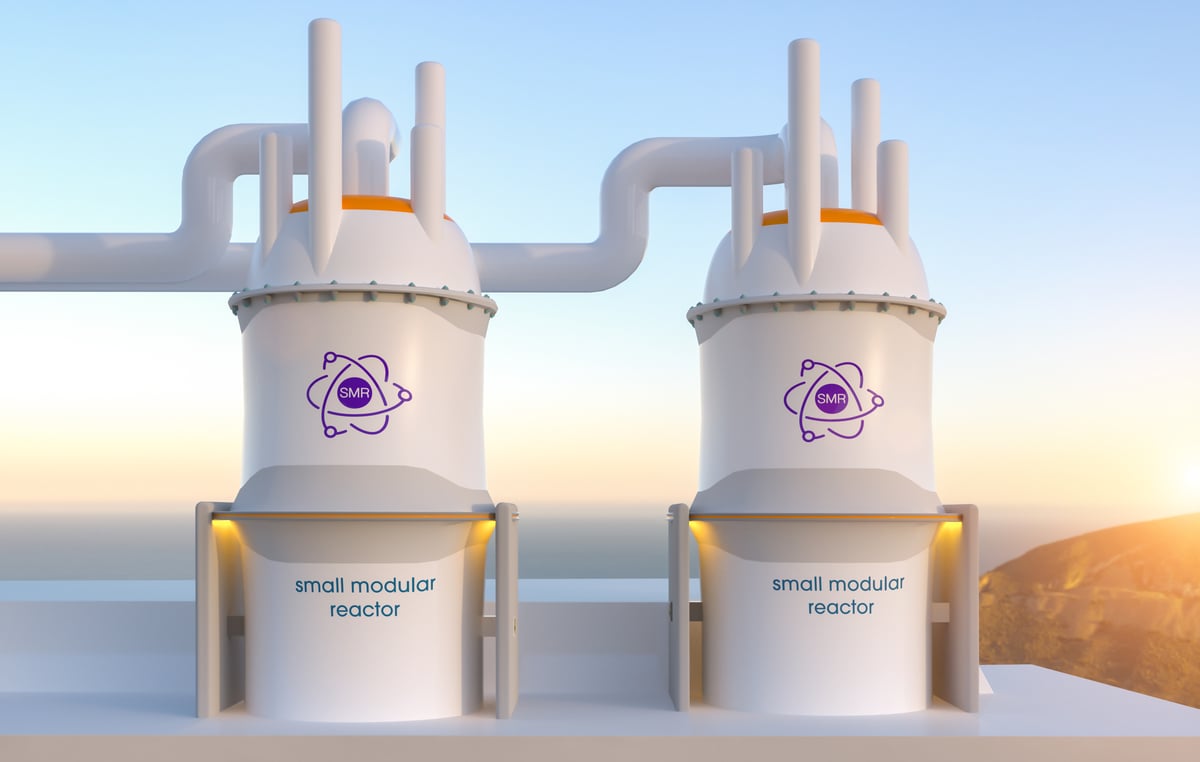
While Rivian captures attention in the consumer vehicle space, Oklo addresses a more fundamental constraint on AI expansion: energy supply. The company's small modular reactor (SMR) technology represents a direct bet on the thesis that AI data centers will face severe power limitations without next-generation energy infrastructure.
The energy demand dynamics are stark. Modern large language models and AI training facilities consume extraordinary amounts of electricity, creating an infrastructure bottleneck that threatens to constrain AI development and deployment. Traditional power sources struggle to keep pace with demand, and regulatory hurdles slow conventional nuclear expansion. This is where Oklo's technology becomes strategically valuable.
Oklo's business model centers on designing and deploying small modular reactors specifically engineered to power data centers and computational facilities. Rather than competing with massive utility-scale reactors, the company's SMR approach offers:
- Modular deployment allowing targeted power solutions for data center complexes
- Faster permitting timelines compared to traditional large nuclear plants
- Scalability to match incremental AI infrastructure expansion
- Direct integration with tech companies' energy requirements
This positioning makes Oklo a pure-play investment in the infrastructure constraints that may ultimately limit AI growth if left unaddressed.
Market Context: The AI Revolution and Industry Dynamics
Both stocks must be understood within the broader context of AI's explosive growth and its cascading effects across multiple industries. The artificial intelligence market is experiencing compound annual growth rates that dwarf most other technology sectors, with enterprise adoption accelerating faster than previously anticipated.
For Rivian, the competitive landscape includes both traditional automakers integrating AI into vehicles and dedicated autonomous vehicle companies. However, Rivian's entry point at a low valuation multiple suggests the market may be underpricing the premium that AI-enabled autonomous vehicles could command once the technology reaches regulatory approval and consumer readiness.
For Oklo, the competitive environment is equally significant. Energy infrastructure represents a less crowded space than consumer AI applications, but the company faces competition from other advanced nuclear approaches, renewable energy scaling, and traditional utility expansion. However, the specificity of Oklo's focus on data center power needs creates a niche market with structurally high demand from a limited set of customers—major cloud providers and AI infrastructure companies.
The regulatory environment surrounding both companies warrants attention. Autonomous vehicle regulations continue evolving, with potential for accelerated approval timelines if safety milestones are achieved. Nuclear power is experiencing a remarkable regulatory thaw in many developed markets, with governments recognizing its role in decarbonization and energy security.
Investor Implications and Portfolio Positioning
For long-term investors, these two stocks represent asymmetric opportunities—situations where the potential upside over a decade significantly exceeds the downside risks, particularly given current valuations and market positioning.
Rivian's 3.2x price-to-sales valuation suggests the market has not materially priced in the value creation from autonomous driving capabilities and the AI technology embedded in future models. If the company successfully brings autonomous vehicles to market and captures premium pricing, current valuations appear extremely attractive. Conversely, investors should recognize the execution risks inherent in scaling EV production and validating autonomous technology.
Oklo's opportunity centers on a more fundamental thesis: energy will become the rate-limiting factor for AI infrastructure expansion. Early positioning in companies solving this constraint could yield significant returns if demand materializes as expected. The company benefits from secular tailwinds in both clean energy transition and AI infrastructure buildout.
For portfolio construction, these stocks serve different roles. Rivian ($RIVN) represents exposure to consumer-facing AI applications and transportation transformation. Oklo ($OKLO) provides infrastructure leverage on the AI boom. Together, they offer a complementary view on the AI decade: one on the applications side, one on the foundation side.
Investors considering these positions should maintain a long-term time horizon—preferably five to ten years—to allow theses to develop. Near-term volatility should be expected and viewed as opportunity rather than concern. Additionally, portfolio sizing matters; these represent higher-conviction, higher-volatility plays that should be sized appropriately relative to overall risk tolerance.
Forward-Looking Perspective
The next decade will likely prove transformative for companies positioned at the intersection of artificial intelligence and critical infrastructure. Rivian and Oklo represent two distinct but complementary bets on how this transformation unfolds—one on the vehicles that will operate in an AI-powered world, the other on the power that will fuel that world.
The attractiveness of both opportunities rests on a shared premise: that AI will continue advancing exponentially, that its infrastructure requirements will prove more constraining than current market expectations suggest, and that early positioning in solutions to these challenges will reward patient investors. For those convinced of this thesis, current valuations in both stocks appear to offer compelling risk-reward profiles for the next decade of opportunity and inevitable chaos.