
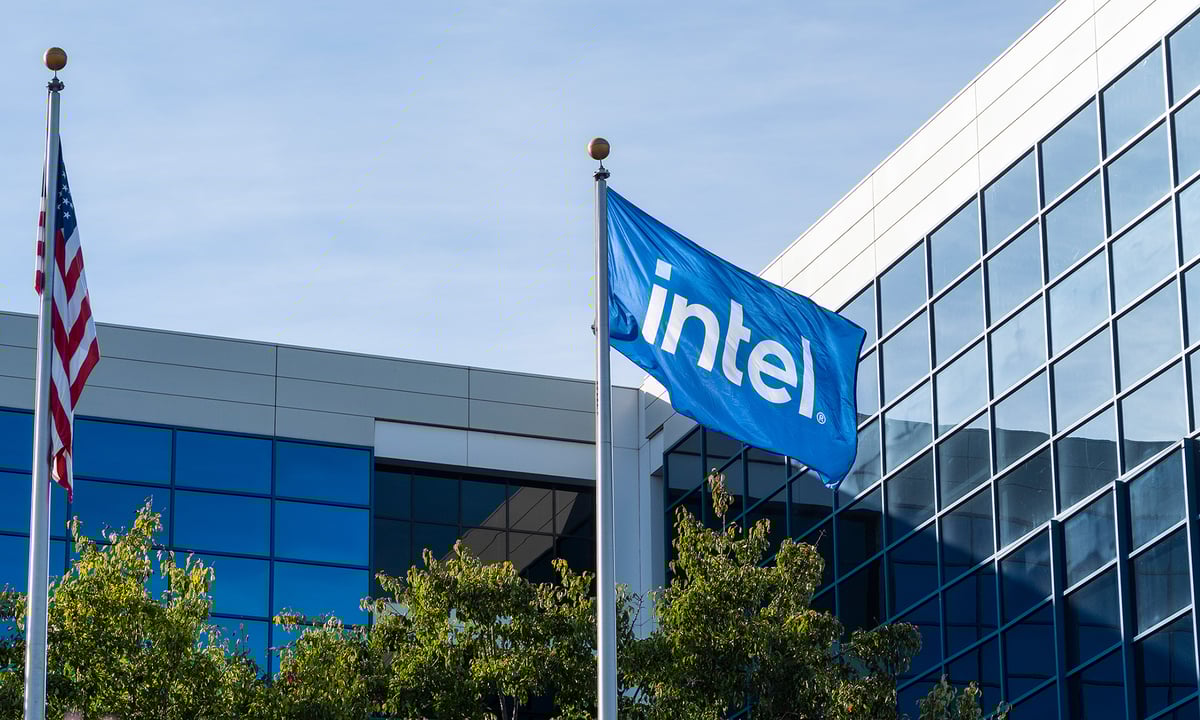
Two AI Giants Signal Recovery Path as Enterprise Demand Strengthens
Despite the recent pullback in artificial intelligence equities, two semiconductor and software powerhouses appear positioned for substantial gains through the end of 2026. Intel ($INTL) and Palantir Technologies ($PLTR) are benefiting from robust enterprise demand for AI infrastructure and software solutions, suggesting a meaningful recovery window for investors who maintain conviction in the sector's long-term thesis. The pair's divergent business models—one rooted in hardware manufacturing, the other in specialized AI software platforms—offer complementary exposure to an AI market that remains in its relative infancy despite recent volatility.
The narrative underpinning this bullish outlook rests on fundamental strength in enterprise AI adoption that transcends near-term market sentiment. While macro headwinds and profit-taking have rattled investor confidence in AI equities broadly, the underlying demand signals from data centers and Fortune 500 enterprises suggest the sector's infrastructure buildout remains intact. Both companies have demonstrated concrete momentum in their respective verticals, with measurable contract wins and utilization increases that point toward sustained revenue growth into 2026.
Hardware Momentum: Intel's Data Center Revival
Intel's resurgence hinges on explosive demand for data center CPUs, the processors that power the servers and infrastructure supporting AI model training and inference. The chipmaking giant is positioned to benefit from anticipated price increases in its data center product portfolio, with analysts projecting potential price hikes ranging from 11% to 15% over the coming periods. This represents a meaningful tailwind for gross margins and absolute profitability, particularly as customers prioritize performance and efficiency in their AI workloads.
Beyond traditional CPU upgrades, Intel is expanding its custom AI processor business, a higher-margin segment that allows the company to serve hyperscalers and enterprise customers with specialized silicon optimized for machine learning applications. This diversification away from commodity processors toward application-specific integrated circuits (ASICs) mirrors strategies employed by competitors and positions Intel to capture a larger share of the AI infrastructure market.
Key metrics supporting Intel's outlook include:
- 11-15% data center CPU price increase potential addressing pent-up customer demand
- Expansion of custom AI processor business creating higher-margin revenue streams
- Sustained enterprise capital expenditures for AI infrastructure buildout
- Market share recovery opportunities in a competitive but growing market
Palantir's Software Dominance: Record Contract Momentum
Palantir Technologies is demonstrating accelerating traction in its AI platform business, evidenced by record-breaking commercial metrics that underscore the value proposition of its data intelligence software. The company secured $4.3 billion in new contracts during its most recent reporting period, a remarkable figure that reflects both the breadth of its customer base and the complexity of deployments driving larger deal sizes.
Equally impressive is Palantir's 139% net dollar retention rate, a metric that indicates existing customers are expanding their spending with the company at an exceptional pace. Net dollar retention above 100% signals strong product-market fit, customer satisfaction, and the presence of significant upsell opportunities within Palantir's installed base. This organic expansion of customer lifetime value provides a compounding growth engine that should continue propelling revenue and profitability higher through 2026.
However, investors should acknowledge that Palantir's valuation remains elevated relative to historical tech multiples. The market has priced in meaningful growth expectations, leaving limited margin for disappointment. The company's ability to convert its record contract bookings into actual revenue realization and to manage investor expectations around profitability will be critical factors determining whether the stock finishes 2026 materially higher.
Market Context: The Broader AI Infrastructure Build
The recovery thesis for both companies rests on a secular structural shift in enterprise technology spending. The AI infrastructure market is expected to expand significantly through the remainder of this decade, as organizations of all sizes recognize that competitive advantage increasingly depends on machine learning capabilities embedded within their operations. This shift mirrors previous technology transitions—from mainframes to PCs to cloud computing—each of which created extended periods of hardware and software replacement cycles.
From a competitive standpoint, Intel faces ongoing pressure from Advanced Micro Devices ($AMD) and emerging competition from custom processors developed by hyperscalers. However, the sheer scale of the AI infrastructure buildout suggests the market is large enough to support multiple winners. Palantir, meanwhile, operates in a more specialized segment where deep domain expertise and established relationships with government and enterprise customers provide meaningful moats against emerging competitors.
The regulatory environment remains generally supportive for semiconductor and software investments in AI, particularly in Western markets where governments recognize the strategic importance of developing domestic AI capabilities. This geopolitical backdrop could accelerate enterprise investment cycles, benefiting both hardware and software providers.
Why This Matters for Investors
For equity investors with a 12-18 month investment horizon, the case for Intel and Palantir rests on three pillars: fundamental demand strength, achievable financial targets, and valuation inflection potential. After recent weakness, both stocks offer entry points that may prove attractive to long-term believers in the AI thesis.
Intel investors should focus on whether the company can execute on its data center roadmap and deliver on the promised pricing improvements. Success here would drive meaningful operating leverage and demonstrate that the company can compete effectively in the accelerating AI market despite historical execution challenges.
Palantir shareholders should monitor the company's ability to convert its record backlog into cash flow and profitability. If the company can demonstrate improving unit economics and operating margins while maintaining growth, the elevated valuation could prove justified and potentially expand further.
The risks to this positive view include:
- Broader macro contraction that could compress enterprise IT spending
- Competitive displacement in AI processors and platforms
- Valuation compression if interest rates rise further
- Execution failures at either company on key product initiatives
Looking Ahead: 2026 as an Inflection Point
The proposition that Intel and Palantir will finish 2026 materially higher than their current levels is grounded in the assumption that enterprise AI adoption accelerates from current levels and that both companies successfully capitalize on the resulting infrastructure demand. The coming 18-24 months will likely prove decisive in determining whether the AI investment cycle matures into sustained profitability or faces a correction.
For investors contemplating positions in either stock, the key is distinguishing between temporary market sentiment and underlying structural demand. The evidence from enterprise contract wins, utilization metrics, and capital allocation by hyperscalers suggests the AI infrastructure buildout remains real and substantial. Should this momentum persist, both Intel ($INTL) and Palantir ($PLTR) appear reasonably positioned to deliver positive returns by the end of 2026, though investors should maintain realistic expectations about the magnitude and timing of those gains.