
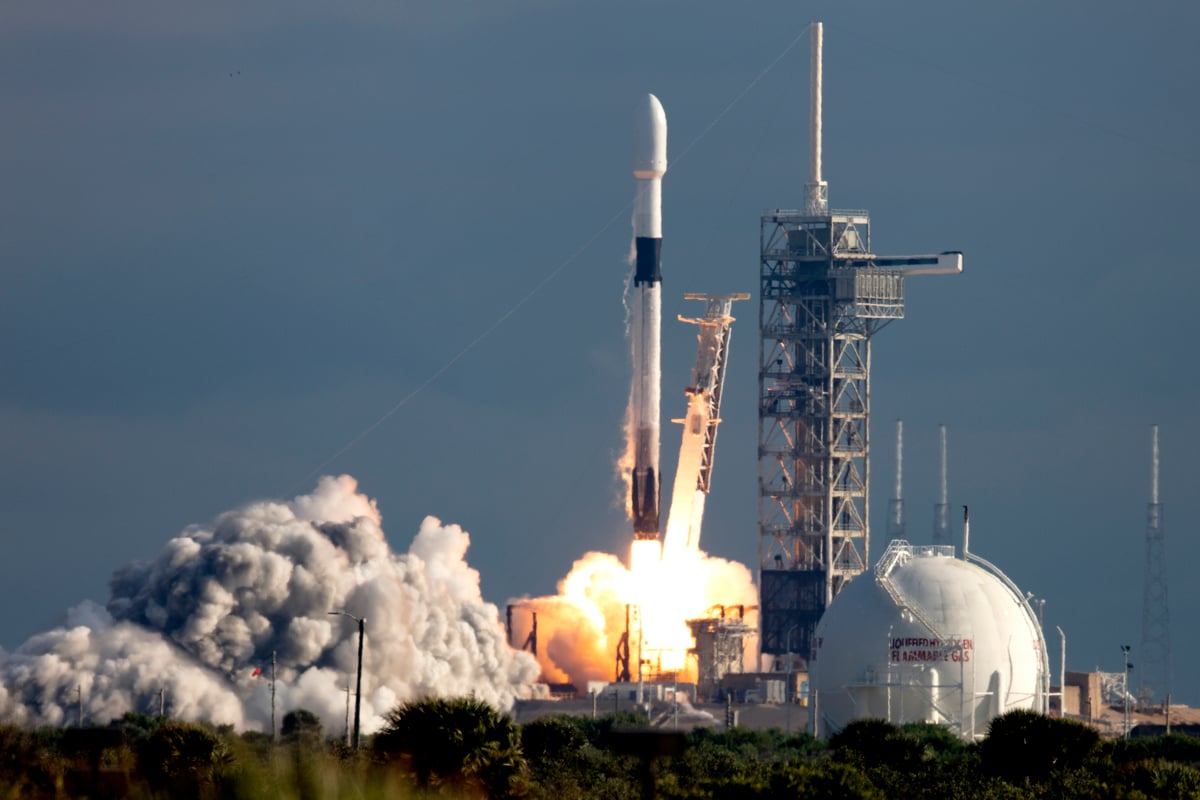
SpaceX Eyeing Record-Breaking IPO Amid Valuation Concerns
SpaceX is preparing for what could become the largest initial public offering in history, seeking to raise approximately $75 billion at a valuation between $1.75 trillion and $2 trillion. The aerospace and space technology company's imminent market debut has generated significant investor excitement, yet financial analysts are raising red flags about the sustainability of such valuations and warning that the offering could evolve into unprecedented meme stock territory driven by retail enthusiasm and the cult-like following surrounding founder Elon Musk.
The scale of this IPO marks a historic milestone for capital markets. To contextualize the magnitude: SpaceX's proposed valuation would make it one of the most valuable private companies ever to go public, rivaling the market capitalizations of established tech giants. However, the valuation metrics present a concerning picture for value-conscious investors, with the company trading at approximately 219 times trailing earnings—a multiple that financial experts argue cannot be justified by fundamental business performance or industry comparables.
The Valuation Red Flags and Meme Stock Risk
The extraordinary valuation multiple raises serious questions about whether SpaceX's IPO pricing reflects realistic earning potential or rather reflects speculative fervor surrounding the company and its magnetic founder. Several factors contribute to the meme stock risk assessment:
- Extreme valuation multiples: At 219x trailing earnings, SpaceX trades at levels typically associated with unprofitable high-growth startups, not established revenue-generating space ventures
- Elon Musk factor: The entrepreneur's outsized social media presence and retail investor cult following create conditions for speculative trading patterns
- Retail investor enthusiasm: Expected strong retail participation could drive share prices detached from fundamental value
- Limited comparables: The space industry lacks established public companies against which to benchmark valuation reasonably
Financial analysts warn that much of the anticipated demand for SpaceX shares will likely originate from retail investors motivated by enthusiasm for the company's mission, brand appeal, and association with Musk rather than rigorous financial analysis. This dynamic mirrors the conditions that preceded other meme stock episodes, where social media coordination and retail momentum temporarily disconnected share prices from intrinsic value.
Market Context: Space Industry Dynamics and Competitive Landscape
The space technology sector has experienced significant investment and innovation in recent years, yet remains dominated by government contracts and a limited number of players. SpaceX has established itself as a market leader through the successful Falcon 9 rocket platform, Starship development, and the Starlink satellite internet constellation. However, the competitive landscape is intensifying.
Other space industry participants include Axiom Space, Blue Origin (privately held), and Virgin Galactic ($SPCE), which has already achieved public market status. Traditional aerospace contractors like Lockheed Martin ($LMT), Boeing ($BA), and Northrop Grumman ($NOC) also compete for government contracts and commercial opportunities. The emergence of multiple competitors and the maturation of commercial space markets suggest that SpaceX's dominant position may face erosion.
Additionally, the space industry remains heavily dependent on government contracts and subsidies. Changes in federal spending priorities, regulatory environments, or geopolitical dynamics could significantly impact revenue streams and profitability. This regulatory and policy risk is often underestimated by retail investors excited about the sector's growth narrative.
Investor Implications: Lock-up Provisions and Price Discovery
For institutional and sophisticated investors, the most compelling argument for caution concerns the timing of the IPO and the inevitable expiration of lock-up provisions. Analysts predict that SpaceX shares could trade significantly cheaper within 3 to 6 months following the offering, once the initial euphoria subsides and early investors become legally permitted to sell their shares.
Lock-up provisions typically prevent company insiders, early investors, and venture capital firms from selling their shares for a defined period following an IPO—often 180 days. When these provisions expire, significant supply of shares typically enters the market, often causing price corrections as the market absorbs substantial selling pressure. This dynamic has historically created excellent entry points for patient, value-focused investors while punishing those who chase offerings at peak hype.
The divergence between current speculative pricing and fundamental value suggests that investors who resist the initial IPO allocation and instead wait for post-lock-up price discovery could achieve considerably better risk-adjusted returns. The trajectory of SpaceX shares may closely resemble other high-profile recent IPOs where enthusiasm-driven initial pricing gave way to more rational valuations once the initial retail investor fervor subsided.
Forward Outlook: A Test of Market Rationality
SpaceX's IPO will serve as a significant test of market discipline and the balance between speculative retail participation and institutional price discovery mechanisms. While the company possesses genuine operational achievements and strategic assets—particularly its advanced rocket technology and growing Starlink customer base—the proposed valuation appears disconnected from financial reality.
For investors, the prudent approach involves acknowledging SpaceX's legitimate competitive advantages while recognizing that the IPO pricing likely embeds excessive optimism. The opportunity to acquire shares at substantially lower valuations following lock-up expiration may prove more rewarding than participating in what could become a textbook example of meme stock dynamics in contemporary markets. The coming months will reveal whether market mechanisms can appropriately price a transformative technology company or whether they will capitulate to retail enthusiasm divorced from fundamental analysis.