
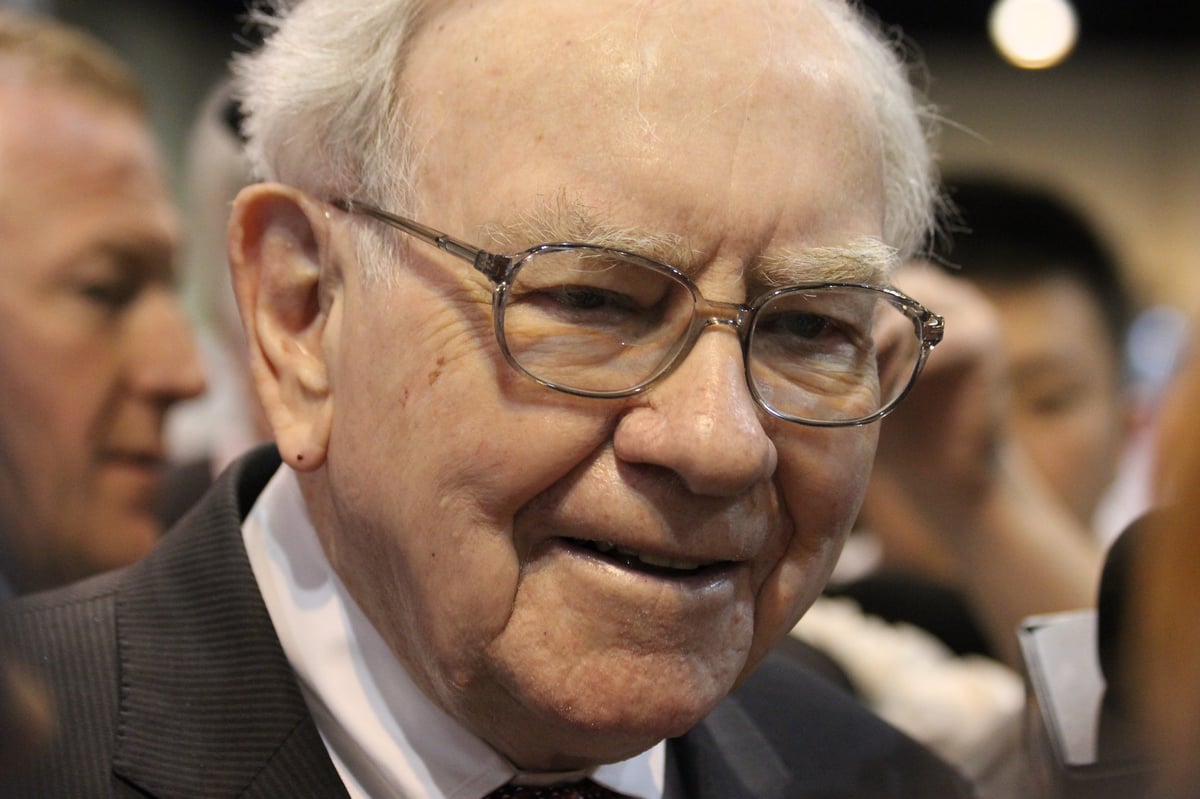
A Blueprint for Crisis Investing: The Buffett Dividend Strategy
Warren Buffett's legendary investment approach during market downturns centers on one core principle: buy exceptional businesses with durable competitive advantages at depressed valuations. A recent analysis identifies three dividend aristocrats that exemplify this philosophy and would likely appeal to the Berkshire Hathaway ($BRK.A, $BRK.B) chairman during significant market corrections. Coca-Cola, Chevron, and McDonald's represent a cross-section of defensive, cash-generative businesses with proven resilience through multiple economic cycles—precisely the type of holdings Buffett gravitates toward when equity prices plummet.
These three companies share a critical characteristic that distinguishes them in Buffett's investment universe: an extraordinary commitment to rewarding shareholders through consistent dividend growth, even during periods of economic stress. Their track records span decades, and their business models generate the reliable cash flows necessary to maintain and increase distributions regardless of market sentiment. For income-focused investors seeking to understand Buffett's contrarian playbook, examining why these three stocks merit consideration during crashes reveals important lessons about quality, predictability, and long-term value creation.
Key Details: The Dividend Aristocrats Under the Microscope
Coca-Cola ($KO) stands as perhaps the most iconic position in Buffett's portfolio and one of the most impressive dividend stories in corporate America. The beverage giant has achieved an extraordinary milestone: 64 consecutive years of dividend increases. This uninterrupted streak represents not merely financial discipline but a fundamental commitment to shareholder returns that has survived wars, recessions, pandemics, and seismic shifts in consumer preferences.
Berkshire Hathaway's substantial stake in Coca-Cola—accumulated primarily during the 1980s and 1990s—exemplifies Buffett's preference for businesses with:
- Globally recognized brand moats that command pricing power
- Recurring revenue streams from essential consumer products
- Predictable cash generation enabling dividend sustainability
- Minimal capital intensity requirements for growth
- Defensive characteristics that hold value during downturns
Chevron ($CVX) represents a different category of defensive holding: an integrated energy major with substantial competitive advantages despite the industry's transition challenges. While energy sector dynamics have shifted dramatically over the past decade, Chevron's diversified operations across upstream exploration, downstream refining, and midstream logistics provide multiple revenue streams. The company's strong long-term demand thesis rests on the fundamental reality that despite renewable energy expansion, global oil and natural gas consumption remains substantial and will continue for decades.
McDonald's ($MCD) exemplifies perhaps the most underappreciated aspect of Buffett's investment philosophy: understanding the true nature of a business. Superficially, McDonald's operates as a fast-food restaurant chain. In reality, it functions primarily as a real estate company that collects franchise rents. This structural advantage creates recurring, predictable cash flows largely insulated from commodity price fluctuations or labor cost pressures affecting franchisees.
McDonald's dividend credentials include:
- 49 consecutive years of dividend growth
- Asset-light franchise model generating high-margin real estate income
- Recession-resistant revenue streams from restaurant rent collection
- Global scale providing diversification across economic cycles
- Minimal operational disruption risk compared to traditional restaurant operators
Market Context: Why These Stocks Matter Now
The appeal of these dividend stocks intensifies during market crashes precisely because equity valuations compress while their underlying businesses remain fundamentally unchanged. When S&P 500 indices decline 20-40% from peaks, high-quality dividend payers often trade at attractive price-to-earnings multiples that haven't been available in years. Buffett's historical pattern demonstrates consistent purchases during these windows—most notably during the 2008-2009 financial crisis when he deployed billions into equities while markets collapsed.
The broader dividend aristocrat category—companies with 25+ consecutive years of dividend increases—has historically outperformed during market recoveries. These businesses benefit from:
- Institutional demand from pension funds and income-focused portfolios seeking safety
- Revaluation as risk premiums compress during recovery phases
- Compound dividend reinvestment benefits that accelerate wealth creation
- Reduced volatility compared to non-dividend-paying growth stocks
In the current market environment, where interest rates remain elevated and economic uncertainty persists, dividend-paying stocks have regained investor focus. The relative yields offered by quality dividend aristocrats increasingly compete with fixed-income alternatives, creating valuation opportunities during periods of equity market stress.
Competitive positioning deserves consideration as well. Coca-Cola faces stiff competition from private-label beverages and health-conscious alternatives, yet its brand moat and distribution network remain unmatched globally. Chevron competes against integrated majors like ExxonMobil ($XOM) and international competitors, but maintains competitive upstream assets and downstream capabilities. McDonald's ($MCD) operates in the highly competitive quick-service restaurant sector yet possesses structural advantages its franchisee-heavy model provides, distinguishing it from competitors like Yum! Brands ($YUM).
Investor Implications: Positioning for Downturns
For equity investors, the investment thesis surrounding these three stocks during market corrections rests on several foundational principles that Buffett has articulated throughout his career:
Valuation discipline: Market crashes create opportunities to purchase quality assets at discounted prices. When Coca-Cola, Chevron, or McDonald's decline 30-40% alongside broader indices, their intrinsic business quality hasn't diminished—only their price has.
Dividend sustainability: Each of these companies possesses sufficient cash generation and balance sheet strength to maintain and grow distributions even during recession. This differentiates them from cyclical stocks where dividend cuts become likely during downturns.
Recovery optionality: Historical analysis shows that dividend aristocrats not only recover from market crashes but often outperform as equity premiums normalize. Investors who purchase during crashes benefit from both dividend yields and capital appreciation as valuations re-rate.
Portfolio stability: For investors with longer time horizons, maintaining a core position in dividend aristocrats provides portfolio ballast during volatility. Their combination of yield, growth, and stability creates a compelling risk-adjusted return profile.
For income-seeking investors, these stocks merit consideration even outside crash scenarios, though crashes present particularly compelling entry points. The diversification benefits of holding all three across consumer staples, energy, and real estate sectors provides further risk management.
Forward Outlook: Applying Buffett's Framework
The three-stock framework identified here reflects Buffett's broader investment philosophy: focus on exceptional businesses with sustainable competitive advantages, reasonable valuations, and management teams committed to shareholder value. While future market crashes remain inevitable, the principles guiding investment decisions during such periods need not remain mysterious.
Coca-Cola's 64-year dividend streak, Chevron's commanding position in global energy markets, and McDonald's structural real estate advantages provide the foundational quality Buffett seeks. During the next significant market correction—whenever it arrives—these stocks will likely represent the type of opportunities that align with contrarian investing principles: purchasing quality at discounts when fear dominates market sentiment.
Investors contemplating whether to build positions in these dividend aristocrats should consider their own time horizons and risk tolerance. For long-term portfolio builders, dollar-cost averaging into quality dividend stocks provides a disciplined approach regardless of market conditions. For tactical investors, maintaining watchlists at predetermined price levels enables rapid deployment of capital during crashes when opportunities become most compelling. Buffett's three-decade accumulation of Coca-Cola stock and his demonstrated willingness to deploy billions during crises offer a roadmap for investors seeking to profit from market dislocations while building lasting wealth.