
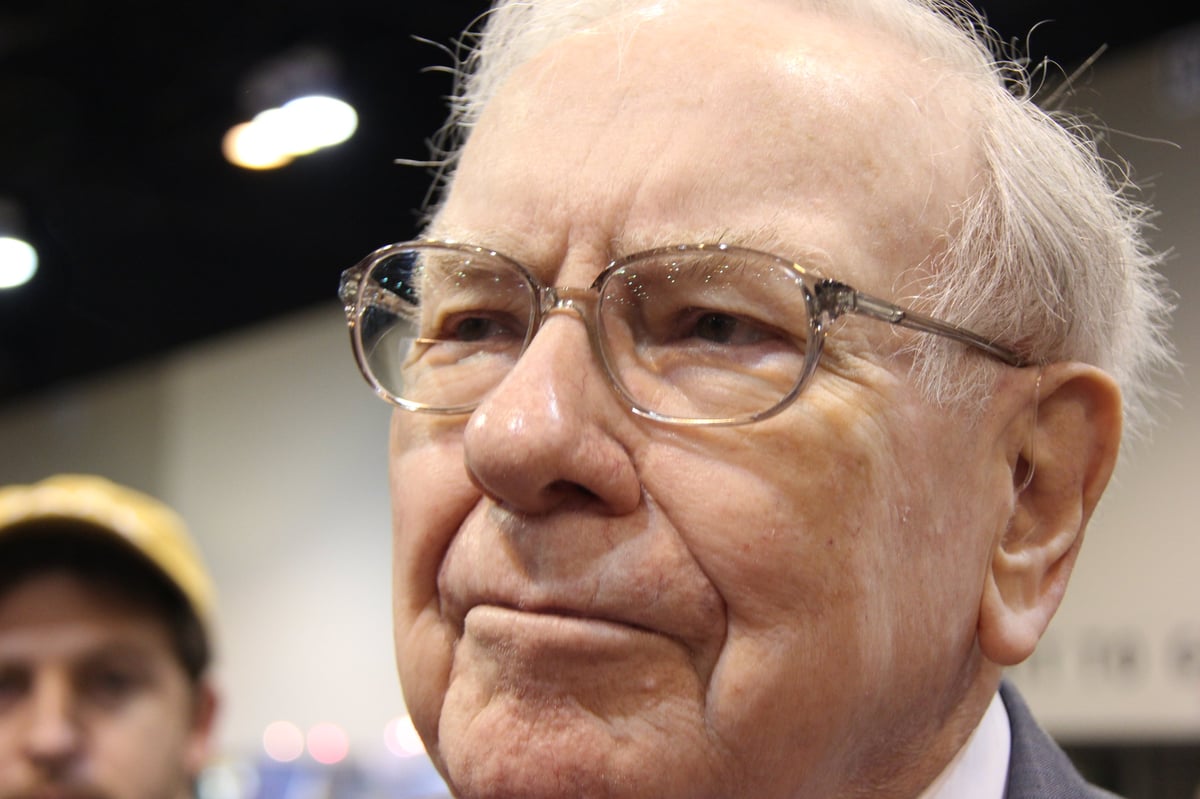
Apple's Premium Valuation Challenges Berkshire's Core Philosophy
Greg Abel, Warren Buffett's successor as CEO of Berkshire Hathaway, has maintained Apple ($AAPL) as one of the conglomerate's "forever holdings"—a classification reserved for the company's most cherished long-term investments. Yet this decision represents a striking departure from the investment discipline that built Buffett's legendary reputation. With Apple trading at 33x trailing earnings, the tech giant commands a valuation that stands at historically elevated levels compared to the 10-15x multiple when Buffett initially began accumulating the position in 2016, creating a fundamental tension between conviction and value.
The situation grows more complex when examining the actions of Buffett himself during the twilight of his tenure. In the nine quarters preceding his retirement, the Oracle of Omaha sold 75% of Berkshire's Apple position—a divestment that speaks volumes about his concerns regarding valuation despite the company's undeniable operational excellence and promising artificial intelligence prospects. This divergence between Buffett's recent portfolio moves and Abel's stewardship of the Apple holding underscores a crucial question: whether the next generation of Berkshire leadership will maintain the value-investing principles that defined the firm's four-decade outperformance.
The Mathematics of Valuation Disconnect
The numbers tell a compelling story about how dramatically market conditions have shifted since Buffett initiated his Apple position. When Berkshire began establishing its stake in 2016, the company was trading at a 10-15x price-to-earnings multiple—a valuation range that reflected investor skepticism about smartphone market saturation and concerns over iPhone cyclicality. At those multiples, Apple represented precisely the kind of "wonderful business at a reasonable price" that Buffett had spent decades pursuing.
Today's valuation landscape presents an entirely different proposition:
- Current multiple: 33x trailing earnings
- 2016 entry multiple: 10-15x trailing earnings
- Multiple expansion: Approximately 2.2x to 3.3x since initial purchase
- Buffett's divestment: 75% of position liquidated over nine quarters
- Remaining Berkshire exposure: Reduced but maintained as indefinite holding
This valuation expansion reflects several market dynamics, including Apple's extraordinary profitability improvements, its services ecosystem maturation, and investor enthusiasm for AI-integrated devices. However, by Buffett's own historical standards, paying 33x earnings for any stock—regardless of quality—stretches the boundaries of prudent value investing. The legendary investor built his reputation on exploiting the margin of safety that comes with purchasing businesses at meaningful discounts to intrinsic value.
Market Context: Quality Commands Premium in AI Era
Apple's current valuation must be understood within the broader context of how financial markets have fundamentally reassessed the worth of high-quality, durable franchises. The artificial intelligence boom has sparked investor appetite for companies perceived as beneficiaries of technological transformation, creating a bifurcated market where premium-quality businesses command historically elevated multiples while cyclical or challenged enterprises languish.
Apple's competitive positioning remains formidable despite the valuation premium:
- Services growth: Driving higher-margin revenue streams independent of iPhone unit sales
- AI integration: Announced artificial intelligence features positioning the company as a consumer AI beneficiary
- Ecosystem stickiness: Customer retention rates among the highest in technology
- Capital returns: Aggressive buyback program reducing share count and supporting per-share metrics
- Regulatory scrutiny: Offset by strong market positions and switching costs
The technology sector as a whole has seen dramatic multiple expansion, with "Magnificent Seven" stocks commanding substantial premiums to historical averages. In this environment, Apple's 33x multiple, while elevated by Buffett-era standards, does not appear egregiously out of line with comparable mega-cap software and services companies that trade at even more premium valuations.
Buffett's own commentary over the years suggests he came to appreciate Apple not merely as a financial investment but as a business model worthy of respect. The company's ability to generate consistent free cash flow, maintain pricing power, and reinvent its product portfolio demonstrated characteristics that aligned with his philosophical preferences. Yet his systematic reduction of the position suggests he ultimately prioritized valuation discipline over intellectual respect for the business.
Investor Implications: The Future of Berkshire's Strategy
The decision to retain Apple as a "forever holding" despite its premium valuation carries significant implications for investors evaluating Berkshire Hathaway ($BRK.B) and its future capital allocation priorities.
For shareholders, this development raises several substantive questions:
Portfolio philosophy: Abel's willingness to hold Apple at 33x earnings suggests a potential shift toward accepting higher valuations for quality businesses than Buffett typically endorsed. This could signal broader tolerance for multiple expansion across the portfolio.
Capital allocation: With Berkshire accumulating substantial cash reserves in recent years, the decision to maintain rather than add to Apple hints that Abel may be more selective about deploying capital at current market valuations—a position consistent with value-investing orthodoxy.
Succession philosophy: The divergence between Buffett's selling and Abel's holding represents the first meaningful test of whether Berkshire's investment discipline has fundamentally changed. Abel's appointment was broadly supported by the investment community, yet his first major test involves contradicting Buffett's recent portfolio actions.
Market timing implications: Buffett's sale of 75% of Apple before his retirement could be interpreted as a market-timing signal, suggesting he viewed 2023-2024 valuations as excessive relative to long-term intrinsic value. Abel's decision to retain the position represents a counterpoint to that pessimism.
Looking Forward: Value Investing in the AI Age
The Apple question ultimately reflects a broader tension in modern finance: whether the principles that generated extraordinary returns from 1965 through 2010 remain applicable in markets dominated by mega-cap technology companies with durable competitive advantages and recurring revenue streams.
Apple ($AAPL) possesses characteristics that Buffett has historically valued—pricing power, competitive moats, strong management, and capital discipline. Yet its valuation has fundamentally departed from the formula that guided his greatest successes. Abel's decision to designate it a forever holding suggests he believes Apple's quality justifies its premium. Buffett's systematic divestment suggests he disagreed.
For investors, the unfolding answer to this question will prove instructive. If Apple continues to grow earnings at rates that justify its 33x multiple and potentially expand that valuation further through AI monetization, Abel's conviction will be vindicated and questions about Buffett's selling will intensify. Conversely, if multiple compression accompanies slower earnings growth, Buffett's exit will appear prescient and serve as a cautionary tale about paying even for quality when valuations become excessive.
The next chapter of Berkshire Hathaway's Apple saga will provide clarity on whether value investing as a discipline evolves with technological change—or whether the markets have permanently shifted how investors should evaluate the worth of even the world's finest businesses.