
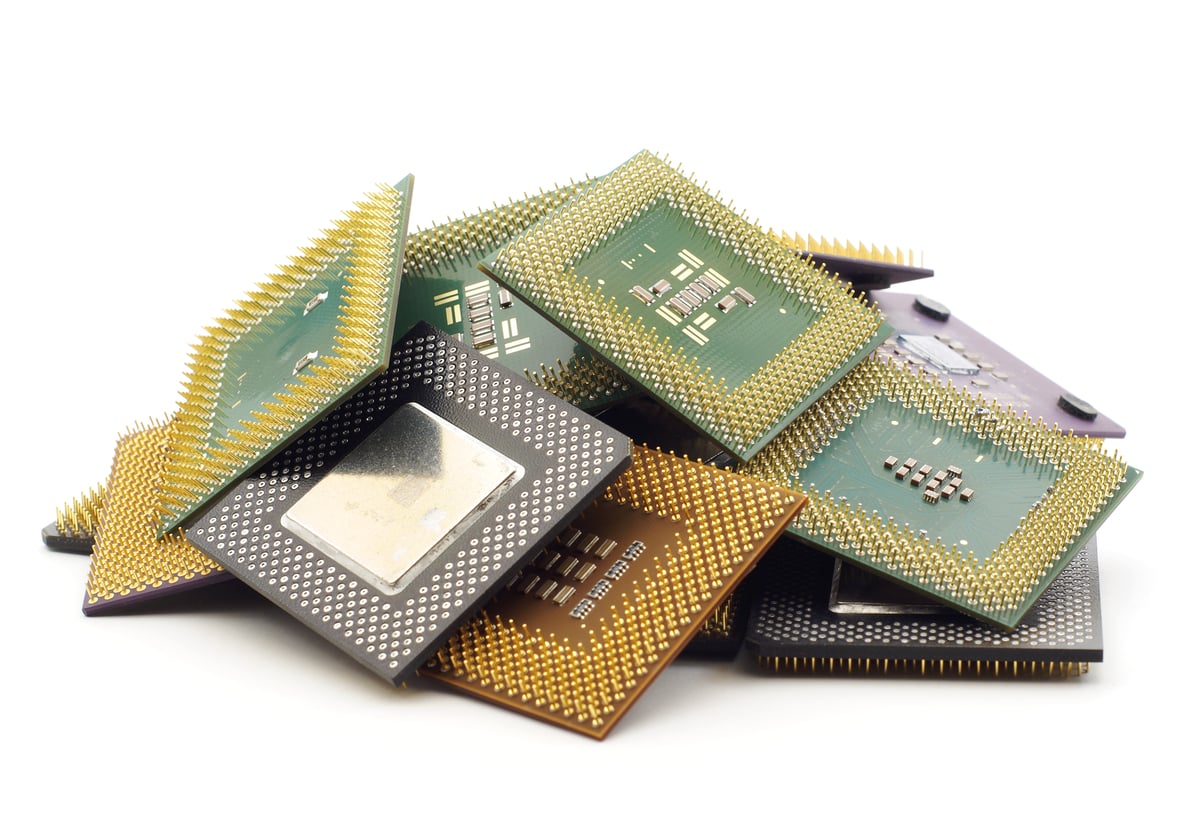
The Semiconductor Sector's Bullish Outlook
Semiconductor and semiconductor equipment companies are signaling the strongest confidence in first-quarter 2026 earnings among all industry groups, demonstrating robust underlying demand despite macroeconomic headwinds. With 54% of S&P 500 companies issuing positive earnings per share (EPS) guidance, the chip sector has emerged as a clear leader in forward-looking sentiment—a critical barometer for investor confidence and economic health.
The optimism reflects a dramatic acceleration in capital spending cycles, particularly as artificial intelligence infrastructure buildouts continue to drive demand for advanced processors and manufacturing equipment. This positive momentum arrives even as oil price spikes threatened to create broader economic uncertainties in March, suggesting the semiconductor industry's growth drivers are sufficiently powerful to overcome near-term commodity volatility.
Extraordinary Performance and Market Leadership
The semiconductor industry group's financial performance has been extraordinary:
- Year-to-date gain: 7% (outpacing broader market indices)
- 52-week performance: 84% return (dramatically exceeding S&P 500 performance)
- Guidance strength: 54% of S&P 500 companies issuing positive EPS guidance, with semiconductors leading this category
- Expected performance: Major chipmakers and equipment suppliers anticipated to beat Wall Street estimates
This sustained outperformance reflects structural tailwinds that extend far beyond cyclical market recoveries. The semiconductor sector's dual beneficiaries—both manufacturers producing cutting-edge chips and equipment suppliers enabling next-generation fabrication—are experiencing a rare synchronized upswing. Companies like NVIDIA, TSMC, Intel, Advanced Micro Devices ($AMD), and equipment manufacturers in the sector have benefited from unprecedented demand for AI chips, high-bandwidth memory, and specialized computing infrastructure.
The 84% one-year return is particularly striking when considered alongside broader equity market performance, highlighting how concentrated gains have been in the semiconductor space. This concentration reflects the market's recognition of semiconductors as essential infrastructure for the AI revolution and continued digital transformation across global economies.
Market Context and Competitive Dynamics
The semiconductor industry's earnings confidence must be understood within the context of the current technology landscape:
AI-Driven Demand Acceleration: The generative AI boom has created an unprecedented supercycle for semiconductor demand. Data center chip orders, particularly for training and inference workloads, have exceeded manufacturing capacity at multiple key suppliers. This supply constraint paradoxically strengthens pricing power and justifies aggressive capacity investments.
Capital Expenditure Cycles: Major chipmakers and foundries have announced record capital expenditure budgets. TSMC, the world's largest contract semiconductor manufacturer, has committed to substantial fab expansions. This equipment purchasing cascades to semiconductor equipment manufacturers, whose order books remain robust through 2026 and beyond.
Geopolitical and Regulatory Support: Government incentives, including U.S. CHIPS Act funding and international semiconductor subsidies, are accelerating investment decisions. These policy tailwinds reduce execution risk for major manufacturers and stabilize long-term demand forecasts.
Competitive Positioning: While the sector collectively shows strength, competitive dynamics remain intense. Advanced chip design leadership, manufacturing efficiency, and equipment innovation create meaningful separation between market leaders and followers. The concentration of 84% gains among top performers suggests not all semiconductor companies are benefiting equally.
Investor Implications and Forward Outlook
For investors, semiconductor sector strength carries several critical implications:
Valuation Considerations: Exceptional price performance naturally raises questions about valuation sustainability. With 84% one-year returns already achieved, positioning in the sector requires conviction about extended growth cycles rather than mean reversion expectations. The positive earnings guidance suggests fundamental strength supports current valuations, but downside risks exist if AI-related capex cycles moderate unexpectedly.
Portfolio Weighting: The semiconductor sector's outperformance has likely increased its portfolio weight for diversified investors. Decisions about whether to trim gains or maintain exposure hinge on individual risk tolerance and economic outlook assumptions.
Interest Rate Sensitivity: Semiconductor stocks typically exhibit high sensitivity to interest rate expectations. The positive Q1 2026 guidance is contingent on the economic environment remaining stable. Unexpected inflation or rate-hiking cycles could quickly reverse sentiment, despite strong fundamentals.
Earnings Estimate Revisions: The likelihood of chipmakers beating Q1 2026 estimates creates momentum for upward estimate revisions throughout 2026. Each earnings season beat provides opportunities for analyst upgrades, potentially extending positive momentum—or creating disappointment if actual results merely meet expectations rather than exceed them.
Supply Chain Benefits: Beyond pure semiconductor companies, investors should consider beneficiaries throughout the semiconductor ecosystem, including equipment suppliers, materials companies, and logistics partners, which share in this growth cycle.
Conclusion: A Sector in Momentum
The semiconductor industry's exceptional earnings optimism represents more than statistical confidence—it reflects a fundamental shift in capital allocation toward AI infrastructure and digital transformation. With 54% of S&P 500 companies signaling positive EPS guidance and semiconductor stocks delivering 84% returns over twelve months, the sector commands serious attention from growth-oriented investors.
However, these impressive metrics also suggest that much positive sentiment is already reflected in current prices. The coming earnings seasons will prove critical in determining whether the semiconductor sector can sustain momentum or faces normalization. For investors, the key question isn't whether semiconductors remain important—that's settled—but whether current valuations offer sufficient margin of safety given execution risks and potential capex cycle moderation. The sector's positive guidance through Q1 2026 provides near-term support, but longer-term sustainability depends on whether AI infrastructure spending actually materializes at anticipated levels and whether semiconductor companies can expand capacity without triggering oversupply conditions.