
The Quiet Winner in Nvidia's AI Infrastructure Play
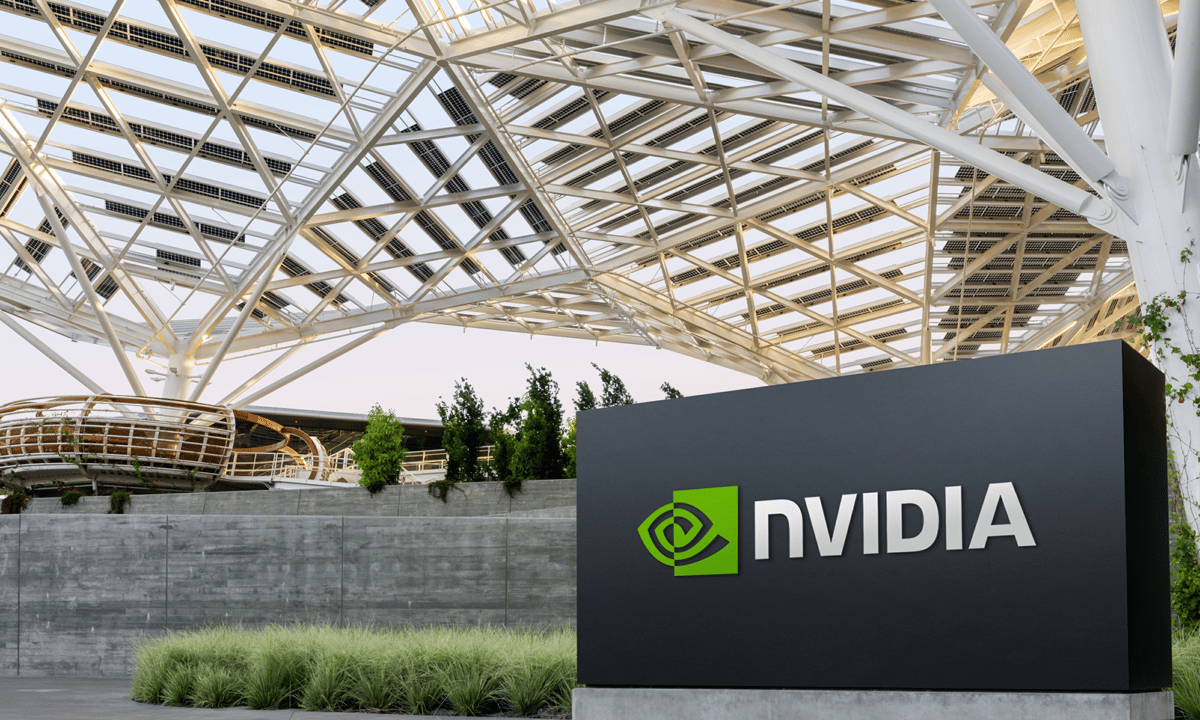
Nvidia's recent $2 billion investment in Marvell Technology has dominated headlines as a strategic move to strengthen data center AI infrastructure through NVLink Fusion. However, a quieter but potentially equally significant development is emerging from Nvidia's $1 billion commitment to Nokia—a company few investors associate with artificial intelligence. This investment in Nokia's AI-native radio access network (RAN) platform positions the Finnish telecommunications equipment manufacturer as an overlooked beneficiary of the explosive growth in edge AI infrastructure, fundamentally reshaping how investors should view the AI ecosystem beyond the obvious chip and GPU plays.
The timing and structure of these investments reveal Nvidia's sophisticated strategy to dominate not just data center AI, but the entire infrastructure layer supporting artificial intelligence deployment. While Marvell Technology ($MRVL) has received substantial investor attention for its role in data center interconnectivity, Nokia ($NOK) remains trading around $10 per share with minimal analyst coverage of its AI infrastructure transformation. This discrepancy presents a compelling opportunity for investors seeking exposure to complementary AI infrastructure beneficiaries.
The Strategic Investments and Market Opportunity
Nvidia's dual investments demonstrate the breadth of infrastructure required to support enterprise AI deployment:
- Marvell Technology Investment: $2 billion commitment strengthening data center AI infrastructure through NVLink Fusion technology, enabling better connectivity between processors and accelerators
- Nokia Investment: $1 billion backing for AI-native radio access network platform development
- Total Edge AI Market Size: Estimated to reach $200 billion by 2030, representing a compound annual growth rate significantly outpacing traditional telecom infrastructure
- Nokia's Current Trading Price: Approximately $10 per share, with limited institutional focus on its AI transformation narrative
Nokia's pivot from a commoditized telecommunications equipment provider to an AI infrastructure player addresses a critical gap in the market. The edge AI opportunity—processing artificial intelligence computations closer to data sources rather than in centralized cloud data centers—requires sophisticated radio access networks capable of handling real-time, low-latency AI workloads. This is precisely where Nokia's 5G and 6G infrastructure expertise becomes valuable in the AI era.
The $1 billion investment from Nvidia represents more than a financial injection; it signals strategic validation. Nvidia CEO Jensen Huang and his team have demonstrated exceptional capital allocation skills in identifying which infrastructure layers will prove essential as AI deployment accelerates. By backing Nokia's AI-native RAN platform, Nvidia is essentially acknowledging that the next trillion dollars of AI infrastructure spending cannot be confined to data center chips alone—the networks connecting these systems matter fundamentally.
Market Context: Why This Matters Now
The broader context amplifies the significance of Nokia's positioning. The telecommunications infrastructure industry has faced secular headwinds for years, with traditional carriers viewing network infrastructure as a cost center rather than a profit driver. Nokia has struggled with investor skepticism regarding its future relevance in an increasingly software-defined, cloud-native world. However, the emergence of edge AI computing fundamentally changes this narrative.
Key market dynamics supporting this thesis:
- Data Center Saturation: Hyperscalers like Amazon, Microsoft, and Google are approaching physical and economic limits on data center expansion, making edge computing increasingly attractive for distributed AI inference
- Latency Requirements: Real-time AI applications in autonomous vehicles, industrial automation, and smart city infrastructure require sub-10 millisecond latencies that edge networks can provide
- Regulatory Tailwinds: Government AI initiatives and digital sovereignty concerns are driving investment in diverse infrastructure suppliers, reducing reliance on concentrated providers
- 5G/6G Deployment Cycles: Existing 5G networks are being retrofitted for AI workloads, creating multi-year upgrade cycles for companies like Nokia
Compare this to the competitive landscape: Ericsson ($ERIC) and Huawei dominate traditional RAN markets, but neither has Nvidia's explicit backing for AI-native platforms. Cisco Systems ($CSCO) and Juniper Networks ($JNPR) offer edge computing capabilities, but lack Nokia's integrated RAN expertise. This creates a unique positioning for Nokia as the primary beneficiary of Nvidia's edge AI infrastructure strategy.
Investor sentiment toward Nokia has remained tepid despite these structural improvements. The company's historical struggles, including its catastrophic miss in smartphone markets, have created lasting reputational damage. Institutional investors often view Nokia as a value trap rather than a transformation story. This perception gap between fundamental opportunity and market valuation creates potential asymmetric upside for contrarian investors willing to challenge consensus.
Investor Implications and Valuation Considerations
For equity investors, Nokia's emerging role in edge AI infrastructure presents several compelling angles:
Direct Investment Case:
- $10 stock price offers accessibility and lower volatility compared to Nvidia ($NVDA) trading in the $800+ range
- Nvidia's $1 billion commitment provides de facto validation and potential for expanded partnership expansion
- $200 billion edge AI market opportunity by 2030 could drive substantial revenue growth if Nokia captures 5-10% market share
- Potential for institutional investor rerating once AI narrative gains traction in equity research coverage
Portfolio Complementarity: Investors already holding Nvidia and Marvell Technology can use Nokia to construct a more complete AI infrastructure exposure. While Nvidia dominates processing power and Marvell addresses data center interconnectivity, Nokia captures the network layer—completing the infrastructure stack. This diversification reduces concentration risk in semiconductor suppliers who face potential cyclicality and capacity constraints.
Valuation Perspective: Nokia's current valuation remains significantly depressed relative to revenue growth prospects. Traditional telecom equipment peers like Ericsson trade at higher multiples despite similar or lower growth profiles. As institutional recognition of the edge AI opportunity spreads, mean reversion could drive substantial multiple expansion before revenue growth even accelerates materially.
However, investors must acknowledge risks. Nokia's execution track record on major strategic pivots remains questioned by markets. The company must successfully develop and commercialize AI-native RAN capabilities before capturing meaningful market share. Competitive responses from Ericsson, Huawei, and cloud-native startups could limit upside. Regulatory uncertainty around Chinese technology restrictions could also create unpredictable headwinds for global infrastructure deployments.
Forward Outlook and Strategic Significance
The $1 billion investment from Nvidia in Nokia likely represents just the beginning of a strategic partnership. As edge AI infrastructure deployment accelerates through 2025-2030, successful network equipment providers will capture substantial value creation. Nokia's transformation from a commoditized telecom legacy player to a critical AI infrastructure enabler remains underappreciated by market participants fixated on semiconductor stocks.
The real winner analysis proves more nuanced than typical binary thinking suggests. Both Marvell Technology and Nokia are genuine beneficiaries of Nvidia's infrastructure strategy, but Nokia's lower profile, depressed valuation, and larger addressable market opportunity create a more compelling risk-reward proposition for contrarian investors. As the market increasingly recognizes that AI infrastructure extends far beyond chips, companies like Nokia positioned at network layer intersections may deliver outsized returns to patient investors willing to think beyond the obvious semiconductor narratives dominating current market discourse.