
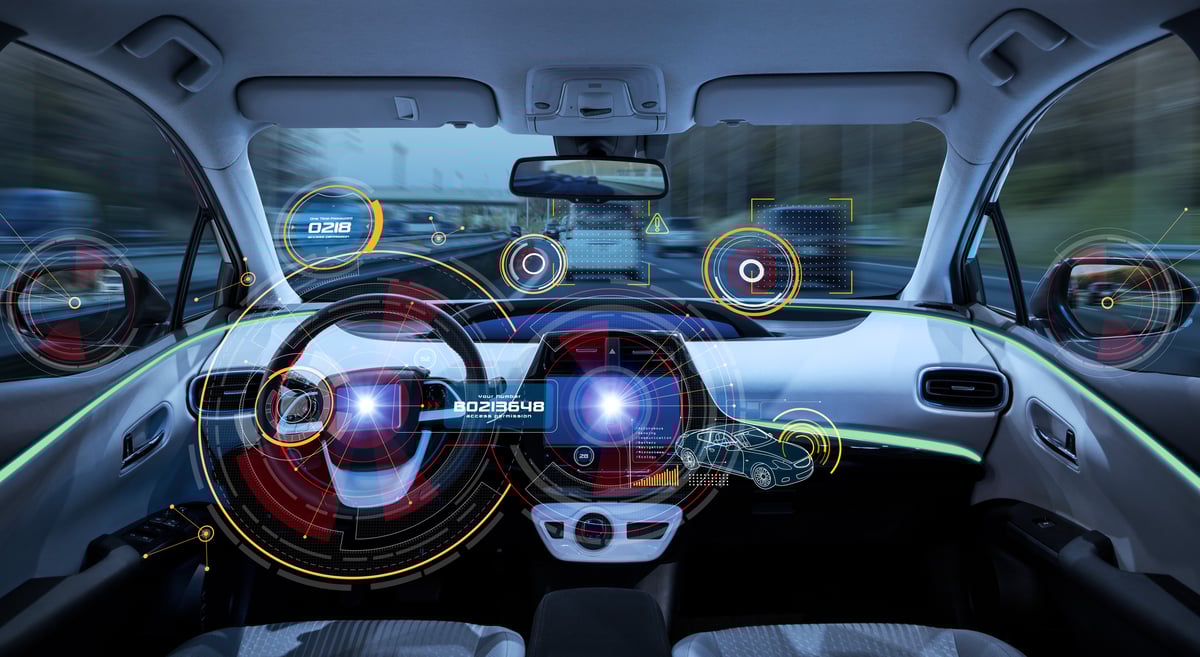
The Robotaxi Bet: Why Tesla's $TSLA Valuation Hinges on Autonomous Gamble
Tesla's ambitious Robotaxi service has become increasingly central to the electric vehicle manufacturer's long-term valuation narrative, yet the autonomous vehicle venture carries substantial execution risk that could dramatically reshape investor sentiment. Should the service fail to meet expectations, analysts warn that $TSLA could face a significant valuation rerating despite the company's core electric vehicle and energy storage businesses remaining operationally sound. The gap between market expectations and technological reality represents one of Wall Street's most consequential bets in the automotive sector.
The Technical and Market Challenges Ahead
The obstacles confronting Tesla's Robotaxi ambitions are both technical and commercial in nature. The autonomous driving technology required to safely navigate complex urban environments—handling unpredictable weather conditions, dense traffic patterns, and novel scenarios—remains unproven at scale. Tesla must overcome significant hurdles:
- Technological limitations in handling edge cases and complex driving scenarios that fall outside the parameters of existing training data
- Regulatory hurdles requiring approval from federal and state authorities across multiple jurisdictions
- Safety validation demanding extensive real-world testing to demonstrate reliability exceeding human drivers
- Infrastructure dependencies including high-quality mapping, connectivity, and computational systems
Beyond the engineering challenges, Tesla faces formidable competition from entrenched players in the mobility space. Waymo, backed by Alphabet ($GOOGL), has already deployed limited robotaxi services in select markets and possesses decades of autonomous vehicle research. Traditional ride-hailing platforms like Uber ($UBER) and Lyft ($LYFT) maintain massive user networks, brand recognition, and existing infrastructure that would prove difficult for any new entrant to displace. Additionally, legacy automakers including General Motors ($GM) and Ford ($F) are investing billions in autonomous vehicle development, ensuring competition will intensify rather than diminish.
Consumer adoption presents another critical uncertainty. Premium autonomous ride-sharing services may struggle to find sufficient demand if pricing cannot undercut traditional taxi and ride-hailing alternatives, or if consumer skepticism about autonomous safety limits ridership. The addressable market for Robotaxi services, while potentially enormous, remains speculative and unvalidated at commercial scale.
Market Context and Valuation Implications
Tesla's current market valuation significantly exceeds that of traditional automakers on a per-vehicle basis, a premium almost entirely justified by investor expectations for growth beyond conventional automotive manufacturing. The company's market capitalization increasingly reflects anticipated future revenues from Robotaxi operations, energy storage solutions, and other autonomous services rather than current profitability from vehicle sales alone.
This valuation structure creates an asymmetric risk profile for shareholders. Tesla's core EV business—currently the company's primary revenue generator—remains viable and competitive, with the company maintaining significant market share advantages in premium electric vehicles and expanding capacity globally. Energy storage and solar operations, while smaller, represent genuine growth markets with favorable long-term tailwinds.
However, the market has priced in substantial upside from Robotaxi services that have not yet materialized commercially. If Tesla fails to deliver a compelling autonomous ride-sharing product, or if adoption proceeds more slowly than anticipated, the company would face forced valuation compression. Investors who have bid up $TSLA expecting Robotaxi revenues would likely reassess the stock based on a more conservative set of assumptions aligned with traditional automotive economics.
The competitive landscape has intensified significantly. Waymo's early mover advantage in select markets, combined with Alphabet's capital resources and AI expertise, positions a formidable competitor. Meanwhile, Cruise (owned by General Motors), despite recent setbacks, continues developing autonomous technology. Chinese competitors including Baidu ($BIDU) have also achieved notable progress in autonomous vehicle deployment domestically.
Investor Implications and Valuation Scenarios
The Robotaxi risk directly impacts how investors should value Tesla equity today. Institutional investors must grapple with a fundamental question: what portion of $TSLA's current valuation should be discounted for Robotaxi execution risk?
Consider potential scenarios:
- Success Case: Robotaxi generates substantial revenues within 3-5 years, justifying current valuation multiples and supporting further upside
- Partial Success Case: Service launches but captures smaller-than-expected market share due to competition or adoption headwinds, supporting modestly higher valuations than core EV business alone
- Failure Case: Service fails to achieve commercial viability or faces indefinite delays, forcing valuation to compress toward legacy automotive comparables
In the failure scenario, $TSLA would likely trade on earnings multiples closer to traditional automakers, particularly if the company has made substantial capital investments in Robotaxi development without commercial returns. This could represent 40-60% downside from current valuations, depending on the stock price at the time of failure recognition.
Conversely, if Tesla successfully deploys Robotaxi at scale with acceptable unit economics, the business model could prove transformative, potentially justifying valuations significantly above current levels. The asymmetric nature of this bet—large downside if execution fails, potentially massive upside if successful—explains why $TSLA remains one of the most debated stocks among institutional investors.
Risk-conscious investors should carefully evaluate the probability-weighted outcome of Robotaxi success versus their confidence in management's ability to execute. Those with lower conviction in autonomous vehicle commercialization, or those concerned about Tesla's competitive position relative to Waymo and other competitors, may view the current valuation as leaving insufficient margin of safety for Robotaxi failure scenarios.
Looking Forward: The Critical Years Ahead
The next 18-36 months will prove pivotal for validating or disproving Robotaxi feasibility. Meaningful deployment milestones—commercial service launches, scaled ridership numbers, demonstrated unit economics, and regulatory approvals—will provide concrete data for investors to reassess the opportunity. Until then, $TSLA investors remain significantly exposed to the success or failure of an unproven business model, despite the company's validated strengths in EV manufacturing and energy storage. The market's verdict on Robotaxi will ultimately determine whether Tesla maintains its premium valuation or faces substantial multiple compression.