
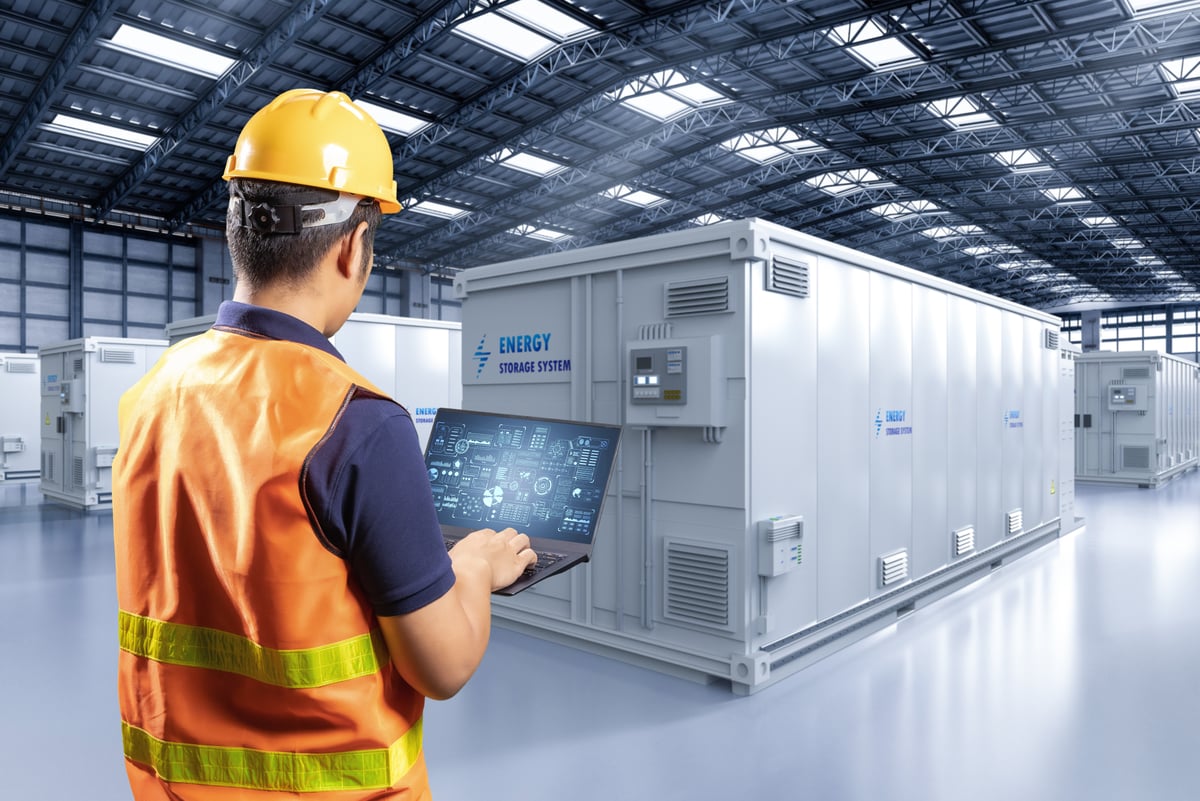
$BE stock jumped nearly 20% following an expanded partnership with Oracle to supply fuel cells for artificial intelligence data centers, capitalizing on a historic infrastructure investment wave sweeping the technology sector.
Bloom Energy Corporation ($BE), a manufacturer of solid oxide fuel cell technology, has emerged as a prime beneficiary of the massive computational infrastructure buildout required to support artificial intelligence applications. The company's stock surge reflects investor confidence in its ability to capture a significant portion of the enormous capital expenditures being deployed across the tech industry to support AI capabilities. This development signals a potential inflection point for specialized energy infrastructure providers positioned at the intersection of artificial intelligence and power generation.
The Deal and Growth Trajectory
Oracle's expanded commitment represents a substantial validation of Bloom Energy's fuel cell technology as a viable solution for data center power demands. The agreement calls for $BE to supply up to 2.8 gigawatts of fuel cells, a massive order that underscores the critical role efficient, clean power generation plays in supporting energy-intensive AI computing operations. This partnership reflects a broader industry recognition that traditional grid infrastructure may struggle to meet the unprecedented power requirements of next-generation data centers.
The financial projections accompanying this momentum are compelling:
- Revenue expected to reach $3.2 billion, representing 56% year-over-year growth
- Backlog totaling $20 billion, providing substantial visibility into future revenue streams
- Long-term positioning within the multi-billion-dollar data center power infrastructure market
These figures suggest Bloom Energy is transitioning from a niche clean energy player into a core infrastructure provider for the AI era. The $20 billion backlog is particularly significant, as it provides management with exceptional clarity on near-to-medium-term revenue generation and allows for efficient capital allocation and workforce planning.
Market Context: The AI Infrastructure Supercycle
The broader technology sector is investing unprecedented capital in AI infrastructure, with major companies planning to deploy over $625 billion on AI-related infrastructure during the current year alone. This spending surge represents one of the most significant industrial buildouts in recent technology history, comparable to the fiber optic internet expansion of the late 1990s or the smartphone infrastructure build of the 2010s.
Companies including Meta, Google, Amazon, and other hyperscalers are racing to secure computational capacity to support their artificial intelligence ambitions. This competitive dynamic has created acute power supply challenges, as data centers require increasingly reliable, efficient, and scalable power sources. Traditional power infrastructure often cannot keep pace with demand, creating opportunities for innovative energy technology providers.
Bloom Energy's fuel cell technology addresses critical pain points in the data center power equation:
- High efficiency reduces operational costs and environmental impact
- Distributed generation capability enables on-site power production, reducing grid dependency
- Rapid deployment allows data center operators to scale capacity faster than traditional infrastructure upgrades
- Clean energy credentials align with corporate sustainability commitments increasingly important to investors and customers
The regulatory environment has also become favorable for clean energy infrastructure providers. Government incentives, corporate net-zero commitments, and growing recognition of climate-related risks have all strengthened demand for efficient, low-carbon power generation solutions. Bloom Energy benefits directly from this confluence of market forces, regulatory support, and unprecedented capital availability.
Investor Implications and Competitive Position
For shareholders, the Oracle agreement and associated financial projections represent validation that Bloom Energy has successfully transitioned from a speculative clean energy play into a provider of essential infrastructure. The combination of 56% revenue growth, a substantial multi-billion-dollar backlog, and a clear pathway to profitability at scale makes $BE increasingly attractive to growth-oriented investors seeking exposure to artificial intelligence infrastructure trends.
The competitive landscape remains fragmented, with traditional power generation providers, renewable energy companies, and emerging fuel cell manufacturers all competing for data center power contracts. However, Bloom Energy's established track record, existing installations, and manufacturing capacity provide meaningful competitive advantages. The company's ability to secure the Oracle partnership ahead of competitors suggests superior technology performance, cost competitiveness, or superior customer relationships—or likely some combination of all three.
Investor returns ultimately depend on whether Bloom Energy can convert its substantial backlog into profitable revenue while maintaining or expanding gross margins. The capital-intensive nature of fuel cell manufacturing means that achieving scale while managing costs will be critical. Additionally, the company must navigate supply chain challenges, retain manufacturing and engineering talent, and maintain technological differentiation as larger industrial companies inevitably enter the data center power market.
The broader market implications are significant. Success by $BE suggests that specialized infrastructure providers positioned at major technological inflection points can generate outsized returns. This dynamic may encourage investors to identify other companies serving similar niches—companies providing cooling systems, power distribution equipment, or other critical data center infrastructure components essential to the AI buildout.
Looking Forward
Bloom Energy's surge represents more than a single company benefiting from favorable market conditions. It reflects a fundamental shift in how the global economy powers itself, driven by artificial intelligence's enormous computational requirements. The $625 billion investment in AI infrastructure this year alone suggests this trend is in early innings, with years of sustained capital expenditures likely to follow.
For investors, the critical questions moving forward involve whether Bloom Energy can maintain its current technological edge, whether gross margins remain stable as production scales, and whether the company can secure sufficient capital to expand manufacturing capacity in line with demand. The company's trajectory over the next 2-3 years will likely serve as a bellwether for whether specialized infrastructure providers can thrive in the AI era, or whether larger diversified industrial companies will consolidate this market.
The 20% stock surge reflects justified optimism about Bloom Energy's near-term prospects and the enormous opportunities before it. However, converting opportunity into sustainable, profitable growth requires flawless execution in manufacturing, supply chain management, and customer relations—challenges that have historically tripped up companies that grew too quickly.