
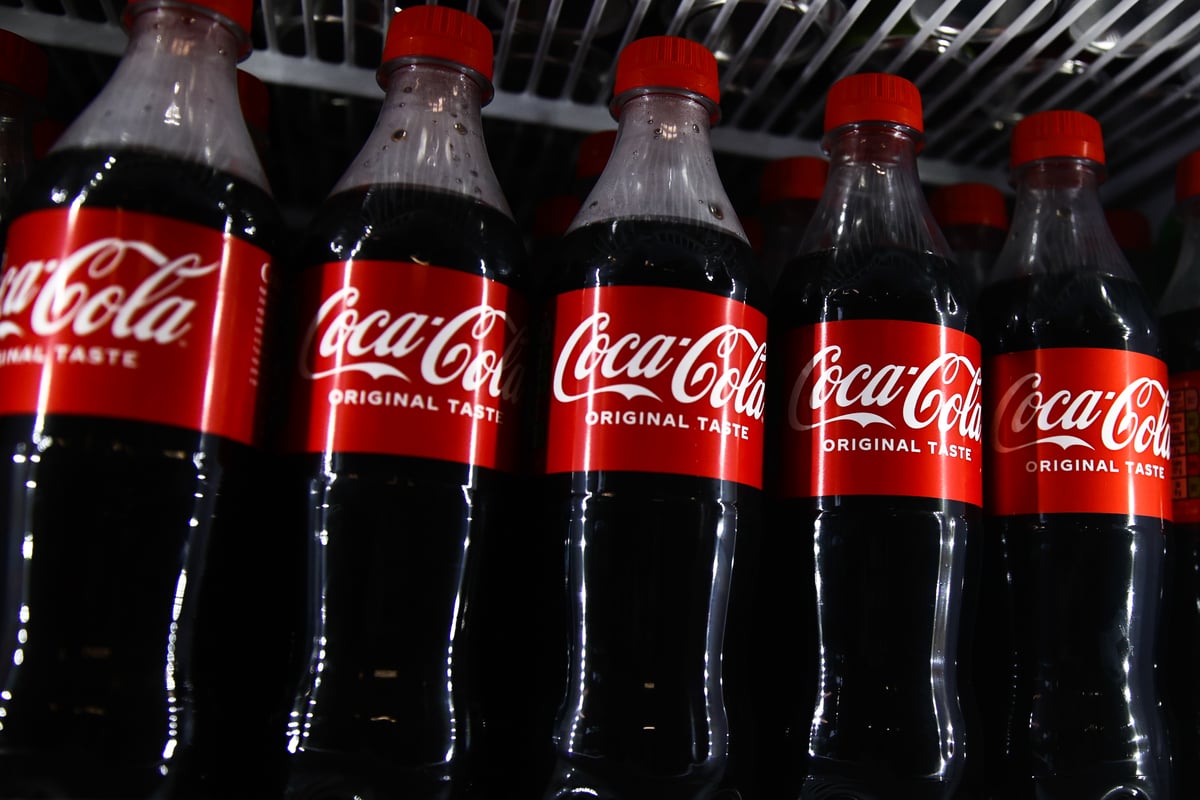
Coca-Cola's Dividend Fortress Faces Growth Test in Volatile 2026 Markets
As financial markets navigate significant turbulence in 2026, Coca-Cola ($KO) has emerged as a defensive haven for risk-averse investors seeking portfolio stability. The beverage giant's combination of consistent profitability, an unmatched 64-year dividend growth streak, and fortress-like brand moat offers a compelling counterbalance to market volatility—yet its historical underperformance against broader indices raises critical questions about growth aspirations.
A Defensive Powerhouse in Uncertain Times
Coca-Cola represents one of the market's most reliable dividend stories, with six decades of consecutive annual dividend increases cementing its status among the elite dividend aristocrats. The company's ability to maintain profitability and shareholder distributions through multiple market cycles reflects the resilience of its business model and the enduring appeal of its global brand portfolio.
Key attributes making Coca-Cola attractive in volatile markets include:
- 64-year consecutive dividend growth streak, one of the longest in corporate history
- Strong brand moat protecting market share and pricing power across 200+ countries
- Consistent profitability despite macroeconomic headwinds and competitive pressures
- Low-maintenance business model generating steady cash flows with minimal operational surprises
- Defensive characteristics typical of consumer staples that maintain demand regardless of economic conditions
These fundamentals make $KO particularly attractive for investors prioritizing capital preservation and income generation over capital appreciation. During periods of market turmoil, dividend-focused strategies have historically outperformed growth-oriented approaches, providing both psychological comfort and tangible returns to long-term holders.
The Growth Conundrum: Underperformance Against Broader Markets
However, Coca-Cola's stability comes with a significant trade-off: historical returns have substantially underperformed the S&P 500 over extended periods. This performance gap reflects the mature nature of the beverage industry, limited geographic expansion opportunities, and the company's saturated core markets in developed economies.
Investors comparing $KO to the broader market benchmark face a classic risk-return trade-off:
- S&P 500: Higher historical returns with elevated volatility and broader sector exposure
- Coca-Cola: Lower returns with reduced volatility and predictable income streams
For investors seeking growth acceleration, Coca-Cola's portfolio of brands—while globally dominant—may appear insufficient in an era favoring technology, healthcare innovation, and emerging market exposure. The company's efforts to diversify beyond carbonated soft drinks into water, sports beverages, and premium segments address this concern but have yet to fundamentally alter its growth trajectory relative to the broader market.
Market Context: The Competitive and Structural Landscape
The beverage industry faces secular headwinds that contextualize Coca-Cola's measured growth outlook. Changing consumer preferences toward healthier drinks, regulatory pressures on sugar content, and the rise of energy drinks and premium beverages have fragmented the market that $KO once dominated with relative ease.
The competitive landscape has intensified significantly:
- PepsiCo ($PEP) has successfully diversified into snacks, reducing beverage dependence
- Monster Beverage ($MNST) and Red Bull capture significant market share in the high-growth energy drink segment
- Private label and regional brands erode market share in developed markets
- Emerging market growth remains constrained by currency volatility and economic uncertainty
Regulatory pressures have mounted globally, with governments implementing sugar taxes, implementing stricter advertising restrictions for sugary beverages, and promoting nutritional transparency. These developments directly impact Coca-Cola's core products and profit margins, necessitating ongoing portfolio innovation and reformulation investments.
Despite these headwinds, Coca-Cola maintains unparalleled distribution networks, pricing power rooted in brand equity, and scale advantages that competitors struggle to replicate. The company's 2026 positioning reflects both the strength of its legacy business and the constraints of operating within mature, increasingly regulated markets.
Investor Implications: Portfolio Role and Allocation Strategy
For different investor profiles, Coca-Cola serves distinctly different purposes:
For Risk-Averse, Income-Focused Investors: $KO functions as portfolio ballast—a reliable, low-volatility holding that generates predictable dividend income. The 64-year dividend growth track record provides confidence in continued distributions, making it ideal for retirees and conservative allocation strategies. In volatile markets, this stability prevents forced selling at unfavorable prices and preserves capital.
For Growth-Oriented Investors: $KO appears unsuitable as a core holding, given its historical underperformance against the S&P 500. Investors prioritizing capital appreciation would better allocate capital to sectors offering higher growth potential, whether in technology, healthcare, or emerging market exposure. Coca-Cola may occupy only a tactical or defensive position within such portfolios.
For Balanced Portfolios: $KO merits consideration as a portfolio diversifier that provides non-correlated returns to growth equities and reduces overall volatility. Its defensive characteristics typically shine during market downturns when growth stocks experience acute pressure, making it a useful hedge component.
The critical question for 2026 investors involves determining what portfolio role Coca-Cola should occupy given current market conditions, interest rate environment, and individual risk tolerance. In a volatile market, its appeal is heightened; during periods of economic expansion and risk appetite, its attractiveness diminishes relative to higher-growth alternatives.
The Verdict: Situation-Dependent Investment Merit
Coca-Cola in 2026 exemplifies the classic tension between growth and stability in portfolio construction. The company's unmatched dividend aristocrat status, global brand dominance, and defensive characteristics make it an appropriate holding for investors emphasizing income and capital preservation—particularly during turbulent market periods.
Conversely, $KO remains suboptimal for investors seeking capital appreciation comparable to broader market indices. Its mature market position, constrained growth outlook, and competitive pressures suggest that growth-focused portfolios should allocate capital elsewhere.
Ultimately, the buy-sell-hold decision depends entirely on individual circumstances: a buy for conservative investors building dividend income foundations, a hold for existing shareholders benefiting from 64 years of dividend growth, and a sell or avoid for growth-focused managers seeking superior capital appreciation. As market volatility persists in 2026, Coca-Cola's defensive merits likely outweigh its growth limitations for many investors—but this advantage proves temporary once market conditions normalize and risk appetite returns.