
Vistra Stock Plunges 25% Amid Regulatory Fears—Here's the Contrarian Bull Case
Vistra Energy, one of America's largest independent power producers, has experienced a sharp 25% decline from its 52-week highs as investor sentiment sours over regulatory headwinds and elevated scrutiny of the company's lucrative data center power deals. Yet beneath the selling pressure lies a compelling narrative for contrarian investors: a fortress balance sheet, strategic nuclear assets, and long-term contracts with some of the world's most capital-rich technology companies betting on artificial intelligence infrastructure. The question facing the market isn't whether $VST is broken—it's whether the current valuation reflects an overblown regulatory risk or a genuine structural shift in the industry.
The selloff reflects a convergence of near-term concerns that have rattled energy investors broadly. Regulatory chatter about potential electricity price caps and heightened political scrutiny of data center proliferation has clouded the investment thesis. Large institutional holders have trimmed positions, and retail investors have followed suit, creating a vicious cycle of negative momentum. Yet the underlying business fundamentals tell a markedly different story than the price action suggests.
The Overlooked Strength: Nuclear Assets and Long-Term Contracts
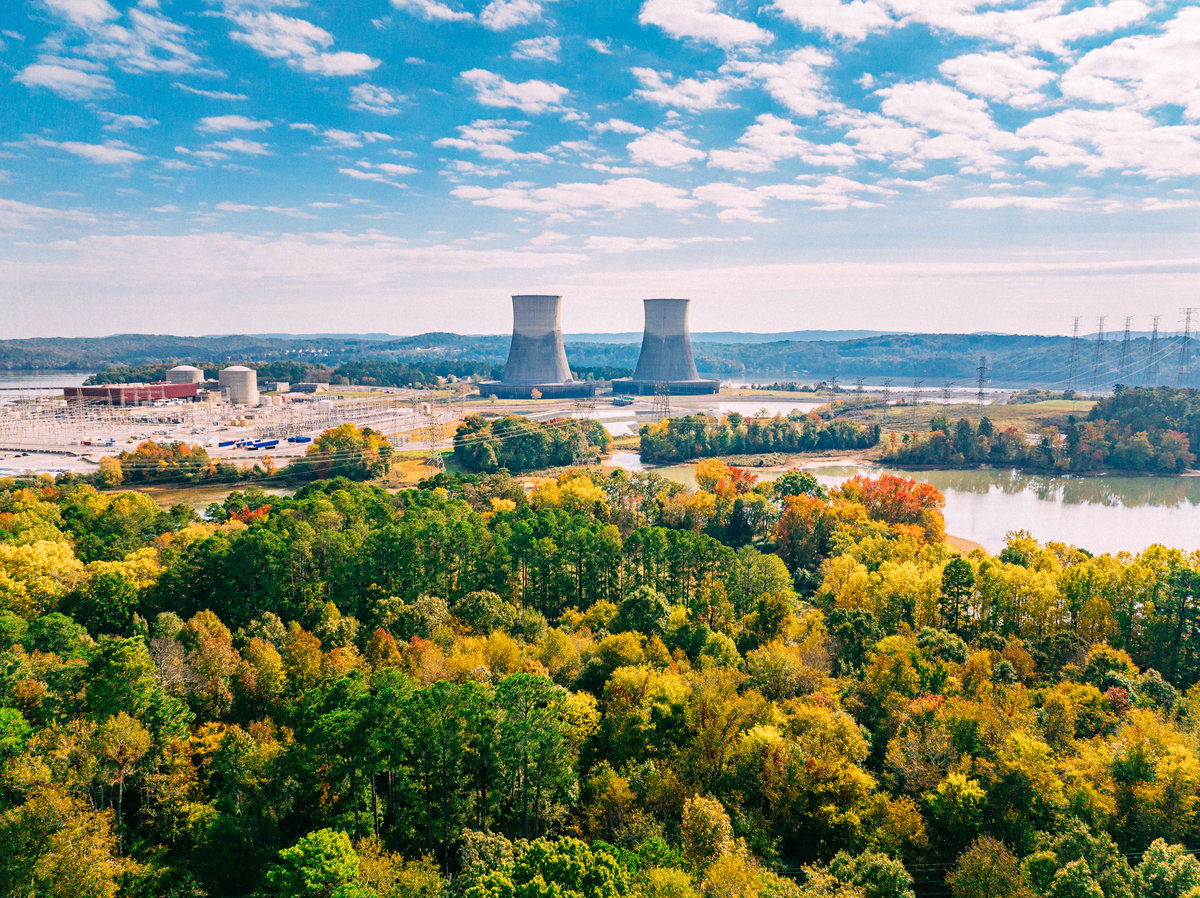
Vistra Energy operates one of the most enviable asset portfolios in the independent power generation space. The company maintains substantial nuclear capacity, a cornerstone advantage in an era where power demand is accelerating due to AI data centers, electrification of transportation, and industrial expansion. Nuclear power plants operate with minimal marginal costs once constructed, generating high-margin, stable cash flows that provide a buffer against commodity price volatility.
More critically, Vistra has secured long-term power purchase agreements (PPAs) with major technology giants seeking reliable, carbon-free electricity for their data center operations. These aren't speculative contracts—they represent binding commitments from companies with fortress balance sheets and unlimited capital budgets:
- Microsoft, Google, Meta, and other hyperscalers are locked into multiyear agreements to purchase power from Vistra facilities
- These PPAs feature fixed or floor pricing mechanisms, providing revenue predictability regardless of wholesale electricity market conditions
- The agreements are structured to span 10+ years, providing long-duration cash flow visibility rare in power generation
The economics are compelling: as demand for AI training and inference infrastructure explodes, these contracts essentially provide Vistra with a dedicated customer base of companies that will pay premium prices for guaranteed, clean power supply.
Strategic Growth: The Cogentrix Acquisition
Underscoring management's confidence in the data center thesis, Vistra announced plans to acquire Cogentrix Energy, a transaction designed to expand the company's generation capacity specifically to serve the booming AI infrastructure market. The acquisition represents a calculated bet that electricity demand from data centers will remain structurally elevated for decades, not a cyclical spike.
Key aspects of the acquisition strategy:
- Cogentrix's assets complement Vistra's existing portfolio, providing geographic diversification and additional baseload capacity
- The deal is explicitly framed around meeting growing AI data center electricity demand, aligning acquisition strategy with secular tailwinds
- Combined entity will possess enhanced ability to compete for large corporate PPA contracts with premium pricing power
This isn't a desperate scramble—it's proactive capital deployment into assets that match long-term demand fundamentals.
Market Context: Why Regulatory Fears May Be Overblown
The Regulatory Backdrop
The current regulatory anxiety stems from several sources. Political pressure on electricity price caps has intensified as some policymakers blame high power costs on independent generators capturing windfall profits. Additionally, concerns about data center proliferation straining electrical grids have triggered local and state-level scrutiny that could potentially restrict new projects.
However, several factors suggest these risks may be priced too severely into $VST:
- Long-term PPAs already signed insulate Vistra from future price cap regulations—existing contracts typically include grandfather clauses or force majeure provisions protecting the company from retroactive price controls
- Data center demand is structural, not cyclical. AI infrastructure buildout is in its infancy. No credible policy proposal would completely halt data center electricity access without destroying national competitiveness in AI
- Regulatory capture and stakeholder pressure favor reliable, established operators like Vistra over new entrants. The company's relationships with major tech firms provide political insulation
- Nuclear power is increasingly viewed favorably by regulators as a climate solution, potentially protecting Vistra's most valuable assets from adverse regulatory treatment
Competitive Landscape
The independent power generation sector includes competitors like NextEra Energy, Duke Energy, and American Electric Power, but few possess Vistra's combination of nuclear baseload assets, data center customer concentration, and growth-oriented management. Most traditional utilities are hamstrung by regulatory frameworks that cap returns; Vistra operates in a different competitive set, competing directly for corporate power contracts rather than relying on regulated rate-of-return models.
Investor Implications: A Risk-Reward Asymmetry
The 25% decline from 52-week highs creates an asymmetric risk-reward profile for disciplined investors:
Downside scenarios:
- Aggressive price cap legislation retroactively reducing returns on existing contracts (low probability given contract protections)
- Data center demand disappointment if AI capex cycles slow faster than expected (contradicted by current tech company guidance)
- Margin compression from renewable energy oversupply dynamics (partially mitigated by Vistra's nuclear focus)
Upside catalysts:
- Revenue acceleration as additional data center PPAs are executed at premium pricing
- Margin expansion as renewable costs fall and Vistra's nuclear fleet becomes increasingly valuable relative to high-cost peaking capacity
- M&A activity or activist investor pressure could unlock asset value or accelerate capital returns
- Regulatory clarity that alleviates price cap fears and reignites investor interest
For long-term investors with conviction in AI infrastructure buildout and power demand growth, current prices likely offer compelling risk-adjusted returns. The market is pricing in a regulatory apocalypse scenario that appears unlikely given contract protections and political-economic realities. Vistra trades at a discount to historical multiples while maintaining visibility into double-digit earnings growth from data center PPAs.
Forward Outlook: Positioning for the Next Cycle
The next 12-24 months will determine whether the market's pessimism was justified or excessive. Key milestones include Cogentrix acquisition completion, additional major corporate PPA announcements, and regulatory developments at both federal and state levels. If, as expected, data center electricity demand remains robust and regulatory risks prove manageable, $VST could recapture lost ground quickly. Current shareholders who panic-sold may regret the decision; new investors entering at depressed valuations may find substantial appreciation potential.
Vistra Energy represents a classic contrarian opportunity: a fundamentally sound business with visible long-term growth drivers suffering temporary valuation suppression due to regulatory headline risk. The crowd's dumping may ultimately prove to be the generational entry point for those willing to think beyond the cycle.