
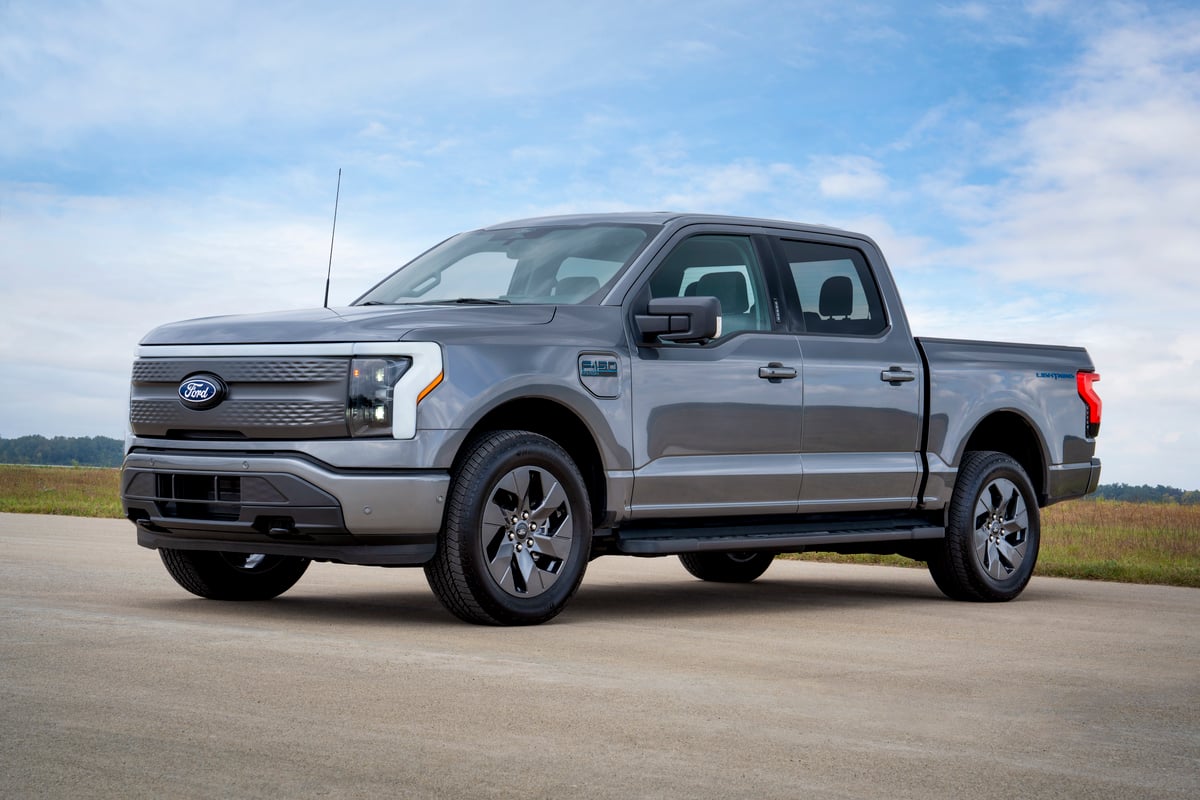
Ford's Electric Vehicle Market Share Crumbles
Ford Motor Company ($F) faces a critical inflection point in the electric vehicle market, having surrendered its position as America's second-largest EV seller to competitors including Toyota, General Motors, and Hyundai. The Detroit automaker sold just 6,860 electric vehicles in the first quarter of 2026, representing a staggering 70% year-over-year decline that underscores the deepening challenges facing legacy automakers in the EV transition.
The loss of Ford's No. 2 ranking marks a dramatic reversal for a company that once positioned itself as a serious EV contender. The collapse is particularly striking given that Toyota achieved this outsale using only a single model, highlighting the efficiency gap between established EV specialists and traditional automakers struggling with electrification. For investors, the data raises fundamental questions about Ford's execution strategy, capital allocation, and ability to compete in an increasingly crowded electric vehicle marketplace dominated by Tesla, Chinese manufacturers, and aggressive competitors from Asia and Europe.
The Numbers Behind the Decline
Ford's Q1 2026 EV sales tell a sobering story about market dynamics and competitive positioning:
- Q1 2026 EV Sales: 6,860 units
- Year-over-Year Decline: 70%
- Market Position Lost: Dropped from No. 2 to outside the top three
- Key Competitors Now Outselling: Toyota (single model), General Motors, Hyundai
The 70% quarterly decline represents more than statistical noise—it signals fundamental market rejection or logistical failure in Ford's EV lineup. When a competitor like Toyota can outsell Ford's entire EV portfolio with a single model offering, it suggests either superior product-market fit, more efficient distribution, better pricing, or all three. This isn't a marginal competitive loss; it's a wholesale collapse of Ford's EV strategy as currently executed.
The deterioration comes at a particularly inopportune moment for Ford, which has invested billions in EV manufacturing capacity and committed to ambitious electrification targets. The company faces the dual burden of managing legacy internal combustion engine operations while simultaneously building competitive EV capabilities—a challenge that has proven extraordinarily difficult for traditional automakers across the industry.
Strategic Pivot and Future Expectations
Recognizing the severity of its market position, Ford is implementing a strategic course correction focused on affordability and hybrid technology. The company's revised approach emphasizes:
- Pivot toward more affordable EV models to capture price-sensitive consumers
- Increased emphasis on hybrid vehicles as a bridge technology
- Launch of a $30,000 mid-size electric pickup scheduled for 2027
The $30,000 price point represents a significant target for Ford, as it would position the vehicle in a competitive segment currently dominated by value-conscious buyers. If successfully executed, this pickup could address a critical gap in Ford's portfolio and capitalize on the brand's traditional strength in the truck market. However, the company faces substantial execution risk: delivering a profitable EV at that price point while competing against established players with more advanced battery technology and cost structures remains extraordinarily challenging.
Ford's strategy implicitly acknowledges that premium EV positioning failed to gain sufficient market traction, forcing a retreat to higher-volume, lower-margin segments. This approach mirrors strategies adopted by other legacy automakers but requires operational excellence and disciplined capital allocation—areas where Ford has struggled historically in its EV transition.
Market Context and Competitive Landscape
Ford's EV struggles must be understood within the broader automotive industry transformation. The global shift toward electrification has created winners and losers, with clear competitive advantages accruing to companies that achieved scale, battery supply chain advantages, or superior technology platforms earlier.
Tesla ($TSLA) maintains dominant market position through vertical integration and manufacturing efficiency. General Motors ($GM) has aggressively invested in EV platforms and secured favorable battery supply contracts. Hyundai ($HYUNDAI) has become an aggressive global EV competitor through dedicated EV platforms and strategic partnerships. Toyota ($TOYOTA), despite late-market entry, leverages its manufacturing reputation and capital resources effectively.
Ford entered this competition with genuine advantages—brand recognition, existing dealer networks, and substantial capital—but failed to convert these strengths into market leadership. The company's EV models have received mixed critical reception, facing criticism regarding range, charging infrastructure integration, and value proposition relative to competitors. Manufacturing delays, supply chain disruptions, and technology challenges have compounded Ford's difficulties.
The industry backdrop shows continued consolidation around EV leaders, with weaker competitors facing margin compression and market share losses. Ford's 70% quarterly decline suggests the company may be losing not just market share but actual customers who switch to competitors rather than simply delaying purchases.
Investor Implications and Stock Outlook
For Ford shareholders, the Q1 2026 data presents a material negative signal regarding the company's transformation trajectory. Several critical investment concerns emerge:
Execution Risk: Ford's ability to launch a competitive $30,000 electric pickup in 2027 remains unproven. Automotive history demonstrates that manufacturers frequently miss EV launch timelines and initial quality targets. Failure to deliver this model on schedule and within specifications would further damage Ford's credibility.
Profitability Concerns: EV sales at lower price points typically generate lower margins than traditional vehicles. If Ford can only regain market share through aggressive pricing and afford-ability positioning, overall profitability could face sustained pressure despite volume recovery.
Capital Efficiency: Ford's substantial EV investment has failed to produce competitive market position. Future capital deployment for additional EV facilities, retooling existing plants, or accelerating model launches carries elevated execution risk given demonstrated operational challenges.
Competitive Position: Losing the No. 2 ranking to Toyota and others signals that Ford's traditional competitive advantages—brand loyalty, dealer networks, truck expertise—have not successfully transferred to the EV market. This suggests structural rather than cyclical challenges.
The stock market has historically punished legacy automakers perceived as losing critical transitions. Ford's EV market share collapse could trigger multiple compression if investors lose confidence in management's ability to execute the turnaround strategy, particularly given the company's mixed track record with previous transformation initiatives.
Looking Ahead
Ford Motor Company faces a critical 18-month window to stabilize its EV position and rebuild investor confidence. The company's $30,000 electric pickup launch in 2027 represents a make-or-break moment—success could restore competitive credibility and market momentum, while failure would likely trigger more severe stock price deterioration and strategic reassessment.
The broader lesson for automotive investors: traditional automakers cannot simply apply legacy manufacturing excellence and brand power to win in EV markets. Those that fail to achieve technological parity, cost competitiveness, and customer preference in electric vehicles face rapid, potentially irreversible market share losses. Ford's 70% quarterly EV sales decline serves as a cautionary tale about the genuine disruption underway in the automotive industry and the limited time window remaining for legacy players to establish viable EV market positions.