
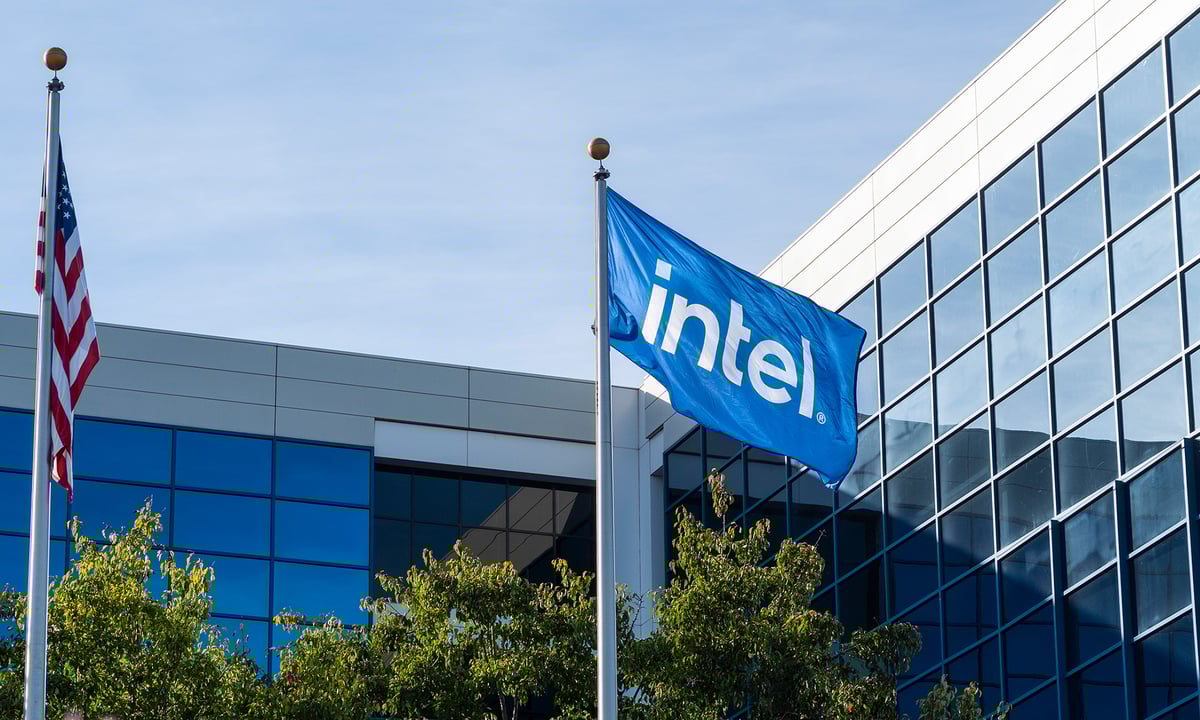
Intel's Remarkable Rally Defies Valuation Concerns
Intel ($INTC) has experienced a remarkable resurgence in the equity markets, with shares surging 66% since March 30, translating into an eye-popping addition of $137 billion in market capitalization. This extraordinary rally has positioned the semiconductor giant at the center of investor enthusiasm, driven primarily by a confluence of strategic partnerships and high-profile collaborations that signal a potential turnaround for the company. Yet beneath the surface of this bullish sentiment lies a troubling valuation picture that raises questions about whether the stock's explosive gains can be sustained.
The catalyst for Intel's remarkable ascent stems from two significant developments that have reignited confidence in the company's future. First, Google announced a strategic partnership with Intel for AI chip supply, signaling major tech companies' renewed interest in Intel's manufacturing capabilities at a critical moment when artificial intelligence demand is reshaping the semiconductor industry. Second, and perhaps more notably, Intel has become involved in Elon Musk's Terafab semiconductor project, a venture that has captured market imagination and positioned Intel as a key player in next-generation chip manufacturing innovation. These partnerships underscore Intel's potential to capture significant share of the expanding AI infrastructure market, which has become the primary growth driver across the semiconductor sector.
The Valuation Paradox: Growth Potential Meets Market Excess
While Intel's partnership announcements provide legitimate reasons for optimism, the stock's current valuation metrics present a starkly different narrative. The company trades at an extraordinary 904x trailing price-to-earnings ratio and an even more extreme 135x forward price-to-earnings ratio—valuations that typically appear in growth-stage technology companies rather than established semiconductor manufacturers with mature product lines. These multiples are not merely elevated; they represent historical extremes that leave little room for disappointment.
For context, these valuation levels suggest the market has priced in substantial operational improvements and earnings growth that must materialize for investors to justify current stock prices. The semiconductor industry's average forward P/E ratio typically ranges between 15x and 25x, depending on broader market conditions and growth expectations. Intel's current forward multiple is roughly five to nine times higher than peer averages, indicating the market has assigned a significant premium based on partnership potential and turnaround expectations.
The critical test arrives on April 23, when Intel will report its Q1 earnings results. This earnings announcement carries outsized importance because it will provide the first tangible evidence of whether the company's operational improvements match market expectations. Investors will scrutinize not only earnings per share and revenue figures but also management guidance, gross margins, and commentary on the Google and Terafab partnerships. A disappointing report could trigger a sharp correction, given how extended valuations have become.
Market Context: Semiconductor Industry in Transformation
Intel's resurgence must be understood within the broader context of the semiconductor industry's dramatic transformation driven by artificial intelligence adoption. The sector has experienced unprecedented demand for specialized chips capable of training and running large language models, creating opportunities for companies positioned to capture this growth. NVIDIA ($NVDA) and AMD ($AMD) have already capitalized on this trend, but the market remains interested in diversifying supply chains given geopolitical tensions and production bottlenecks.
Intel's partnerships with Google and involvement in Musk's Terafab project represent attempts to recapture relevance in this transformed landscape. For years, Intel has struggled with manufacturing challenges, design missteps, and competition from more agile rivals. The company's foundry ambitions—seeking to manufacture chips for other companies rather than relying solely on its own product lines—represent a structural shift in business model that could unlock significant value if executed successfully. However, Intel's track record executing such transformations has been inconsistent, tempering some enthusiasm among more skeptical investors.
The competitive landscape remains intensely challenging. NVIDIA continues to dominate AI chip markets with its CUDA software ecosystem and architectural advantages. AMD has made significant progress capturing server market share. Meanwhile, emerging competitors and specialized chip designers continue fragmenting the market. Intel must not only deliver competitive products but do so at scale and with superior profitability to justify its valuation premium.
Investor Implications: High Reward Paired with Significant Risk
For investors, Intel's current situation presents a classic risk-reward dilemma. Bulls argue that:
- Strategic partnerships with major technology companies validate Intel's technology and manufacturing capabilities
- The company's foundry ambitions could generate substantial new revenue streams
- Artificial intelligence demand creates multi-year tailwinds for semiconductor capacity expansion
- Potential government support for U.S. semiconductor manufacturing could provide additional revenue opportunities
Bears counter that:
- Valuation multiples leave minimal room for execution errors or delayed profitability
- Intel's historical difficulty delivering on transformational promises creates credibility concerns
- Competition from NVIDIA, AMD, and specialized chip designers continues intensifying
- Q1 earnings represent a crucial hurdle that could result in significant downside if disappointing
- The company's manufacturing challenges have persisted for years despite significant capital investment
Long-term investors should recognize that Intel's long-term growth prospects remain genuinely promising. The company possesses world-class manufacturing capabilities, enormous resources for R&D, and strategic partnerships that validate its direction. However, current valuations demand near-perfect execution, which has not historically been Intel's strength. The April 23 earnings report will provide critical evidence regarding whether the partnership announcements reflect genuine operational momentum or simply investor enthusiasm ahead of substantive results.
The $137 billion in market value added since March 30 represents investor optimism crystallizing around Intel's turnaround narrative. However, that narrative now must translate into earnings, margin improvement, and revenue growth. Until Intel demonstrates sustained operational progress, the stock's current valuation multiples will remain vulnerable to correction if the company disappoints on any material dimension.
Intel's rally has been remarkable, but the real test begins with Q1 results. Investors should approach current valuations with appropriate caution, recognizing that while Intel's long-term prospects may be genuine, the risk-reward calculus has shifted dramatically following the stock's recent surge. Success in the partnership initiatives, combined with solid Q1 earnings and credible forward guidance, would provide justification for holding current positions. Conversely, any stumble on earnings day could trigger the rapid unwinding of gains that appeared so certain just weeks ago.