
Pentagon's "Arsenal of Freedom" Becomes Defense Windfall as AI Dominates Military Strategy
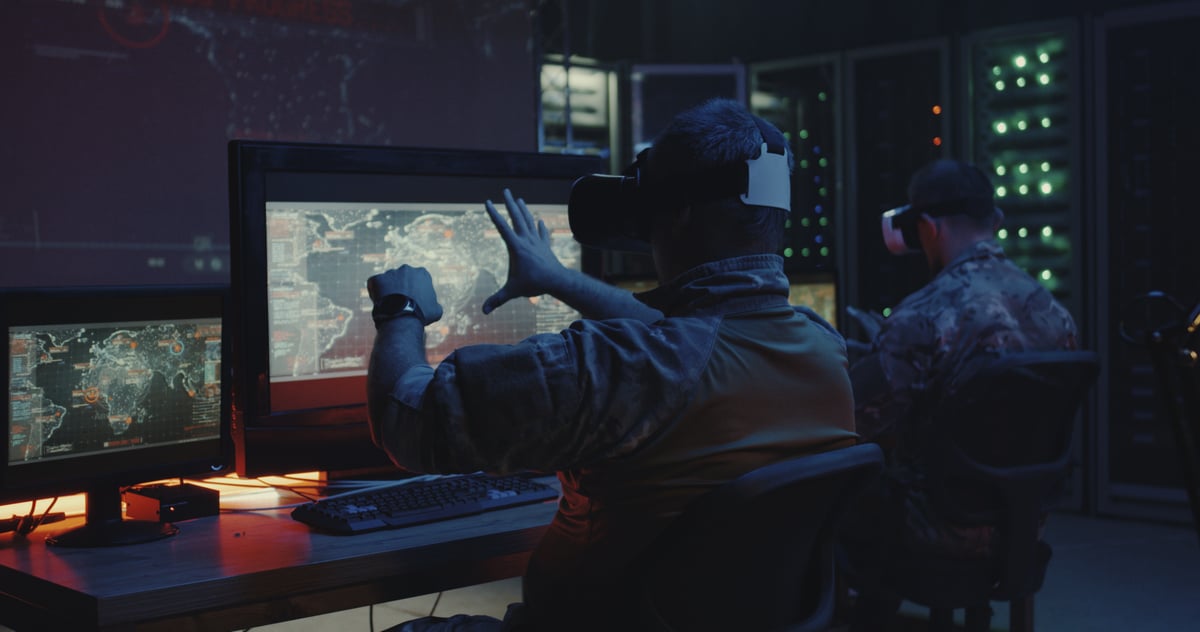
The U.S. Department of Defense is channeling substantial resources into an aggressive push for AI-powered defense systems under its "Arsenal of Freedom" initiative, creating a multiyear revenue opportunity for defense contractors positioned at the intersection of artificial intelligence and military technology. Rather than treating AI as an ancillary capability, the Pentagon is elevating autonomous systems to serve as the central nervous system for modern warfare, fundamentally reshaping how military operations will be conducted and creating unprecedented demand for specialized defense technology providers.
This strategic pivot represents one of the most consequential shifts in Pentagon procurement in decades, with implications extending far beyond traditional defense spending cycles. Companies specializing in AI integration—particularly $PLTR (Palantir Technologies), Anduril Industries, and $LMT (Lockheed Martin)—stand positioned to capture significant market share as the military establishes new standards for autonomous decision-making, real-time data analysis, and AI-driven threat assessment across all service branches.
The Pentagon's AI-First Defense Strategy
The "Arsenal of Freedom" initiative represents a fundamental reimagining of military procurement priorities, with the Pentagon treating artificial intelligence not as an optional enhancement but as essential infrastructure for 21st-century defense operations. This distinction carries enormous implications for contractors competing in the defense space.
Key characteristics of the initiative include:
- Multiyear funding commitment providing sustained revenue visibility for qualified contractors
- AI as foundational capability rather than bolt-on feature for weapons systems and operational planning
- Integration across service branches creating standardization opportunities and network effects
- Central nervous system architecture requiring sophisticated data fusion and real-time autonomous decision-making
- Emphasis on speed and adaptation in military response to evolving threats
The Pentagon's framing of AI as a "central nervous system" is particularly significant, suggesting the military envisions interconnected networks of autonomous systems operating with minimal human intervention in tactical scenarios. This architecture requires end-to-end software platforms capable of ingesting massive data streams, identifying patterns, making autonomous decisions, and coordinating across distributed military assets—precisely the capability sets offered by companies like Palantir, which specializes in data integration and intelligence analysis platforms.
Defense officials have made clear that competitors falling behind in AI integration risk obsolescence in future conflict scenarios. This urgency is driving procurement decisions and accelerating technology adoption timelines well beyond historical Pentagon norms, creating what amounts to a technological arms race among defense contractors.
Market Context: The Defense AI Landscape
The shift toward AI-centric defense spending reflects broader geopolitical realities and technological trajectories that have reshaped military strategy. The U.S. Department of Defense faces explicit technological competition from peer adversaries investing heavily in autonomous warfare capabilities, creating institutional pressure to accelerate AI adoption across all military domains.
$PLTR (Palantir Technologies) has emerged as a leading beneficiary of this pivot, leveraging its longstanding relationships with defense and intelligence agencies through platforms like Gotham (focused on defense/intelligence applications) and Apollo (commercial offering). Palantir's core strength lies in its ability to unify disparate data sources and provide decision-makers with actionable intelligence—a capability directly aligned with Pentagon requirements for AI-enabled "central nervous system" architecture.
Anduril Industries, the San Diego-based defense technology startup founded by Palmer Luckey, has carved out a distinctive niche in autonomous defense systems and AI-powered surveillance platforms. The company has secured substantial Pentagon contracts and continues expanding its footprint in emerging warfare domains, positioning itself as an agile competitor to traditional defense giants.
$LMT (Lockheed Martin), the defense sector's largest contractor by revenue, brings established relationships with military procurement offices and existing integration capabilities across weapons systems, sensors, and command-and-control infrastructure. The company's advantage lies in its ability to embed AI capabilities across its vast portfolio of defense programs.
The competitive landscape includes traditional defense contractors like $RTX (Raytheon Technologies), $NOC (Northrop Grumman), and $BA (Boeing) Defense, Space & Security division, which are also investing in AI capabilities but generally lack the native software development expertise of specialized AI-first competitors. This dynamic has created an unusual market environment where smaller, more agile technology firms can capture meaningful portions of Pentagon spending alongside traditional giants.
Regulatory environment considerations include Committee on Foreign Investment in the United States (CFIUS) oversight, export control restrictions on advanced defense technologies, and increasing congressional scrutiny of foreign ownership stakes in defense contractors—factors that advantage domestic AI specialists operating independently or under purely American ownership structures.
Investor Implications: Multiyear Growth Runway
For investors, the Pentagon's "Arsenal of Freedom" initiative represents a structural shift in defense spending allocation that could support multiyear revenue growth for qualified contractors. The multiyear commitment nature of military contracts provides unusual revenue visibility compared to commercial technology sectors, while the scale of Pentagon procurement creates substantial addressable markets for leading competitors.
Key investment considerations:
- Revenue visibility: Multiyear defense contracts provide forecastable revenue streams superior to commercial technology markets
- Margin profile: Defense contracts typically offer higher margins than commercial equivalents, supporting profitability expansion
- Secular growth drivers: Geopolitical competition, technological obsolescence concerns, and peer-nation AI investments create sustained funding pressure
- Concentration risk: Heavy dependence on Pentagon spending exposes contractors to budget pressures, political changes, and procurement delays
- Technology risk: Rapid AI advancement could render current platforms obsolete, requiring continuous innovation investment
- Competitive dynamics: Winners will likely consolidate, creating opportunity for scale players while pressuring smaller specialists
For $PLTR specifically, the initiative validates its core strategic positioning in AI-powered intelligence platforms serving defense and intelligence communities. The company's challenge remains demonstrating profitability while maintaining growth, a balancing act that Pentagon contract expansion supports.
Anduril's trajectory remains dependent on venture-stage capital availability and continued Pentagon budget allocation to emerging technology programs—a less certain pathway than established contractors' positions but potentially offering higher growth upside for early investors.
$LMT, $RTX, and $NOC benefit from the Pentagon's pivot toward AI but face integration complexity and legacy cost structures that could limit margin expansion compared to specialized competitors.
The broader defense sector benefits from Pentagon budget growth, but winners will likely cluster around companies demonstrating authentic AI-first development capabilities rather than traditional contractors attempting platform retrofits.
Conclusion: A Decade of Defense AI Spending
The Pentagon's "Arsenal of Freedom" initiative appears positioned to drive defense spending toward artificial intelligence and autonomous systems for at least the next decade, creating a rare combination of secular industry tailwinds, geopolitical urgency, and government budget commitment. The transition from AI as optional feature to AI as foundational infrastructure represents the kind of structural market shift that historically rewards companies positioned ahead of the transition curve.
Investors monitoring defense spending trends should recognize this inflection point as potentially significant for sector allocation decisions. Companies like Palantir, Anduril, and established primes like Lockheed Martin occupy differentiated positions in what could emerge as one of the Pentagon's largest multiyear modernization initiatives. The next several quarters will likely clarify which AI-defense specialists emerge as dominant platforms and which face competitive pressure or consolidation.