
Trump's Missile Defense Pivot Powers Raytheon Into Defense Spending Spotlight
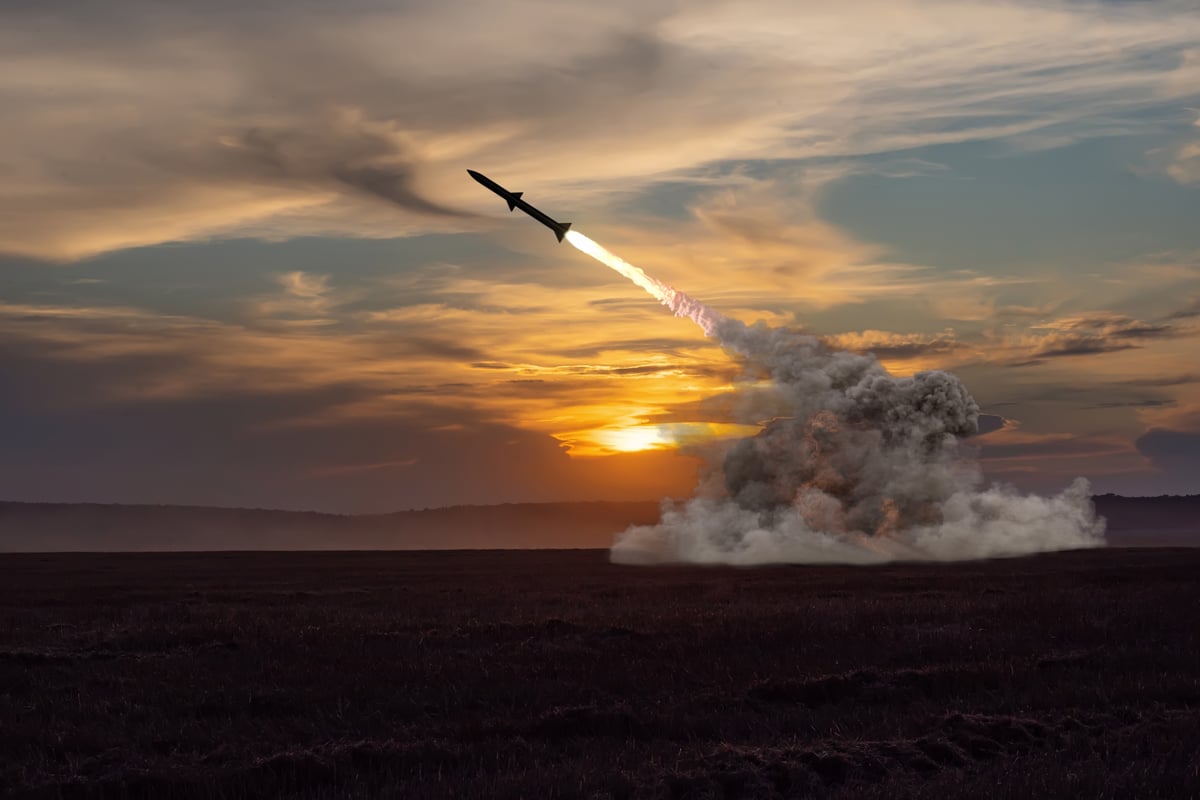
Raytheon Technologies ($RTX) finds itself at the center of a major strategic shift in U.S. military policy, with the Trump administration's emphasis on missile defense systems positioning the defense contractor as a critical supplier for expanded Pentagon procurement. As geopolitical tensions with Iran intensify and the administration prioritizes advanced weaponry over traditional deterrence strategies, RTX is emerging as a primary beneficiary of what analysts expect to be a substantial increase in defense spending and military inventory replenishment.
The renewed focus on missile defense capabilities marks a significant departure from previous strategic priorities, creating immediate demand for the weapons systems Raytheon Technologies specializes in producing. The company's portfolio of advanced defense technologies—particularly its Tomahawk cruise missiles and associated systems—sits directly at the intersection of administration policy objectives and urgent military needs.
Strategic Positioning and Production Commitments
Raytheon Technologies has made aggressive commitments to expand manufacturing capacity in response to anticipated government orders, signaling confidence in sustained demand for its flagship products. The company has pledged to double or even quadruple production rates across various defense systems, a dramatic scaling that underscores the magnitude of expected procurement:
- Manufacturing expansion occurring across three key facilities in Alabama, Arizona, and Massachusetts
- Focus on replenishing depleted missile stockpiles following recent military operations
- Emphasis on Tomahawk missile production, a cornerstone of U.S. cruise missile capability
- Production acceleration plans designed to meet near-term government demand
This production expansion represents a substantial capital commitment and operational challenge for the company. Doubling or quadrupling manufacturing output requires not only increased capital investment in facilities and equipment but also significant expansion of workforce capacity, supply chain management, and quality control processes. The geographic distribution of production across multiple states also suggests RTX is positioning itself to maximize political support for sustained funding levels across different congressional districts.
Market Context and Competitive Landscape
The defense contracting sector has historically benefited during periods of geopolitical tension and military modernization, yet RTX's current position reflects unique confluence of factors that distinguish this cycle from previous ones. The Trump administration's explicit emphasis on military capability and rearmament creates a policy environment uniquely favorable to major defense contractors.
Raytheon Technologies operates in a concentrated market where a handful of major players—including Lockheed Martin ($LMT), General Dynamics ($GD), and Northrop Grumman ($NOC)—dominate U.S. defense procurement. Within this competitive landscape, RTX holds particular strength in missile systems and related technologies. However, the company's recent stock performance reveals investor sensitivity to geopolitical risk: RTX shares declined notably when Middle East tensions showed signs of cooling, indicating that market participants view defense spending opportunities as contingent on sustained international instability.
This volatility presents a critical insight into how the market currently prices RTX shares. The company's valuation appears partially dependent on sustained or escalating geopolitical tension—a dynamic that creates both opportunity and risk for investors. Any diplomatic breakthrough or de-escalation could quickly reverse the positive sentiment that currently supports higher valuations for the company.
The broader defense spending environment also reflects structural support beyond current tensions. The U.S. military has faced significant munitions inventory challenges in recent years, and multiple regional conflicts have demonstrated the need for advanced, long-range strike capabilities. Tomahawk missiles, which represent a significant portion of RTX's strategic systems business, remain among the most sophisticated and expensive precision weapons in the global arsenal.
Investor Implications and Forward Outlook
For RTX shareholders, the current environment presents multiple layers of opportunity and uncertainty. On the positive side, the administration's explicit commitment to defense spending, combined with the need to replenish depleted stockpiles, creates a plausible scenario for multi-year revenue growth and margin expansion within RTX's strategic systems segment.
The company's willingness to commit substantial capital to production expansion signals management confidence in the durability of future demand. Successful execution of these production goals could translate into:
- Accelerated revenue growth in strategic systems and missile programs
- Improved operating margins as production volumes increase and fixed costs are absorbed across higher output
- Sustained government spending authorizations spanning multiple fiscal years
- Potential for long-term contract modifications that lock in production commitments
However, investors must also recognize the risks inherent in this investment thesis. RTX's performance appears significantly correlated with geopolitical tension levels, creating a scenario where sudden de-escalation—whether through diplomatic channels or shifting strategic priorities—could rapidly reduce demand and leave the company with excess production capacity. The company's aggressive production commitments could transform into competitive disadvantages if demand fails to materialize as expected.
Additionally, the political nature of defense spending introduces regulatory and policy risks. Changes in administration priorities, congressional budget constraints, or shifting military strategy could alter the favorable environment that currently supports RTX's expansion plans. International diplomacy developments, particularly any meaningful progress toward resolving U.S.-Iran tensions, would likely trigger immediate reassessment of the company's demand outlook.
From a sector perspective, RTX and its major competitors in the defense industry are positioned to benefit from the current policy environment. However, Raytheon Technologies appears uniquely leveraged to the specific missile defense priorities that currently dominate Pentagon strategy, making it a particularly direct play on the Trump administration's defense policy orientation.
The company's production expansion plans represent a significant operational bet on sustained high demand. For investors evaluating RTX as an investment opportunity, the critical question becomes whether the current geopolitical environment will prove durable enough to justify the company's substantial capital commitments. Success in executing its expansion strategy while maintaining profitability through potential future demand fluctuations will determine whether RTX emerges as a clear winner from this period of elevated defense spending or faces challenges from stranded capacity investments.