
Abbott vs. Dexcom: Which CGM Leader Offers Better Value in 2024?
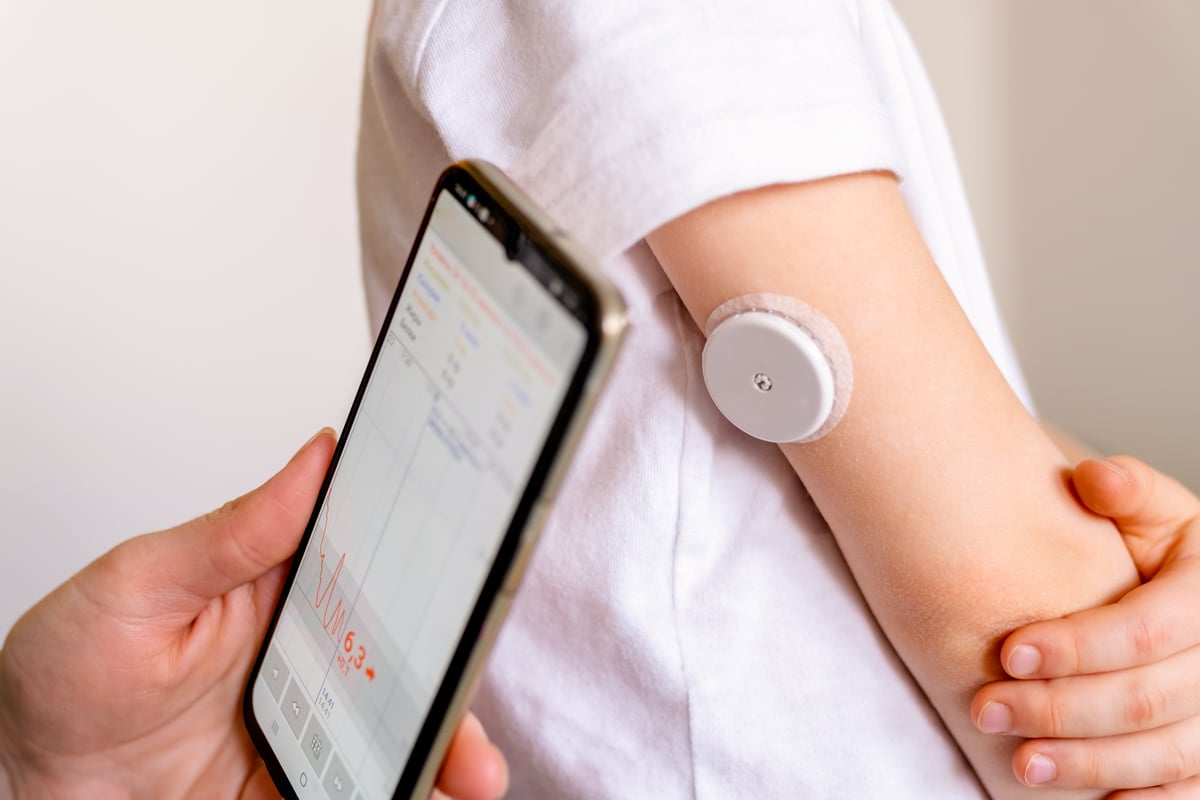
The continuous glucose monitoring (CGM) market is experiencing explosive growth, but two fundamentally different companies are competing for dominance in this lucrative space. Abbott Laboratories ($ABT) and Dexcom ($DXCM) represent contrasting investment theses: one offers stability and diversification with its proven dividend track record, while the other provides pure-play exposure to a faster-growing market segment. As GLP-1 weight-loss medications reshape the diabetes treatment landscape, investors must carefully weigh which company better positions itself for sustained shareholder returns.
The CGM Market Opportunity and Competitive Landscape
The continuous glucose monitoring sector has transitioned from a niche medical device category to one of the fastest-growing segments in healthcare. Both companies have established dominant positions, but through entirely different strategic approaches.
Abbott's Diversified Powerhouse:
Abbott Laboratories brings considerable resources and portfolio breadth to the CGM market. The company's FreeStyle Libre franchise has emerged as a market leader, generating substantial revenue while establishing Abbott as a credible player in diabetes management. Beyond CGM, Abbott maintains a diversified healthcare portfolio spanning diagnostics, nutrition, medical devices, and established pharmaceutical products. The company's recent acquisition of Exact Sciences—a major move that significantly expanded its diagnostic capabilities—underscores Abbott's commitment to building a comprehensive healthcare ecosystem.
Key strengths of Abbott's position:
- Established distribution networks across global markets
- Proven ability to cross-sell products to healthcare providers and patients
- Substantial R&D resources supporting multiple therapeutic areas
- Consistent dividend payments and share buyback programs
- Balance sheet strength enabling strategic acquisitions
Dexcom's Focused Growth Strategy:
Dexcom represents a pure-play CGM investment. The company has achieved remarkable market penetration with its G6 and newer G7 continuous glucose monitoring systems, becoming synonymous with real-time glucose tracking for many patients. Dexcom's narrow focus has allowed the company to concentrate resources entirely on CGM innovation, manufacturing, and market expansion. However, this specialization creates both opportunity and vulnerability in an evolving market.
Key characteristics of Dexcom's approach:
- Laser-focused R&D on CGM technology and wearable platforms
- Direct-to-consumer marketing creating strong brand recognition
- Higher operating margins than diversified competitors
- Rapid product iteration cycles (G6 to G7 transition)
- Limited revenue diversification outside CGM segment
Market Context: Growth Drivers and Emerging Headwinds
The CGM market faces a paradoxical situation that investors must navigate carefully. Multiple secular tailwinds support strong growth, yet a significant headwind has emerged that could reshape competitive dynamics.
Growth Drivers:
The CGM market benefits from several powerful structural trends:
- Expanding patient population: Approximately 37 million Americans have diabetes, with CGM adoption still penetrating a fraction of this addressable market
- Insurance reimbursement expansion: Medicare and private insurers increasingly cover CGM devices, removing historical access barriers
- Clinical validation: Continuous glucose monitoring has demonstrated superior outcomes compared to fingerstick testing, driving physician adoption
- International expansion: CGM penetration outside the United States remains limited, providing substantial geographic growth opportunities
- Integration with digital health: Smartphone connectivity and data analytics enhance the value proposition of modern CGM systems
The GLP-1 Complication:
However, the explosive popularity of GLP-1 receptor agonists—medications like semaglutide and tirzepatide marketed for weight loss—introduces a significant wild card. These medications improve glucose control substantially, which theoretically could reduce the immediate need for continuous glucose monitoring among some patient populations. While medical professionals argue that CGM and GLP-1 medications are complementary tools, the possibility that weight-loss drugs could canibalize CGM demand represents a material risk that disproportionately affects Dexcom given its lack of diversification.
Abbott's Exact Sciences Acquisition Context:
The Exact Sciences deal, valued at approximately $2.8 billion, represents Abbott's strategic bet that diagnostic testing will become increasingly personalized and integrated with treatment decisions. This move partially insulates Abbott from CGM-specific demand fluctuations by embedding the company in broader digital health and precision medicine trends.
Investor Implications: Risk-Return Profiles and Valuation Considerations
The choice between $ABT and $DXCM ultimately depends on an investor's risk tolerance, dividend preferences, and conviction regarding CGM market dynamics.
Abbott ($ABT) - The Conservative Income Play:
Investors seeking lower volatility with established dividend income should consider Abbott's investment profile:
- Dividend history: Decades of consistent dividend payments and raises demonstrate capital allocation discipline
- Valuation stability: Diversification across multiple healthcare segments provides valuation stability during sector rotations
- Lower volatility: The stock typically exhibits lower beta than pure-growth medical device companies
- Downside protection: Diagnostic and nutrition businesses provide earnings stability when device sales weaken
- Acquisition optionality: Financial strength enables strategic investments like Exact Sciences, potentially unlocking future value
- Suitable for: Retirees, dividend-focused portfolios, risk-averse investors with 5+ year horizons
Dexcom ($DXCM) - The Growth-Oriented Bet:
Investors with higher risk tolerance and longer time horizons may prefer Dexcom's growth profile:
- Higher growth trajectory: Pure-play CGM exposure provides direct participation in market expansion
- Operational leverage: Manufacturing and selling primarily one product category creates significant margin expansion potential as scale increases
- Innovation momentum: Focused R&D produces rapid product improvements and expanding feature sets
- Market share potential: Continued product superiority could enable Dexcom to expand market share further
- Valuation premium justified by growth: Growth investors typically pay higher multiples for companies with superior expansion rates
- Vulnerability to disruption: Concentrated business model exposes investors to single-product category risks
- Suitable for: Growth portfolios, investors with 5-10+ year horizons, higher risk tolerance profiles
Valuation and Risk-Return Framework:
Historically, Dexcom commands a valuation premium reflecting its superior growth rates and market position. However, this premium only creates attractive returns if the company continues executing flawlessly and the GLP-1 drug risk doesn't materialize as significantly as feared. Abbott's more modest valuation already incorporates its slower growth rate and lower risk profile, potentially offering better risk-adjusted returns for conservative investors.
Forward-Looking Assessment
Both companies are well-positioned within the attractive CGM market, but they serve different investor mandates. Abbott Laboratories ($ABT) emerges as the preferred choice for risk-averse investors seeking reliable dividend income, business diversification, and exposure to broader healthcare trends including precision diagnostics. The Exact Sciences acquisition indicates management's commitment to remaining relevant in evolving healthcare markets beyond CGM alone.
Dexcom ($DXCM) remains the superior option for growth investors comfortable with concentration risk and willing to bet that the company's innovation pace and market leadership will overcome potential headwinds from GLP-1 medications. The company's focused strategy has created an undisputed technology leader in CGM, and international expansion represents a substantial growth runway.
Ultimately, neither company is objectively "better"—the choice depends entirely on individual investment objectives, risk tolerance, and time horizon. The CGM market's fundamental attractiveness should support both companies' long-term success, even as competitive dynamics and market composition continue evolving.