
Volvo's Electric Truck Dominance Exposes Tesla's Semi Deployment Gap
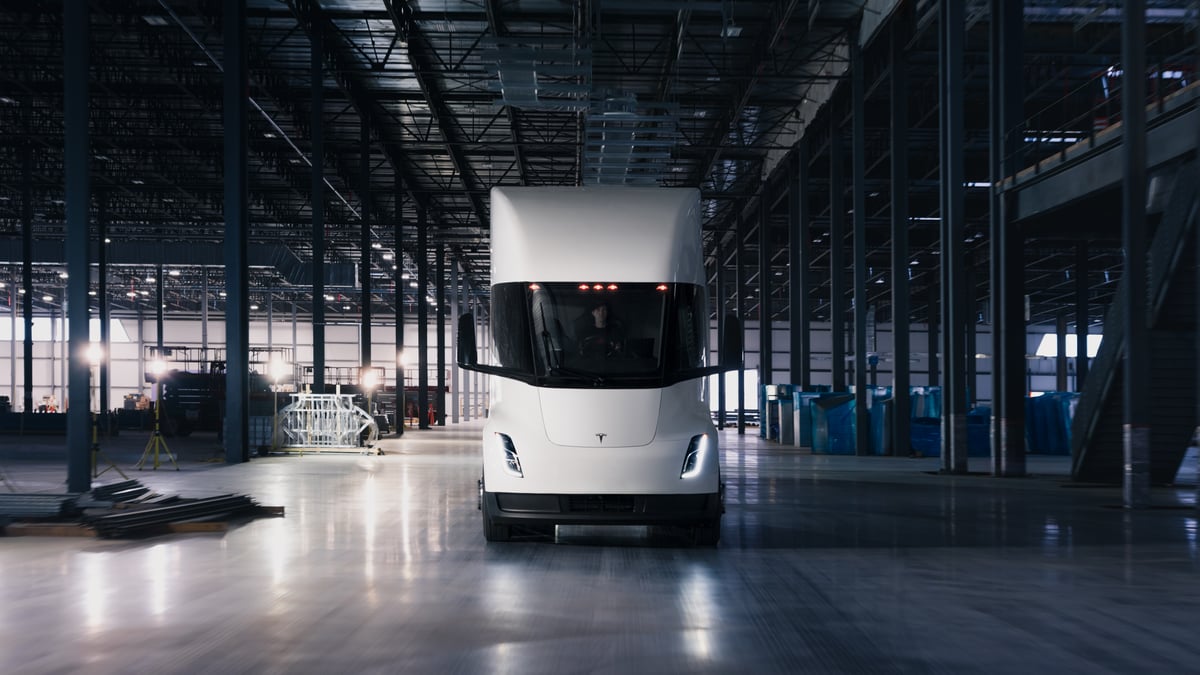
Tesla's ambitious electric semi truck initiative faces a sobering reality check as established automakers like Volvo demonstrate far superior real-world deployment and market penetration. While Tesla has garnered significant attention for its Semi's impressive technical specifications, the company has managed to deliver only a few hundred units globally. Meanwhile, Volvo has already deployed over 5,000 electric semis across its customer base worldwide, accumulating more than 100 million zero-emission miles of actual operational data. This stark disparity underscores a critical gap between Tesla's innovation narrative and the practical execution required to dominate the commercial trucking segment.
The contrast between Tesla's ambitious claims and Volvo's tangible market achievements reveals how quickly the competitive landscape in heavy-duty electric vehicles is shifting away from the Palo Alto manufacturer. Tesla announced its Semi in 2017 with promises of revolutionary range, performance, and cost advantages, but the company has struggled to translate these promises into meaningful market share in the highly fragmented Class 8 trucking segment. In contrast, Volvo—a company with nearly a century of heavy-duty vehicle manufacturing expertise—has methodically built a credible electric semi offering that customers are actually purchasing and deploying at scale.
Key Details: The Deployment Disparity
The numbers paint a clear picture of market reality versus manufacturing ambition:
- Volvo's electric semi deployment: Over 5,000 units globally
- Accumulated zero-emission miles: 100+ million miles of real-world operation
- Tesla's Semi delivery status: Few hundred units total
- Market segment: Class 8 heavy-duty trucking (long-haul and regional routes)
This deployment gap is particularly significant because it reflects actual customer confidence and trust in production reliability. Volvo's accumulated operational data from over 100 million miles provides invaluable insights into battery performance degradation, thermal management, charging infrastructure requirements, and total cost of ownership—metrics that matter enormously to fleet operators making multi-million-dollar purchasing decisions.
Tesla's Semi, despite featuring impressive specifications on paper, remains primarily a proof-of-concept in the market. The company has focused its production efforts on personal vehicles ($TSLA), where it maintains leadership in the electric vehicle market. The Semi program, while strategically important, has never received the manufacturing priority or capital allocation that would enable mass-market production. This reflects the profound difference between designing an excellent vehicle and manufacturing it at the scale necessary to compete effectively in the Class 8 trucking market, where buyers measure value in operational efficiency and reliability over decades.
The technical specifications of Tesla's Semi remain compelling: the company has claimed range capabilities exceeding traditional diesel semis per charge cycle and acceleration performance that seems almost impractical for freight hauling. However, specifications alone do not translate to market adoption. Fleet operators, who purchase trucks for economic returns rather than technological novelty, require proven reliability records, established service networks, and demonstrated total cost of ownership advantages—precisely the areas where Volvo has built credibility.
Market Context: A Shifting Competitive Landscape
The electric semi truck market represents a substantial long-term opportunity, with industry analysts projecting significant growth as regulatory pressure mounts and charging infrastructure expands. However, Volvo's early dominance suggests that established automotive manufacturers with existing dealer networks, service infrastructure, and customer relationships possess structural advantages that pure-play EV manufacturers like Tesla cannot easily overcome.
Other traditional automakers have similarly prioritized electric truck development:
- Daimler (parent of Mercedes-Benz) has invested heavily in electric semi programs
- Paccar has launched electric truck offerings targeting North American markets
- Scania, another Swedish manufacturer, has deployed thousands of electric vehicles
- Chinese manufacturers are rapidly expanding electric truck portfolios
This competitive environment explains why Tesla's ambitious goals in the trucking segment have proven harder to achieve than anticipated. The Class 8 trucking market differs fundamentally from personal vehicles: it requires established relationships with fleet operators, demonstrated reliability over extended service lives, parts availability across geographic regions, and financing solutions tailored to commercial customers. Tesla's direct-to-consumer sales model and limited dealer infrastructure present significant obstacles in this traditionally relationship-driven market.
Regulatory momentum also favors early movers with proven electric truck deployments. The European Union has announced increasingly stringent emissions standards for heavy commercial vehicles, while the United States has proposed similar regulations. Fleet operators purchasing vehicles today are evaluating which manufacturers will most reliably support electrification requirements over the next decade. Volvo's demonstrated ability to deploy and support thousands of operational vehicles provides concrete evidence that the company can navigate this transition—a comfort that Tesla has yet to demonstrate at comparable scale.
Investor Implications: What This Means for Tesla and the Broader Market
For Tesla shareholders, the Volvo comparison highlights a strategic vulnerability that extends beyond the Semi itself. Tesla entered the electric vehicle market as a bootstrapped startup with superior battery technology, manufacturing innovation, and first-mover advantages in consumer demand. In the commercial vehicle segment, however, Tesla faces entrenched competitors with deeper expertise, broader distribution networks, and established customer relationships spanning decades.
The Semi program matters less for near-term revenue than as a window into Tesla's execution in new market segments. If the company struggles to scale the Semi meaningfully against Volvo's entrenched position, it raises questions about whether Tesla can successfully diversify beyond personal vehicles into other commercial segments like commercial energy storage or autonomous taxi services. Market participants should monitor Semi production numbers and customer announcements closely; accelerating deployment would signal renewed commitment to commercial vehicles, while continued languishing would suggest the company is deprioritizing this initiative.
For traditional automakers like Volvo, the data provides validation of their electrification strategies. Over 100 million zero-emission miles represents not just a market achievement but a wealth of operational data that can continuously improve future designs, battery management systems, and service protocols. This creates a flywheel effect where operational scale drives product improvements, which drive further customer adoption.
The broader implications extend to battery supply chains, charging infrastructure development, and the structural economics of electric commercial vehicles. Volvo's success suggests that sufficient customer demand exists for electric semis even at current price points, invalidating skepticism that electrified trucking remains years away from mainstream adoption. This validates capital investments in fast-charging networks and battery manufacturing capacity from suppliers serving the commercial vehicle market.
Investors evaluating companies across the electric vehicle ecosystem—from battery manufacturers to charging networks to traditional automotive suppliers—should recognize that the competitive transition in commercial vehicles may progress faster than previously assumed, particularly in regulated markets like Europe where Volvo has strongest presence.
Forward Look
Tesla's Semi represents a significant long-term growth opportunity, but the competitive reality evident in Volvo's deployment advantage suggests the company will need to accelerate production and customer acquisition to achieve meaningful market share. The fact that an established automaker has already deployed 5,000 electric semis while Tesla struggles to reach several hundred units indicates that market leadership in heavy-duty vehicles requires execution capabilities that differ fundamentally from passenger vehicle manufacturing. As regulatory pressure on commercial vehicle emissions intensifies globally, the window for Tesla to establish meaningful market position may narrow considerably. For investors, this dynamic reinforces that technology leadership alone—without corresponding manufacturing scale and market execution—provides insufficient competitive advantage in established commercial vehicle markets.