
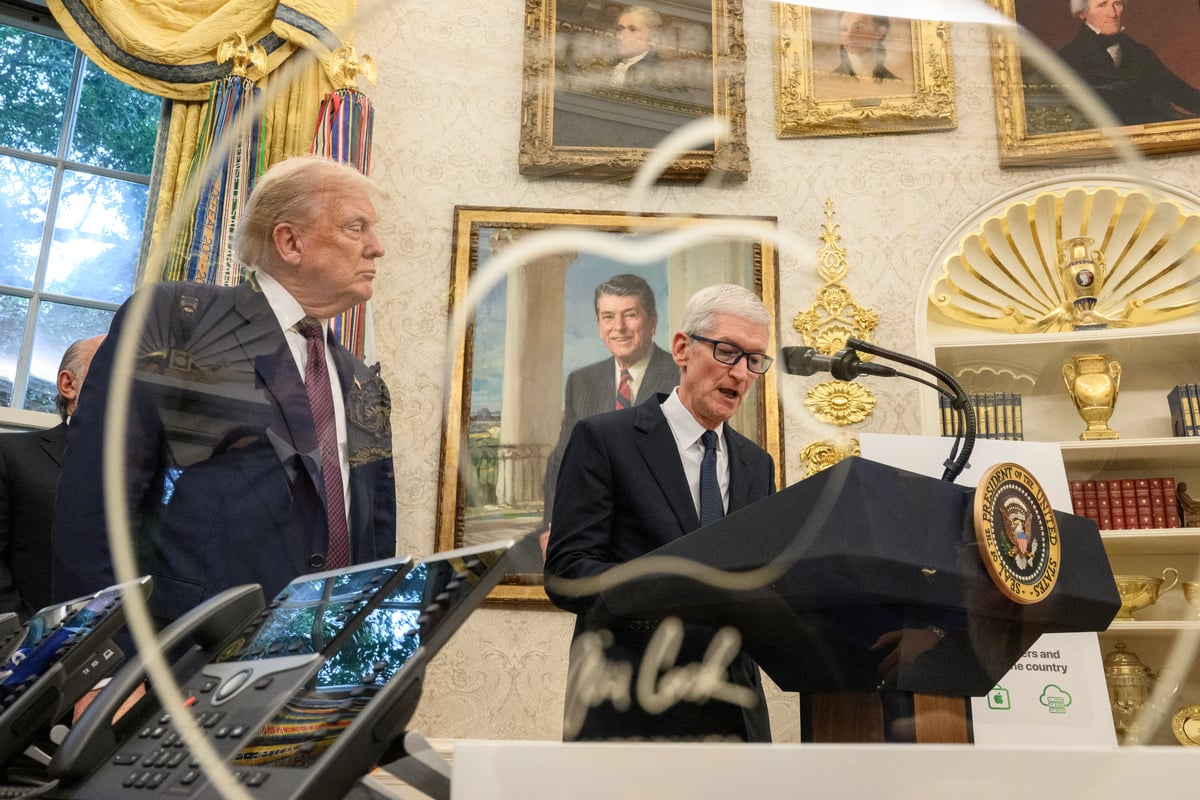
Tim Cook's Departure Marks End of an Era Defined by Financial Engineering
Apple CEO Tim Cook is stepping down from his post on September 1, 2026, transitioning to executive chairman after nearly 15 years leading the world's most valuable technology company. However, Cook's most significant contribution to shareholder value may not be the revolutionary products that define Apple's brand, but rather an aggressive financial strategy that has fundamentally reshaped the company's capital structure: a $841 billion share buyback program executed since 2013.
Under Cook's leadership, Apple has systematically repurchased its own shares on an unprecedented scale, reducing outstanding shares by more than 44% while simultaneously driving substantial increases in earnings per share. This financial engineering—made possible by massive cash generation and accelerated by the 2017 Tax Cuts and Jobs Act—represents a defining characteristic of Cook's tenure that may ultimately prove more transformative than any hardware innovation.
The Numbers Behind the Buyback Juggernaut
The scale of Apple's capital return program is staggering when placed in historical context:
- Total share repurchases since 2013: $841 billion
- Reduction in outstanding shares: Over 44%
- Key catalyst: 2017 Tax Cuts and Jobs Act, which incentivized repatriation of offshore cash
- Annual buyback acceleration: Significantly increased following tax reform
- EPS impact: Dramatic amplification of earnings per share growth independent of operational improvements
Apple's buyback program represents one of the largest capital return initiatives in corporate history. To contextualize this figure, $841 billion exceeds the annual GDP of most countries and rivals the total market capitalization of most Fortune 500 companies. The 44% reduction in share count means that current shareholders own a proportionally larger percentage of the company's earnings, a mathematical reality that has buoyed per-share metrics even during periods of flat or modest earnings growth.
The acceleration following the 2017 Tax Cuts and Jobs Act is particularly noteworthy. The legislation reduced the federal corporate tax rate from 35% to 21% and implemented a one-time repatriation tax on offshore earnings, creating a powerful incentive for multinational corporations to bring accumulated foreign cash back to the United States. Apple, with its massive international operations and substantial overseas cash holdings, became one of the primary beneficiaries of this tax environment. Rather than deploying this capital into research and development, factory expansion, or strategic acquisitions, Cook chose to return the majority of it to shareholders through buybacks and dividends.
Market Context: Financial Engineering in the Tech Sector
Apple's buyback strategy must be understood within the broader landscape of tech sector capital allocation decisions. While product innovation and market expansion have historically driven technology stock valuations, the post-2008 financial crisis era witnessed a fundamental shift in how mature tech companies deploy capital.
Competitors and Comparative Strategies:
The technology sector has seen varied approaches to capital allocation:
- Microsoft ($MSFT) has also pursued significant buybacks while maintaining substantial R&D investment
- Alphabet ($GOOGL) has favored organic growth and strategic acquisitions over aggressive repurchases
- Meta ($META) shifted toward buybacks after years of growth-focused spending
- Amazon ($AMZN) historically reinvested virtually all cash flow into business expansion
Apple's distinction lies in the magnitude and consistency of its repurchase program relative to its cash generation. Over Cook's tenure, the company has returned capital to shareholders at a pace that has fundamentally altered its financial structure. This strategy reflects a maturation thesis: Apple, having dominated the smartphone market and established itself as the world's most profitable technology company, pursued maximizing shareholder value through capital efficiency rather than pursuing transformative growth investments.
The Broader Context:
Cook's buyback-heavy strategy has also benefited from favorable market conditions. As stock prices appreciated—driven by Apple's brand strength, ecosystem loyalty, and consistent profitability—each dollar spent on buybacks repurchased fewer shares. The company essentially locked in gains from earlier, lower-priced repurchases while continuing to return capital at elevated valuations.
This approach has also shielded Apple from activist investor pressure that affected other tech companies. By consistently returning capital and supporting stock prices, Cook maintained strong investor backing despite questions about innovation velocity and market saturation in the iPhone business.
Investor Implications: The Mathematics of Shareholder Value
For investors evaluating Apple ($AAPL) and the broader tech sector, Cook's buyback legacy carries several important implications:
Earnings Per Share Inflation:
The 44% reduction in outstanding shares has created a powerful tailwind for EPS growth that operates independently of revenue or profit margin improvements. When a company reduces its share count while holding earnings constant, EPS automatically rises. This dynamic has been particularly valuable for Apple during periods when operational growth has decelerated or plateaued.
Strategic Opportunity Cost:
The $841 billion deployed for buybacks represents capital not available for other strategic purposes. Notably, Apple has made relatively few transformative acquisitions compared to competitors. The company could theoretically have deployed this capital toward:
- Major technology acquisitions to expand into new markets
- Significant R&D investments in emerging technologies (AI, advanced materials, quantum computing)
- Manufacturing capacity expansion to reduce supply chain vulnerability
- Market share acceleration through aggressive pricing or product line expansion
Instead, Cook opted for financial engineering that maximizes return to existing shareholders while potentially constraining long-term competitive positioning.
Valuation Multiple Implications:
Apple's valuation multiples have remained relatively stable despite the share count reduction, suggesting that the market has appropriately discounted the EPS accretion from buybacks. However, this raises questions about whether the company's growth narrative is sustainable without continued capital allocation toward innovation and market expansion.
Shareholder Base Composition:
The massive buyback program has had a secondary effect: it has shifted Apple's shareholder base toward longer-term, committed investors while potentially attracting capital focused on dividend yield and financial engineering rather than growth. This has created a constituency strongly aligned with Cook's capital allocation strategy.
Forward-Looking Questions and Cook's Legacy
As Cook transitions to executive chairman, his successor will inherit a company with a fundamentally altered capital structure. The next CEO will face critical decisions about whether to continue the buyback momentum or reallocate capital toward innovation and growth investments. The $841 billion figure will stand as a defining metric of Cook's tenure—a testament to financial discipline and shareholder return maximization, but also an open question about opportunity costs and long-term competitive vitality.
Cook's contribution to Apple shareholder value through the buyback program is undeniable from a mathematical perspective. Whether this financial engineering strategy ultimately represents optimal stewardship of the company's resources remains a question for future years to answer.