
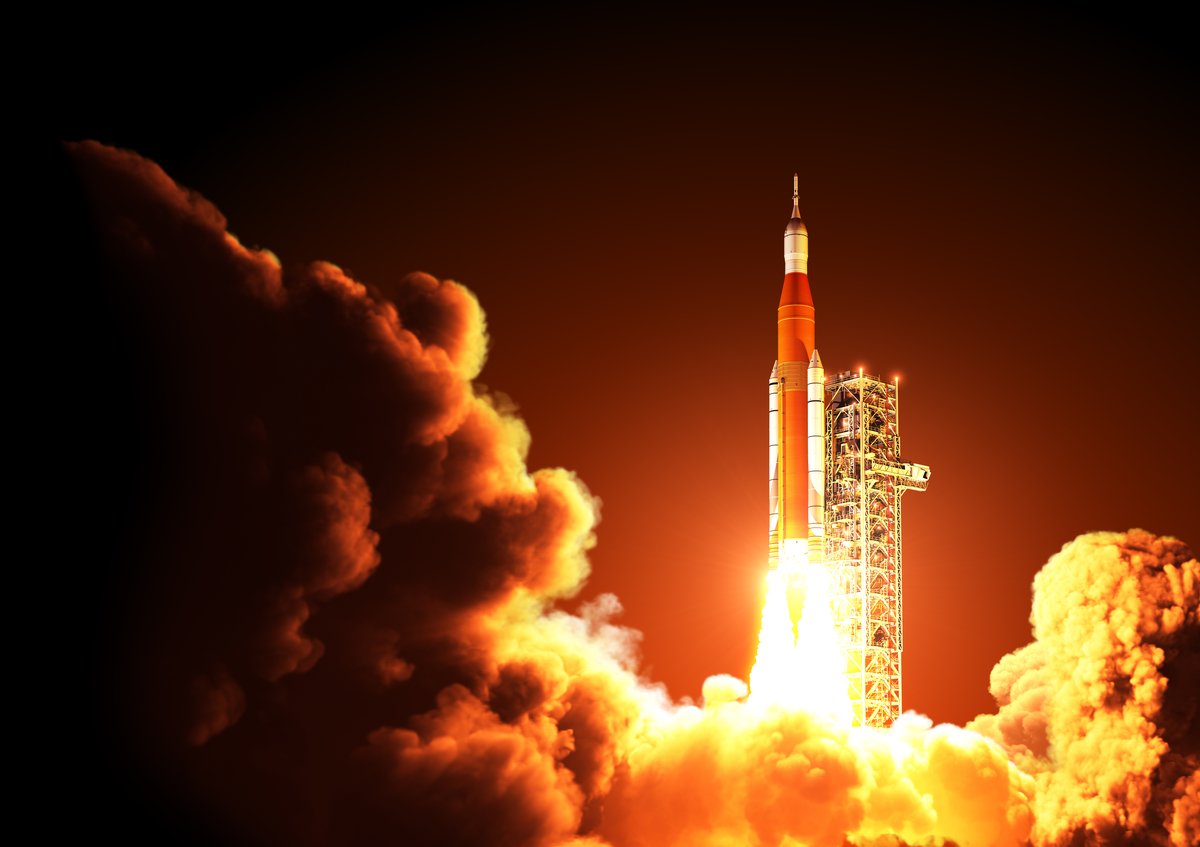
SpaceX's $1.75T IPO Expected June 2026 Could Unlock Tesla Synergies
SpaceX is officially charting its course toward a public market debut, with management targeting an initial public offering in June 2026 at a staggering $1.75 trillion valuation. The aerospace and satellite communications company expects to raise between $50 billion and $75 billion in fresh capital, a figure that would rank among the largest IPOs in modern history. This landmark move marks a significant milestone for Elon Musk's sprawling business empire and could have substantial implications for his other publicly traded venture, Tesla ($TSLA).
The timing and scale of SpaceX's impending IPO underscore the company's remarkable trajectory from a startup founded in 2002 to a privately-held behemoth commanding one of the highest private valuations globally. The $1.75 trillion valuation reflects investor confidence in the company's space launch capabilities, Starlink satellite internet network, and emerging space-based technologies. With plans to raise up to $75 billion, SpaceX would have access to substantial capital for expanding its manufacturing footprint, accelerating technological development, and potentially funding international expansion initiatives.
Key Details: SpaceX's Path to Public Markets
The June 2026 IPO timeline provides SpaceX roughly 18 months to prepare regulatory filings, complete due diligence procedures, and finalize investor roadshows. This deliberate pacing suggests management confidence in the company's operational metrics and financial trajectory heading into the offering.
Key metrics driving SpaceX's valuation include:
- $1.75 trillion enterprise valuation—placing it among the world's most valuable companies
- $50-75 billion expected capital raise from the IPO
- Dominant position in commercial space launch market with Falcon 9 and Falcon Heavy rockets
- Starlink constellation of over 7,000 operational satellites serving global internet connectivity
- Established contracts with NASA, the U.S. Space Force, and commercial customers
- Development pipeline including Starship, the fully reusable super-heavy-lift vehicle
The valuation reflects SpaceX's transition from a government-contractor-dependent business toward a diversified revenue model spanning commercial launches, satellite internet subscriptions, and emerging space infrastructure services.
Market Context: Synergies Across Musk's Business Ecosystem
The strategic significance of SpaceX's IPO extends beyond aerospace and satellite markets. Musk's track record of cross-pollinating technologies and capital across his various ventures suggests potential synergies between SpaceX and Tesla ($TSLA) that could create competitive advantages unavailable to traditional competitors.
Tesla stands to benefit from SpaceX's massive capital raise in several material ways. The electric vehicle and energy storage manufacturer has demonstrated strategic interest in advanced manufacturing automation, high-capacity battery systems, and artificial intelligence—areas where SpaceX's engineering expertise and newly accessible capital could drive innovation:
-
Robotics and Automation: SpaceX's manufacturing operations have pioneered advanced robotic systems for rocket production. Tesla's Gigafactory expansion plans could incorporate similar automation technologies developed within SpaceX's manufacturing infrastructure.
-
Megapack Energy Storage: Tesla Energy's Megapack division manufactures grid-scale battery storage systems. SpaceX, with its orbital infrastructure ambitions, could require substantial energy storage capacity for ground operations, creating cross-company purchasing opportunities.
-
AI and Computing: Both companies prioritize artificial intelligence and advanced computing. SpaceX's Starlink satellite network requires sophisticated AI algorithms for network optimization, a capability that could enhance Tesla's autonomous driving and energy management systems.
-
Manufacturing and Supply Chain: SpaceX's vertically integrated manufacturing operations share philosophical alignment with Tesla's approach to production efficiency. Capital from the IPO could fund joint ventures or technology-sharing initiatives.
Historically, Musk has demonstrated willingness to deploy capital strategically across his holdings. Tesla previously benefited from his leadership focus during critical growth phases, and the company's stock performance often correlates with positive developments across his business portfolio.
The broader aerospace and satellite communications sector is experiencing unprecedented investor interest. Competitors including Axiom Space, Relativity Space, and Planet Labs ($PL) have recently accessed public markets, establishing valuation benchmarks for space-adjacent businesses. SpaceX's $1.75 trillion valuation would position it as the most valuable commercial space company by orders of magnitude, reflecting its unmatched operational track record and market dominance.
Investor Implications: Why This Matters for Markets
For Tesla shareholders, SpaceX's IPO represents a potential catalyst for value creation. While SpaceX and Tesla operate in distinct end markets, the companies share fundamental characteristics that historically drive Musk's strategic decision-making:
-
Vertical Integration Philosophy: Both companies manufacture critical components in-house rather than relying on traditional supply chains. SpaceX's fresh capital could accelerate shared manufacturing innovations.
-
Technology Transfer: SpaceX's advances in materials science, thermal management, and autonomous systems frequently find applications across Musk's broader enterprise. Tesla's access to these innovations could accelerate product development cycles.
-
Capital Redeployment: With $50-75 billion in new capital, SpaceX could theoretically support joint initiatives with Tesla, from advanced manufacturing facilities to AI research partnerships.
Investor sentiment around Tesla ($TSLA) may benefit from positive market reception to SpaceX's IPO. A successful offering would validate Musk's broader vision of interconnected technology companies addressing humanity's existential challenges. Conversely, any IPO delays or valuation complications could create negative sentiment spillover effects.
The aerospace and defense sector would also face disruption from SpaceX's public market entry. Traditional contractors including Lockheed Martin ($LMT), Boeing ($BA), and Northrop Grumman ($NOC) may experience competitive pressure from SpaceX's cost advantages and technological superiority, particularly in commercial launch markets.
Regulatory considerations will shape the IPO timeline and ultimate valuation. SpaceX operates under export control restrictions given its national security significance, and regulatory agencies may require additional disclosure or impose operational constraints on the public company.
Looking Ahead: Strategic Implications
SpaceX's path to public markets represents a watershed moment for commercial space exploration and, indirectly, for Tesla's strategic positioning. The June 2026 IPO provides investors approximately 18 months to position portfolios ahead of this transformative event. Investors should monitor regulatory filings, organizational announcements, and Musk's public statements regarding cross-company initiatives as additional guidance on potential Tesla-SpaceX synergies emerges.
The convergence of SpaceX's capital influx, Tesla's robotics and energy ambitions, and Musk's demonstrated appetite for strategic integration across his holdings creates a compelling investment narrative for forward-looking shareholders. Whether Tesla emerges as a direct beneficiary through component orders, technology licensing, or strategic partnerships remains to be determined, but the structural alignment of both companies' missions suggests meaningful opportunities lie ahead.