
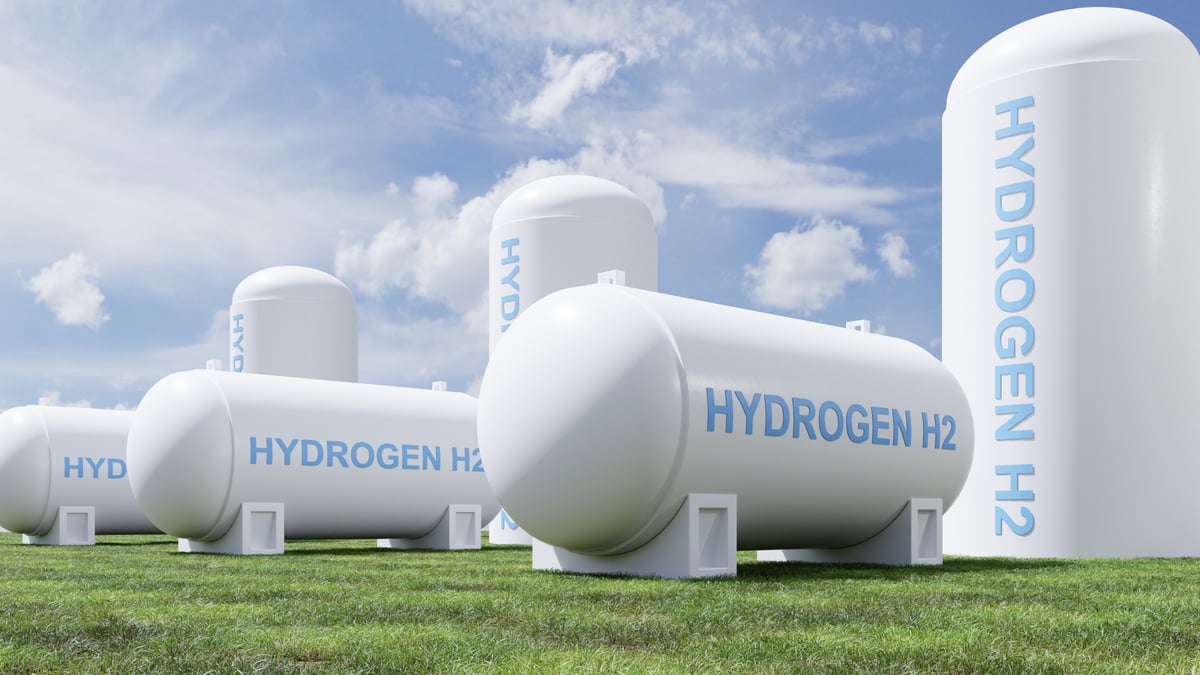
Hydrogen Fuel Cell Maker Rides AI Wave to Spectacular Monthly Gains
FuelCell Energy ($FCEL) has delivered a stunning 80% gain in April, capitalizing on explosive demand for power solutions in the artificial intelligence sector. The surge reflects investor enthusiasm around the company's new 12.5-megawatt power block, specifically engineered for energy-intensive AI data centers seeking clean, reliable power alternatives. While the stock's dramatic appreciation underscores genuine market tailwinds in the hydrogen fuel cell space, underlying profitability challenges suggest caution may be warranted for risk-averse investors.
The April rally represents the latest chapter in a remarkable turnaround narrative for the fuel cell pioneer, whose technology has long struggled to achieve commercial viability at scale. Yet with data center operators racing to secure sustainable power supplies and facing unprecedented electricity demands from AI infrastructure buildouts, FuelCell Energy has positioned itself at the intersection of two of the market's most powerful macro trends: the AI boom and the energy transition.
Explosive Growth Metrics Mask Persistent Losses
The fundamental metrics driving investor optimism are genuinely impressive. FuelCell Energy has grown its business pipeline by 275%, a staggering expansion that reflects surging customer interest across multiple verticals. More tangibly, the company has accumulated over $1 billion in backlog, suggesting years of potential revenue visibility. To meet anticipated demand, FuelCell Energy plans to triple its manufacturing capacity, a capital-intensive undertaking that signals management confidence in sustained growth.
Revenue performance has been equally robust:
- 61% revenue growth year-over-year demonstrates accelerating commercial traction
- 12.5-megawatt power block specifically targets the AI data center segment
- $1 billion+ in backlog provides multi-year revenue runway
- Manufacturing capacity tripling underway to meet demand surge
However, the profitability picture tells a starkly different story. Despite the impressive topline expansion, FuelCell Energy remains deeply unprofitable, with gross losses actually increasing as the company scales operations. This disconnect between revenue growth and loss expansion is a critical red flag that warrants scrutiny. The company appears to be in a classic "growth-at-all-costs" phase, burning cash to secure market share and prove out its technology at scale. Whether this strategy ultimately leads to sustainable profitability—or merely produces larger losses—remains an open question.
This dynamic creates substantial execution risk. Investors are essentially betting that FuelCell Energy can eventually achieve unit economics that support profitability, a proposition that has eluded the company throughout its corporate history. Manufacturing scale, supply chain optimization, and product mix improvements could theoretically unlock margins. But at present, the company is losing more money even as it generates more revenue, a troubling trajectory.
AI Data Centers Represent a Genuine Paradigm Shift
The investment thesis hinges on a straightforward premise: AI data centers face an acute power crisis. These facilities consume electricity at unprecedented rates—modern large-scale data centers can rival small cities in power consumption—and grid infrastructure in many regions cannot satisfy demand. Traditional power solutions face interconnection delays measured in years, creating a supply shortage for operators desperate to expand computational capacity.
FuelCell Energy's hydrogen fuel cell technology offers a compelling alternative:
- Modular deployment without grid interconnection delays
- 24/7 dispatchable clean power independent of weather conditions
- Fuel flexibility enabling use of existing hydrogen infrastructure or green hydrogen as it scales
- Smaller footprint compared to traditional power generation
The 12.5-megawatt power block is purpose-built to address this niche, representing a meaningful product-market fit validation. Unlike earlier applications that struggled to find sufficient customers, hydrogen power blocks for data centers face genuine, acute demand from operators like Microsoft, Google, Amazon, and others racing to deploy AI infrastructure. This represents a structural shift in end-market dynamics compared to FuelCell Energy's historical business model.
Competitors including Plug Power ($PLUG) and others are pursuing similar strategies, suggesting the market opportunity is substantial. However, FuelCell Energy's incumbent position and purpose-built technology give it genuine competitive advantages in this emerging segment, at least in the near term.
Market Context: A Maturing Hydrogen Sector Meets AI Urgency
The hydrogen fuel cell sector has historically suffered from a "perpetually five years away" reputation—promising breakthroughs that never quite materialized commercially. However, recent developments suggest the sector may finally be achieving critical inflection points:
- Government support: Federal hydrogen tax credits and infrastructure funding through the Inflation Reduction Act provide meaningful tailwinds
- Corporate commitments: Major energy companies and technology firms are moving beyond pilot projects toward production-scale deployments
- Cost trajectories: Fuel cell costs have declined meaningfully, approaching price points that enable commercial viability
- ESG mandates: Data center operators face shareholder and regulatory pressure to decarbonize, creating willingness to pay premiums for clean power
FuelCell Energy benefits from all these dynamics simultaneously. The company is no longer fighting against market skepticism about hydrogen viability—instead, it's racing to capture share in a market experiencing genuine tailwinds for the first time in the sector's history.
Yet the 80% April rally in $FCEL may already price in considerable optimism. The stock has previously experienced dramatic reversals when execution faltered or growth disappointed. Current valuation metrics warrant scrutiny relative to the company's actual profitability trajectory and the probability it successfully navigates manufacturing scale-up challenges.
Investor Implications: Growth Promise Versus Execution Reality
For investors, FuelCell Energy represents a classic high-risk, high-reward opportunity. The bull case is compelling: a company with genuine technology advantages operating in a market experiencing explosive growth driven by dual AI and energy-transition tailwinds. The $1 billion backlog and 275% pipeline growth suggest the company is positioned to capture meaningful market share as AI data center build-outs accelerate through the remainder of the decade.
Conversely, the bear case is equally persuasive. FuelCell Energy has repeatedly failed to achieve profitability despite periods of revenue growth. Scaling hydrogen fuel cell manufacturing is genuinely difficult, with numerous technical and supply-chain challenges. The April 80% rally may reflect speculative excess rather than sustainable fundamental improvement. Manufacturing capacity tripling is a capital-intensive undertaking that could pressure financial metrics before benefits materialize.
Risk-tolerant investors with conviction in the hydrogen fuel cell sector and FuelCell Energy's competitive positioning might view current valuations as reasonable entry points despite profitability concerns. Conservative investors should likely wait for evidence that the company can actually monetize its backlog and convert revenue growth into positive operating cash flow before deploying meaningful capital.
The April rally, while dramatic, should be viewed as the beginning of a multi-year story rather than a signal that FuelCell Energy is "solved" as an investment. The company must execute flawlessly to justify current optimism and prevent another boom-bust cycle that has characterized hydrogen sector history.
Forward Outlook: Hydrogen's Moment May Finally Be Here
FuelCell Energy's April surge reflects something genuinely significant: a hydrogen fuel cell company operating in an era when the technology may finally achieve sustainable commercial scale. The convergence of AI data center growth, government support, cost reduction, and ESG mandates creates a uniquely favorable environment.
However, the persistence of profitability challenges despite accelerating revenue growth demands serious attention. Investors should treat this as a story to follow closely rather than one to immediately chase. The company's ability to demonstrate sustainable unit economics and positive operating margins in coming quarters will ultimately determine whether the April rally represents a genuine inflection point or another hydrogen sector disappointment.