
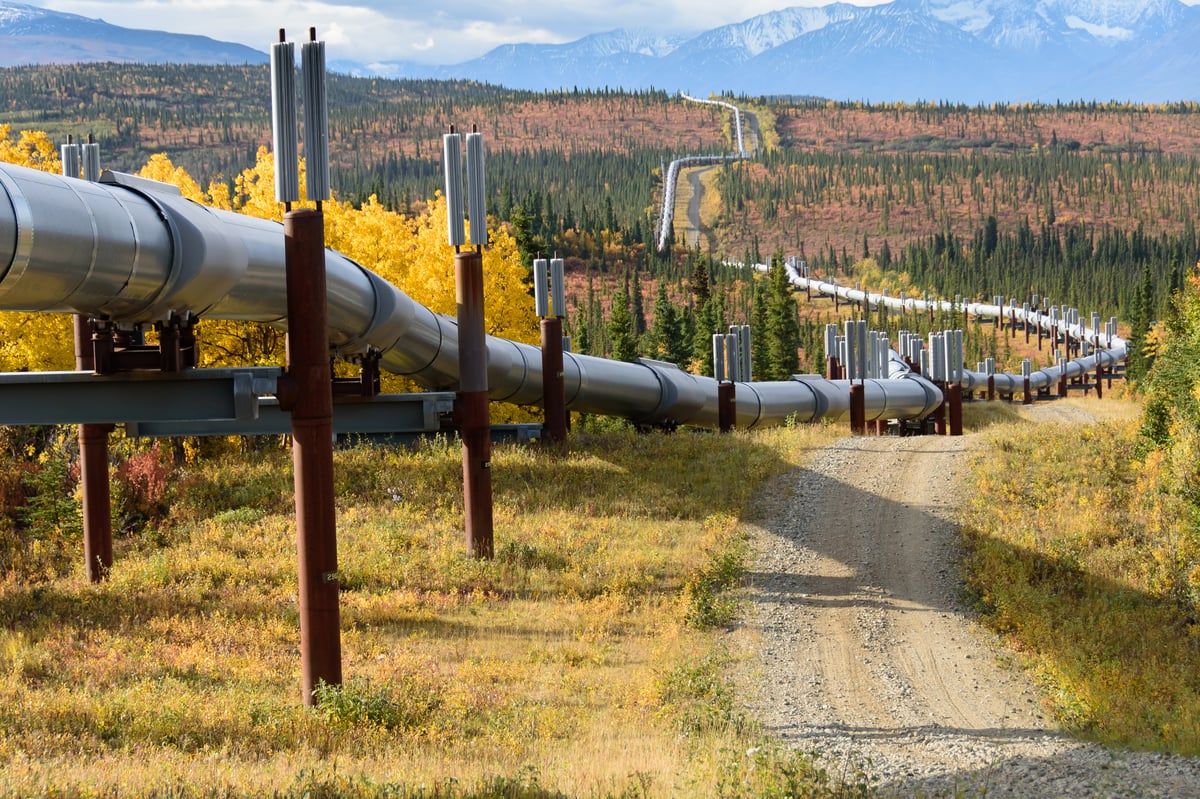
Energy Midstream Giants Offer 5%+ Yields as Oil Markets Remain Pressured
With geopolitical tensions sustaining elevated crude oil prices, two of North America's largest energy infrastructure companies are delivering compelling returns to income-focused investors. Enterprise Products Partners ($EPD) and Enbridge ($ENB) are capitalizing on sustained high energy prices while rewarding shareholders with dividend yields that significantly exceed broader market averages—a rare combination that has made these midstream players attractive defensive positions in an uncertain economic environment.
The appeal lies not merely in current yield levels, but in the exceptional track records of dividend reliability both companies have established. Enterprise Products Partners currently yields 5.75% while maintaining an extraordinary streak of 29 consecutive years of dividend increases. Enbridge, meanwhile, provides a 5.25% yield backed by 30 consecutive years of dividend growth—placing both companies in an elite category of dividend aristocrats within the energy sector.
The Structural Advantages of Midstream Infrastructure
Unlike upstream oil and gas producers whose earnings fluctuate with commodity prices, midstream companies like Enterprise Products and Enbridge operate fundamentally different business models that provide natural hedges against market volatility. These companies generate stable, predictable cash flows by charging fees for transporting, storing, and processing energy products—revenue streams that remain largely insulated from the absolute level of crude prices.
Key characteristics that support their dividend security include:
- Contracted revenue streams: Long-term contracts with producers and consumers provide visibility and stability
- Essential infrastructure: Physical pipelines and storage facilities serve as critical energy infrastructure with high barriers to entry
- Diversified assets: Both companies operate across multiple segments (pipelines, terminals, processing facilities) reducing single-point-of-failure risk
- Inflation-protected cash flows: Many contracts include inflation adjustment clauses that protect margins during periods of rising costs
Enterprise Products Partners operates one of North America's most extensive energy infrastructure networks, spanning crude oil, natural gas, and petrochemical assets. The company's diversified portfolio—including approximately 50,000 miles of pipelines and substantial storage capacity—generates resilient cash distributions to unit holders regardless of price volatility.
Enbridge, North America's largest energy infrastructure company by valuation, operates similarly diversified assets including liquids pipelines, natural gas distribution, and renewable energy projects. The company's 30-year dividend growth streak represents one of the most impressive records in the entire energy sector, underscoring management's confidence in long-term cash generation capabilities.
Market Context: Geopolitical Premiums and Energy Economics
The current elevated crude price environment reflects genuine supply-side pressures rather than temporary market anomalies. The Strait of Hormuz—through which approximately one-third of global seaborne oil transits—faces ongoing disruption risks from regional conflicts, while broader Middle East tensions create structural premiums embedded in current oil valuations.
This geopolitical backdrop creates a supportive environment for midstream companies in multiple ways:
- Higher throughput volumes: Elevated energy prices encourage continued production and transportation demand
- Pricing power: Midstream companies can often renegotiate contracts upward in high-price environments
- Capital availability: Strong cash generation from current operations enables continued infrastructure investment and dividend growth
The broader energy sector has experienced renewed investor interest following years of capital discipline and underinvestment. Unlike the 2010s, when low oil prices pressured energy stocks indiscriminately, today's elevated price environment reflects genuine supply constraints and geopolitical risk premiums likely to persist over intermediate timeframes. This structural shift benefits infrastructure-focused companies like Enterprise Products and Enbridge, which benefit from production activity without bearing direct commodity price risk.
Competitor analysis reveals few direct peers matching the dividend credentials of these two companies. While other midstream partnerships trade actively ($KMP, $MMP), Enterprise Products Partners and Enbridge stand apart through their combination of scale, diversification, and unmatched dividend growth records. This competitive positioning has historically supported valuation premiums during periods of elevated uncertainty.
Investor Implications: Yield, Growth, and Total Return Potential
For income-focused investors, these yield levels merit careful examination. Current yields of 5.75% and 5.25% substantially exceed Treasury yields while coming backed by decades of demonstrated management commitment to dividend growth. The 29-year and 30-year consecutive increase streaks are not merely marketing claims but represent institutional policy commitments that have survived multiple market cycles including the 2008-2009 financial crisis, the 2014-2016 oil price collapse, and the 2020 pandemic shock.
The mathematics of dividend growth investing support these positions' appeal:
- Starting yields exceed current inflation and provide meaningful income
- Annual increases typically track 2-4% annually, compounding yield-on-cost for long-term holders
- Total return potential combines current income with modest price appreciation from improved fundamentals
- Sector momentum: Energy infrastructure benefits from both elevated prices and accelerating ESG-driven divestment from pure-play upstream producers, concentrating capital in more defensive midstream players
Historically, investors purchasing high-quality dividend-growth stocks near market peaks have captured attractive long-term returns through reinvested distributions and patient capital allocation. The combination of 5%+ current yields with multi-decade dividend-increase histories provides a quantifiable margin of safety for total return investors.
However, investors must acknowledge real risks. Further geopolitical de-escalation in the Middle East could pressure crude prices and energy demand. Regulatory changes targeting fossil fuel infrastructure could threaten long-term growth assumptions. These represent genuine headwinds requiring careful individual security analysis.
Looking Forward: Sustainability of the Dividend Model
The critical question for investors evaluates sustainability: Can Enterprise Products and Enbridge maintain their dividend policies through potential commodity cycles and energy transition pressures?
The evidence supporting sustainability appears compelling. Both companies have demonstrated flexibility during prior energy downturns, adjusting growth rates while maintaining absolute distribution levels. Their contracted business models provide visibility that pure exploration-and-production companies lack. Additionally, both companies are actively investing in energy transition infrastructure—renewable natural gas facilities, hydrogen production, carbon capture—positioning for a diversified energy future.
Enterprise Products Partners and Enbridge represent the rare convergence of current income, proven dividend growth, and reasonable valuation multiples. While no investment carries absolute certainty, the combination of structural business advantages, multi-decade track records, and supportive market fundamentals provides a compelling case for income-focused portfolios. Current elevated oil prices create a tailwind, but the underlying infrastructure assets will retain value regardless of future commodity price movements—the essential characteristic separating sustainable dividend stocks from cyclical dividend traps.