
Record Performance Amid Geopolitical Tailwinds
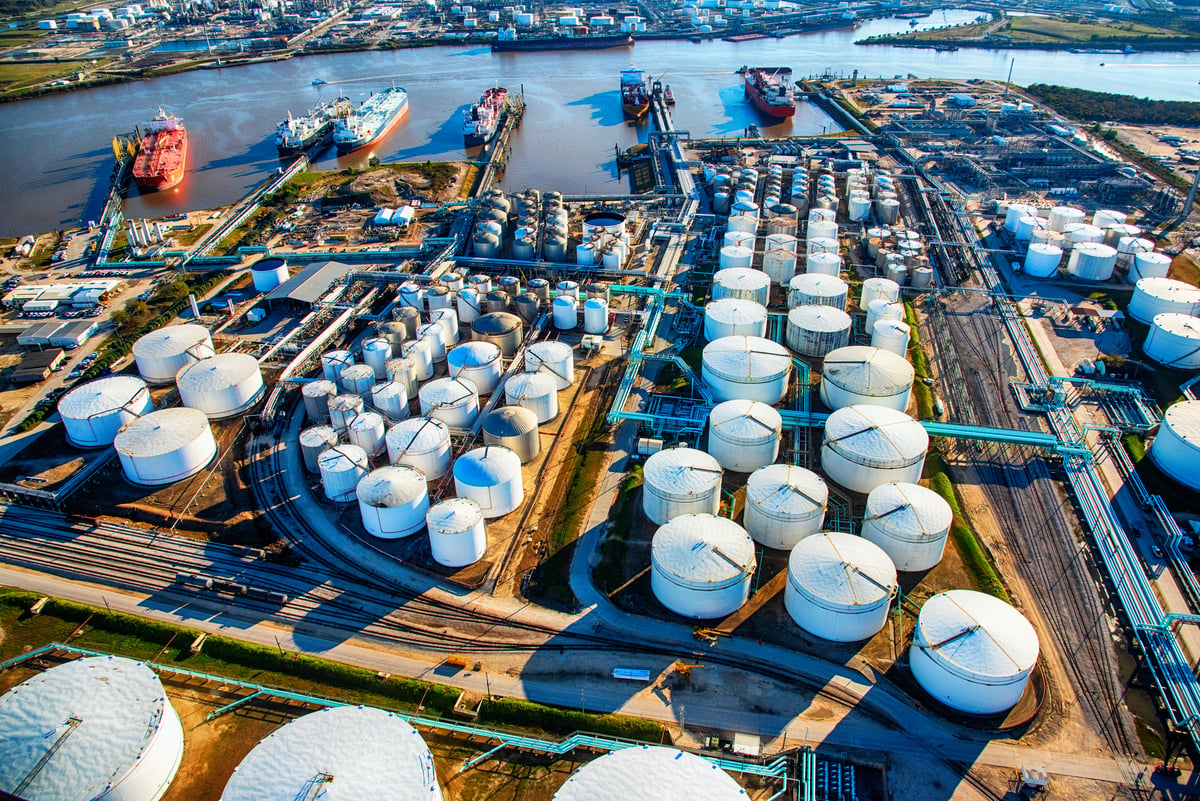
Enterprise Products Partners ($EPD), one of America's largest midstream energy infrastructure companies, delivered blockbuster first-quarter results that underscored the intersection of geopolitical disruption and long-term energy demand fundamentals. The master limited partnership set 12 operational records in Q1 2026, propelled by unprecedented demand for energy exports triggered by global supply disruptions, while simultaneously benefiting from completed expansion projects that position the company for growth extending well beyond the current geopolitical crisis.
The Houston-based MLP generated $2.7 billion in adjusted EBITDA, representing a robust 10% year-over-year increase, alongside $2.3 billion in adjusted free cash flow, also up 10% from the prior year period. These results arrive as energy markets remain volatile and supply chains continue to adjust to shifting geopolitical realities, creating a powerful tailwind for infrastructure companies positioned to capture incremental export volumes and production growth.
Fortress Balance Sheet and Dividend Security
What makes EPD's performance particularly noteworthy for income-focused investors is the security underlying its attractive 5.7% yield. The MLP's distribution coverage ratio of 1.8x provides substantial cushion—meaning the company generates $1.80 in adjusted free cash flow for every $1.00 it distributes to unitholders. This level of coverage is exceptionally strong within the midstream sector and substantially exceeds the threshold required for sustainable distributions, even under challenging market conditions.
The cash generation engine powering these distributions reflects EPD's diversified operational footprint:
- Natural gas gathering, processing, and transportation assets
- Natural gas liquids (NGL) fractionation and export infrastructure
- Petrochemical and refined products logistics
- Liquefied petroleum gas (LPG) and crude oil handling capabilities
- Extensive pipeline networks connecting major production basins to export terminals
This diversification has historically insulated EPD from single-commodity downturns while allowing the company to capitalize on demand across multiple energy vectors.
Growth Pipeline Extends Beyond the Geopolitical Cycle
Perhaps the most consequential element of EPD's earnings report centers on its capital expenditure program and the underlying demand thesis. The company has $5.3 billion in major capital projects currently under construction, a figure that deserves investor attention precisely because it implies management confidence in demand extending well beyond temporary war-related supply disruptions.
These projects primarily focus on expanding natural gas and NGL production and export capacity—the very commodities driving current outperformance. The strategic rationale reflects several enduring trends:
Structural Demand Drivers:
- Global liquefied natural gas (LNG) demand remains structurally elevated as Europe diversifies away from Russian supplies
- Petrochemical manufacturing continues to favor U.S. production costs and domestic feedstock availability
- Natural gas consumption for power generation is expected to remain elevated in transition economies for years
- Asia-Pacific demand for LNG and NGLs continues its long-term growth trajectory
Unlike typical boom-bust cycles in energy, management's substantial capital commitment signals conviction that normalized demand—even absent the current geopolitical premium—justifies continued infrastructure investment.
Market Context and Competitive Positioning
EPD operates within a midstream energy sector that has undergone significant consolidation and professionalization over the past decade. Compared to competitors like Kinder Morgan ($KMI), TC Energy ($TRP), and Williams Companies ($WMB), Enterprise Products has historically maintained stronger cash generation metrics and more conservative leverage profiles, reflected in its current distribution coverage.
The midstream sector broadly has emerged as a defensive equity and income vehicle within broader energy portfolios, offering:
- Contracted or fee-based revenue models that decouple performance from commodity prices
- Essential infrastructure positioning that faces high barriers to entry
- Inflation-hedging characteristics given long-term contract escalators
- Institutional allocation from infrastructure-focused investors and pension funds
Within this context, EPD's record operational performance and visible growth pipeline position it advantageously relative to peers, particularly for investors seeking both current income and capital appreciation potential.
Implications for Investors and Market Outlook
For equity income investors, EPD's combination of 5.7% yield, 1.8x coverage, and visible cash flow growth creates an attractive risk-reward profile. The distribution appears not merely sustainable but likely to grow as capital projects complete and generate incremental cash flows. MLP unitholder distributions, while subject to different tax treatment than corporate dividends (requiring investors file Schedule K-1 forms), have historically provided superior total returns during stable or rising rate environments.
For growth-oriented investors, the $5.3 billion capital commitment signals management belief in multi-year demand tailwinds extending beyond the current crisis cycle. If management proves correct—and current LNG contract books and petrochemical capacity utilization trends suggest they may be—EPD should experience steady distribution growth and potential unit price appreciation.
The broader implication suggests energy infrastructure remains undershooted relative to the capital intensity required to meet global energy demand. As energy transition extends across decades rather than years, infrastructure companies like EPD occupy critical positions within global energy systems, regardless of commodity mix transitions.
Forward-Looking Perspective
Enterprise Products Partners' record Q1 2026 results represent more than a geopolitical bounce. The company's 12 operational records, combined with substantial planned capital investment and healthy distribution coverage, suggest the organization has built structural competitive advantages that extend well beyond the current global supply disruptions. For investors seeking reliable income with embedded growth potential from essential infrastructure, EPD warrants serious consideration—particularly at valuations that remain undemanding relative to earnings power and cash generation capacity. As global energy markets continue adapting to new supply realities, companies positioned at the infrastructure nexus should remain in favor with disciplined capital allocators.