
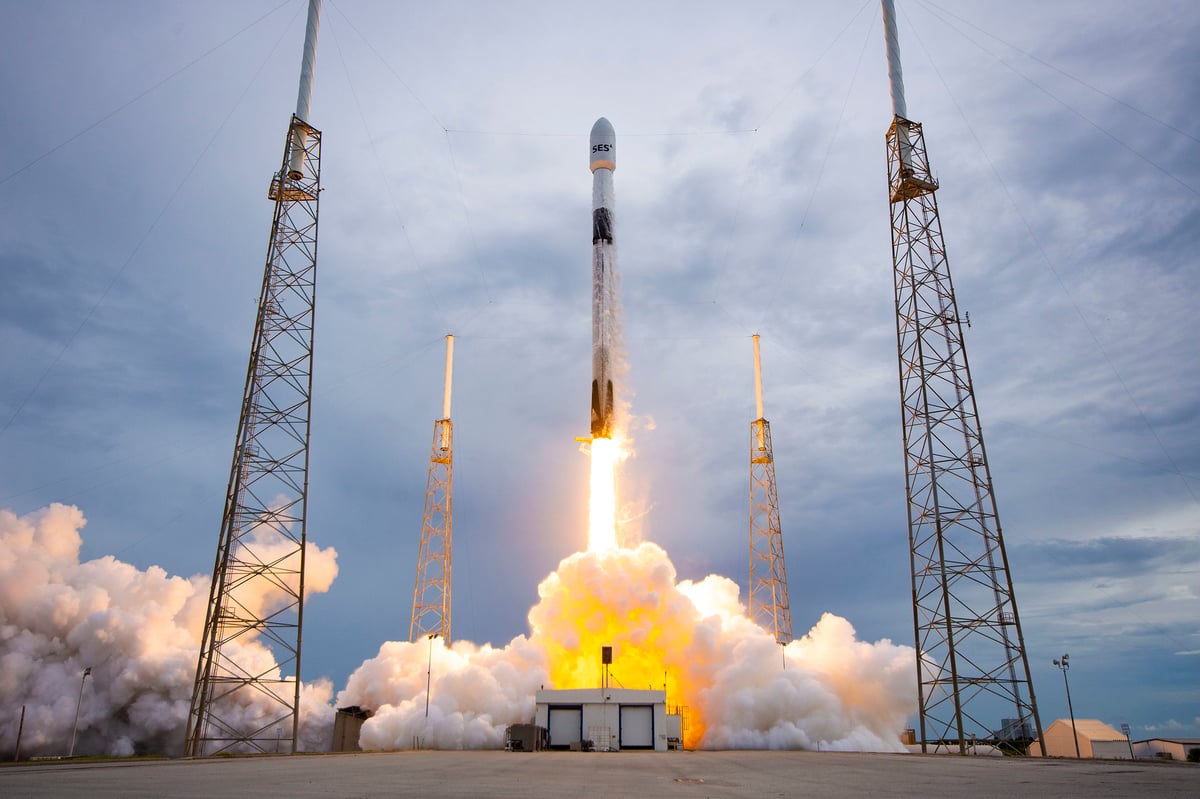
SpaceX IPO Could Threaten Buffett's SiriusXM as Starlink Disrupts Satellite Radio
The anticipated SpaceX IPO, targeting a valuation of $2 trillion and seeking to raise $75 billion, could pose significant competitive threats to SiriusXM Holdings ($SIRI), the satellite radio company that counts Berkshire Hathaway among its largest shareholders. As Starlink's satellite internet service continues its rapid expansion at $50 per month, industry analysts warn that consumers with access to the service would likely gravitate toward internet-based music streaming alternatives rather than maintain subscriptions to SiriusXM's traditional satellite radio offering, priced at $26 per month. This emerging competitive dynamic threatens to further pressure a company already grappling with flat growth as digital streaming platforms like Spotify have fundamentally reshaped consumer preferences in the audio entertainment market.
The Starlink Threat to Satellite Radio
SpaceX's Starlink constellation represents a watershed moment for the satellite communications industry, but its implications extend far beyond broadband internet provision. The service's competitive pricing and expanding coverage create a direct pathway for SiriusXM subscribers to migrate toward streaming-based music services that would leverage Starlink's connectivity.
Key competitive dynamics include:
- Starlink pricing: $50/month for satellite internet access, compared to SiriusXM's $26/month satellite radio subscription
- Total cost advantage: A Starlink subscriber gains broadband access plus the ability to stream unlimited music via Spotify Premium ($12.99/month) or Apple Music ($10.99/month) for combined costs of $60-63/month
- SiriusXM's isolated offering: Traditional satellite radio provides only audio content without broader internet connectivity
- Service expansion: Starlink's growing footprint in rural and underserved areas—SiriusXM's traditional stronghold—directly overlaps with the satellite radio provider's core market
- Consumer choice: Users would obtain both connectivity and superior music selection through streaming platforms rather than maintaining a separate satellite radio subscription
The fundamental economics favor the bundled Starlink-plus-streaming proposition. A SiriusXM subscriber paying $26/month receives limited audio programming with monthly commercial interruptions on most channels. In contrast, a Starlink customer pays marginally more for internet access while gaining access to millions of songs through streaming platforms, superior audio quality, and personalized recommendations through algorithmic curation—capabilities that SiriusXM cannot match.
Market Context: Structural Decline and Intensifying Pressure
SiriusXM's vulnerability to Starlink disruption cannot be separated from the company's already-deteriorating competitive position within the broader audio entertainment landscape. The company has faced years of declining subscriber growth and increasing churn as internet-based alternatives have fundamentally transformed how consumers consume audio content.
The structural headwinds SiriusXM faces:
- Streaming dominance: Spotify, Apple Music, Amazon Music, and YouTube Music have collectively captured the growth trajectory in audio entertainment, offering vastly larger catalogs than satellite radio
- Flat growth trajectory: SiriusXM has struggled to expand its subscriber base meaningfully, with growth concentrated almost exclusively in automotive OEM partnerships rather than retail adoption
- Generational preferences: Younger consumers entering the market show minimal adoption of satellite radio, preferring subscription streaming services they already access through smartphones
- Buffett's stake under pressure: Berkshire Hathaway's substantial investment in SiriusXM has underperformed as the company grapples with secular headwinds
- Pricing power limitations: SiriusXM's ability to raise prices faces constraints given the superior value proposition of streaming alternatives
The satellite radio industry's decline represents one of the starkest examples of digital disruption in media and entertainment. What was once a growth industry with considerable consumer enthusiasm has contracted into a niche service increasingly dependent on captive automotive audiences. Starlink's expansion threatens to accelerate this decline by providing the connectivity infrastructure that makes streaming a viable alternative even in traditionally underserved geographic markets.
Investor Implications: Reassessing Defensive Holdings
For investors holding $SIRI directly or through Berkshire Hathaway ($BRK.B, $BRK.A) exposure, the SpaceX IPO announcement carries meaningful implications for portfolio risk assessment and long-term value expectations.
Critical considerations for shareholders:
- Valuation pressure: A SpaceX IPO at the anticipated valuation would immediately focus investor attention on competing satellite-based business models, inviting direct comparisons between SiriusXM's declining subscriber base and Starlink's expanding coverage and revenue potential
- Competitive disadvantage crystallization: The SpaceX IPO roadshow would likely highlight Starlink's superior economics and growth trajectory, potentially triggering a re-rating of SiriusXM's value in public markets
- Buffett's capital allocation concerns: SiriusXM's underperformance may increasingly pressure Berkshire Hathaway to redeploy capital toward higher-growth opportunities, particularly given the conglomerate's substantial cash position
- Dividend sustainability questions: If subscriber growth continues to stagnate or decline accelerates, SiriusXM's ability to maintain its current dividend policy could face scrutiny
- M&A speculation: Competitive pressure and flat growth could eventually push SiriusXM toward consolidation, acquisition, or strategic repositioning—scenarios that could materially affect shareholder returns
The investment thesis for SiriusXM has long relied on the company's captive automotive audience and the assumption that satellite radio would maintain relevance as a premium audio service. Starlink disruption directly undermines both assumptions. As broadband becomes ubiquitously available—including in previously underserved areas—the value proposition of dedicated satellite radio infrastructure diminishes significantly. Investors should reassess whether SiriusXM's current valuation adequately prices in this competitive displacement risk.
Looking Forward: The Existential Challenge
SpaceX's anticipated IPO and Starlink's continued expansion represent more than just a new competitor in satellite communications. For SiriusXM, they symbolize the company's potential obsolescence in an increasingly connected world where ubiquitous broadband access renders specialized satellite radio infrastructure superfluous. The $2 trillion valuation target for SpaceX versus SiriusXM's considerably more modest market capitalization underscores the market's assessment of which satellite-based business model offers genuine long-term growth potential.
For Buffett and Berkshire Hathaway, this dynamic raises broader questions about capital deployment in industries facing secular decline. SiriusXM's dependence on legacy automotive relationships and its inability to compete effectively on content with streaming platforms suggest the company may represent a value trap rather than a value investment. The next chapter in SiriusXM's history will likely be written not by internal initiatives but by external competitive forces—primarily Starlink's expanding footprint making traditional satellite radio increasingly irrelevant to consumer purchasing decisions.