
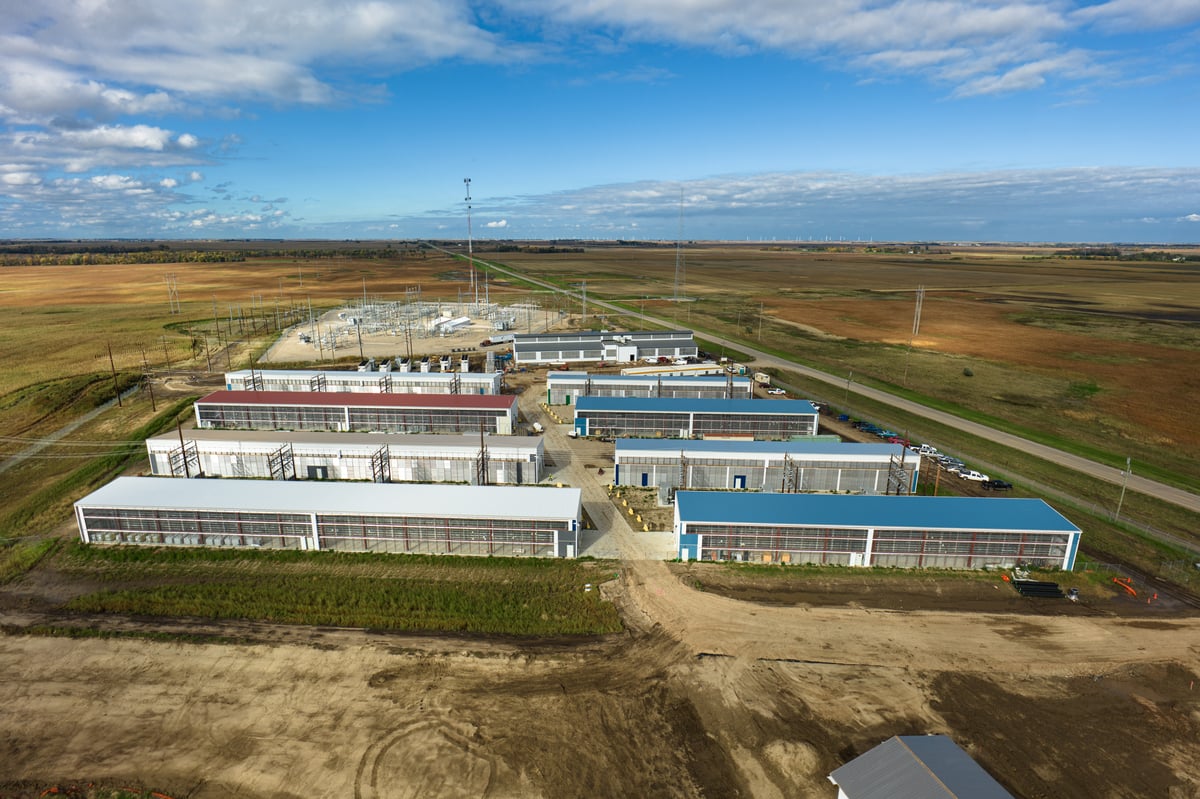
Meta's Aggressive AI Infrastructure Bet Reshapes Chip Demand Outlook
Meta Platforms has dramatically escalated its capital expenditure forecast, raising guidance to a range of $125-145 billion from the previously projected $115-135 billion—a significant upward revision that signals the social media giant's unwavering commitment to dominating artificial intelligence infrastructure. The increase, driven by unexpectedly elevated component costs and memory pricing pressures, comes at a pivotal moment when the hyperscaler arms race for AI dominance is intensifying across the technology industry. For investors in semiconductor suppliers like $NVDA (Nvidia) and $MU (Micron Technology), Meta's revised guidance represents validation that the AI infrastructure investment cycle remains in its infancy, with multiple years of sustained demand ahead.
Meta CEO Mark Zuckerberg's disclosure of higher-than-anticipated component expenses underscores a critical market dynamic: as demand for AI chips has exploded, semiconductor manufacturers have been able to command premium pricing, particularly for memory components essential to training large language models and running inference workloads at scale. This cost inflation, rather than deterring Meta's ambitious AI ambitions, has merely prompted the company to adjust spending upward—a telling signal that the company views AI infrastructure as non-discretionary capital spending essential to its long-term competitive positioning.
The Hyperscaler Spending Surge Accelerates
Meta's revised capex guidance arrives against the backdrop of accelerating cloud infrastructure investments across the entire hyperscaler ecosystem:
- Google Cloud reported a stunning 63% year-over-year growth in revenue, demonstrating explosive demand for AI and machine learning services
- Microsoft Azure achieved 39% growth, buoyed by enterprise adoption of AI-powered applications and GPT-4 integration
- Amazon Web Services (AWS) posted 28% growth, maintaining its market leadership despite intensifying competition
These metrics collectively illustrate that the AI infrastructure buildout is not confined to Meta alone but represents a sector-wide phenomenon. The three largest cloud providers—representing the core of the hyperscaler market—are simultaneously ramping capital investments in data center capacity, GPU procurement, and networking infrastructure. This synchronized expansion creates a powerful tailwind for semiconductor manufacturers, particularly $NVDA, which dominates the GPU market with its H100 and H200 chips that power most large language model training operations.
The memory pricing dynamics that drove Meta's capex increase deserve particular attention. Micron Technology, a leading manufacturer of DRAM and NAND flash memory, stands to benefit disproportionately from sustained price increases as hyperscalers compete for limited memory supply. Unlike logic chips, which face cyclical overcapacity risks, advanced memory components remain in structural shortage as AI workloads require unprecedented quantities of high-bandwidth memory to support models with hundreds of billions of parameters.
Why This Matters for Investors and the Market
Meta's announcement fundamentally reshapes the investment narrative around semiconductor equipment manufacturers and their suppliers. For years, investors questioned whether AI infrastructure spending would prove sustainable or merely represent a speculative bubble. Meta's decision to increase capex guidance in response to higher costs—rather than reduce it—provides empirical evidence that the company views current spending levels as inadequate relative to competitive requirements.
This has profound implications for the semiconductor industry's earnings trajectory. Nvidia's gross margins have expanded significantly as average selling prices for its GPU products have risen faster than production costs. Higher memory prices similarly benefit Micron, which can pass increased DRAM and NAND costs to hyperscaler customers with strong pricing power. The company's capital intensity means that equipment manufacturers like ASML (supplier of chip-making tools) also benefit indirectly through increased demand for advanced fabrication capacity.
The competitive dynamic warrants scrutiny as well. Meta's aggressive AI capex suggests the company is attempting to reduce dependence on external cloud providers and establish internal AI capabilities at scale. This vertical integration strategy parallels similar moves by Google and Amazon, each of which has invested in proprietary AI chips while simultaneously expanding third-party cloud offerings. However, the massive capital requirements—$125-145 billion annually for Meta alone—indicate that even the largest technology companies cannot escape the need for specialized semiconductor expertise from firms like Nvidia and Micron.
The broader macroeconomic context also matters. These capital expenditures occur amid interest rate volatility and economic uncertainty. Yet hyperscalers continue increasing capex despite higher financing costs, suggesting they view AI infrastructure as having sufficient long-term value creation potential to justify the investment hurdle rates required in the current interest rate environment. This conviction translates directly to sustained semiconductor demand.
Forward Outlook: Multiple Years of Sustained Demand
Perhaps most significantly, Meta's guidance commentary—suggesting the AI investment boom remains in early stages with several years of growth ahead—provides a multi-year revenue visibility that most capital goods markets struggle to achieve. For semiconductor companies, this translates to predictable demand curves that support both expansion capital investments and shareholder return programs.
The memory pricing dynamics flagged by Meta deserve investor attention going forward. If component cost inflation persists, additional capex guidance increases from other hyperscalers (Google, Amazon, Microsoft) appear likely, creating a positive feedback loop for semiconductor suppliers. Conversely, if memory prices normalize due to capacity additions coming online, margins for Micron could face pressure even as volumes increase.
Meta's revised guidance ultimately validates the thesis that artificial intelligence infrastructure spending will dominate technology sector capital allocation for the remainder of this decade. For investors positioned in $NVDA, $MU, and related semiconductor beneficiaries, the company's decision to raise guidance despite cost inflation represents tangible evidence that AI investment demand remains robust and sustainable. The question for investors is not whether hyperscalers will continue aggressive capex—Meta's decision makes that answer unambiguous—but rather which semiconductor suppliers will capture the greatest share of the resulting demand. Meta's choice to increase rather than moderate spending despite cost pressures suggests the answer lies with the most specialized, capacity-constrained suppliers serving the AI infrastructure market.