
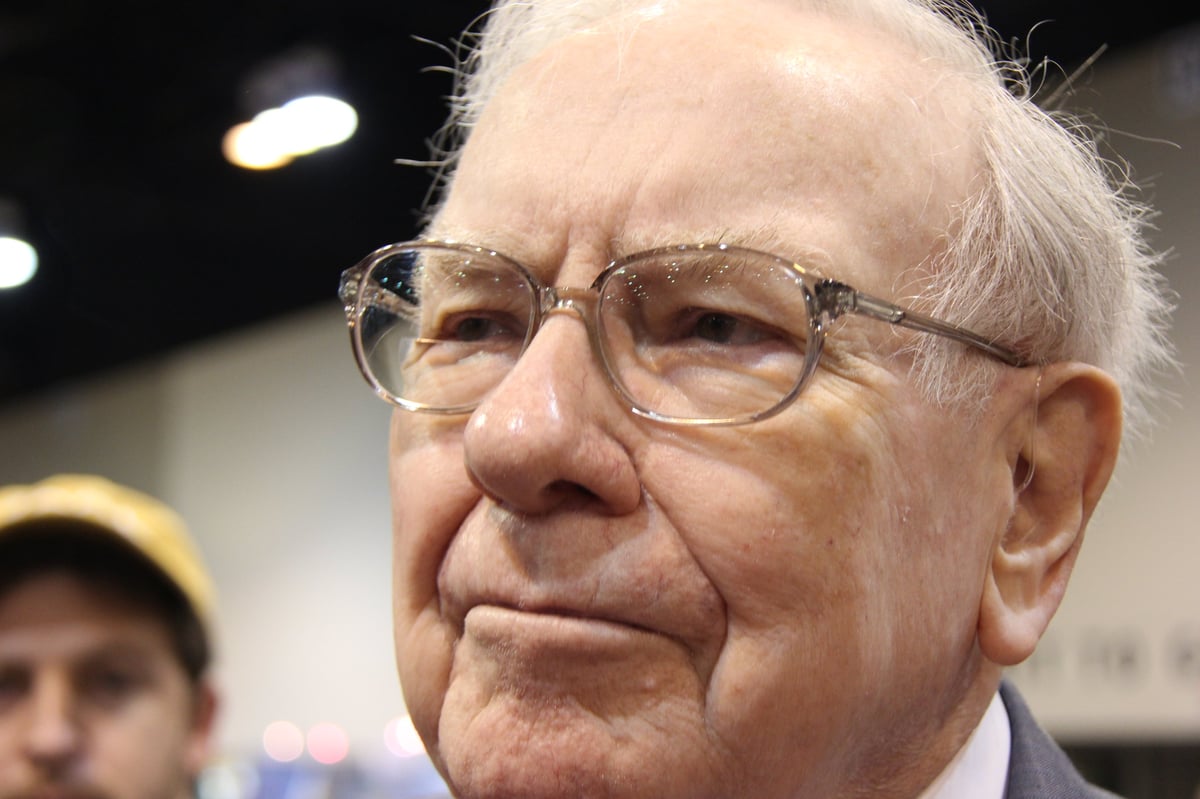
Buffett's Strategic Pivot Marks Dramatic Shift in His Final Days Leading Berkshire
Warren Buffett concluded his legendary tenure as Berkshire Hathaway ($BRK.B) CEO with a bold portfolio reshuffling that underscores a fundamental divergence in his view of two tech giants. Before officially retiring on December 31, 2025, the investing icon liquidated approximately 77% of Berkshire's Amazon stake—a position worth roughly $1.7 billion—while simultaneously deploying over $4 billion into Alphabet ($GOOGL, $GOOG). The moves, executed as Greg Abel assumed leadership of the conglomerate, reveal Buffett's concerns about Amazon's valuation amid aggressive artificial intelligence spending and his enduring conviction in Google's unassailable competitive moat in search.
The timing of these transactions represents far more than routine portfolio maintenance. This is Buffett's final statement as the firm's decision-maker—a carefully choreographed exit that distills decades of investment philosophy into two contrasting bets on the technology sector's future. His departure from Amazon ($AMZN) signals skepticism about the e-commerce and cloud infrastructure giant's growth trajectory relative to its valuation, particularly given the capital intensity of its AI initiatives. Conversely, his substantial reinvestment in Alphabet underscores undiminished faith in the search advertising business model and the company's defensive characteristics.
The Numbers Behind Buffett's Amazon Exit and Google Embrace
The scale of Buffett's Amazon divestment cannot be overstated. Reducing Berkshire's position by 77%—a stake that once represented one of the conglomerate's marquee holdings—represents a decisive repudiation of the company's current trajectory. The $1.7 billion in proceeds from the sale reflects not just a shift in portfolio weights but a fundamental reassessment of Amazon's risk-reward equation.
By contrast, Buffett's $4 billion-plus investment in Alphabet constitutes a resounding endorsement of Google's business fundamentals:
- Dominant market position: Google commands approximately 90% of global search market share, creating a powerful competitive barrier
- Pricing power: The search advertising business model allows the company to command premium rates with limited alternatives
- Valuation calculus: Buffett appears to view Alphabet as offering superior value relative to Amazon on key metrics
- Capital efficiency: Unlike Amazon's capital-intensive AI infrastructure buildout, Google generates enormous free cash flow from its core search business
The $4 billion allocation represents a statement of conviction unusual for an investor in Buffett's final months at the helm. This is not a small tactical adjustment but a meaningful capital deployment that will likely influence Berkshire's investment posture well into the Abel era.
Market Context: The AI Spending Divide and Tech Valuation Concerns
Buffett's divergent views on Amazon and Alphabet reflect broader anxieties sweeping through the investment community regarding technology sector valuations in an age of runaway artificial intelligence capital expenditures. Amazon has emerged as one of the most aggressive corporate investors in AI infrastructure, committing substantial sums to build out data centers and proprietary AI capabilities. For a value investor like Buffett, who has traditionally favored businesses generating returns on invested capital exceeding their cost of capital, this aggressive spending trajectory raises red flags.
Amazon's path differs markedly from Google's approach to artificial intelligence. While both companies recognize AI's transformative potential, Amazon appears to be treating it as requiring massive upfront capital deployment—a strategy that pressures near-term profitability and strains the balance sheet. Buffett's concerns likely center on the uncertain return on these substantial investments and the extended timeline before AI-driven revenue streams materialize meaningfully.
Alphabet, by contrast, operates from a position of extraordinary strength. The company's search monopoly generates over $200 billion in annual revenue, with gross margins exceeding 80%. This financial fortress allows Google to invest substantially in AI research and product development without compromising shareholder returns. The company can integrate AI capabilities into its search business—already positioning Gemini as a competitor to OpenAI's offerings—while maintaining the pricing power and capital efficiency that characterized the business for two decades.
The competitive landscape tilts dramatically in Google's favor. Amazon's retail and cloud businesses face intense competition from specialists and new entrants, while its investment in AI infrastructure serves multiple masters. Google's search franchise, by contrast, faces no meaningful competitive threat despite ChatGPT and other generative AI tools gaining consumer mindshare. The 90% search market share represents a moat so substantial that it transcends industry cycles and technological disruption—precisely the type of durable competitive advantage Buffett has pursued throughout his career.
Investor Implications: What Buffett's Exit Means for Markets
For Berkshire Hathaway shareholders, this final portfolio maneuver carries several critical implications. First, it signals that Abel, who now operates with the implicit blessing of the markets' greatest investor, should expect significant latitude in managing the conglomerate's substantial cash reserves. Buffett's aggressive move into Alphabet demonstrates comfort with concentrated technology exposure, suggesting the next phase of Berkshire's portfolio may maintain meaningful allocations to secular growth stories.
Second, the Amazon exit deserves careful study by growth-oriented investors. Buffett is not ordinarily a trend-following seller; his decisions typically reflect deep conviction about valuation and competitive dynamics. The timing—during a period when Amazon's stock has recovered from pandemic lows and AI enthusiasm runs high—suggests this was not a panic sale but a deliberate choice to reallocate capital to superior opportunities.
Third, Alphabet investors should recognize this as validation from the world's most successful investor at a critical juncture. The company faces legitimate questions about whether artificial intelligence will ultimately cannibalize search advertising or transform it. Buffett's $4 billion bet in his final days as CEO represents institutional-grade confidence that Google's search franchise will thrive in an AI-augmented world.
Broader market implications warrant attention as well. Buffett's moves suggest skepticism about indiscriminate technology sector enthusiasm, particularly regarding companies making enormous bets on AI infrastructure buildout without proven near-term returns. Investors should consider whether the valuation gap between Amazon and Alphabet reflects fundamentally different risk profiles—with Amazon priced for perfection and Alphabet offering the defensive characteristics Buffett historically favored.
The shift also underscores the persistent divergence between artificial intelligence enthusiasm and investment discipline. While venture capital and growth-focused investors have poured capital into AI infrastructure and applications, Buffett's final act suggests the most enduring value in the tech ecosystem lies with companies that own defensible moats in large, profitable markets. Google's search franchise—despite facing disruption rhetoric for nearly a decade—continues generating extraordinary returns on invested capital, precisely the metric that has guided Buffett's entire investment philosophy.
Looking Forward: The End of an Era and a New Beginning
Buffett's transition from active CEO to increasingly hands-off chairman marks the formal beginning of the Greg Abel era at Berkshire Hathaway. The $4 billion Alphabet investment and Amazon stake reduction represent the outgoing leader's final guidance to his successor about where the greatest opportunities lie within technology. This is Buffett passing the baton not through philosophical abstractions but through concrete capital allocation decisions.
For market observers, these moves crystallize a crucial lesson about technology investing in 2025 and beyond: not all growth is created equal, and competitive moats matter more than ever. Amazon's aggressive AI spending may ultimately prove prescient, or it may prove a cautionary tale about capital discipline. Google's dominance may be more durable than disruption theorists have suggested. Buffett's final bet is that the latter scenarios prove correct—and his 60-year track record suggests investors would be wise to pay attention to where America's greatest investor placed his final chips.