
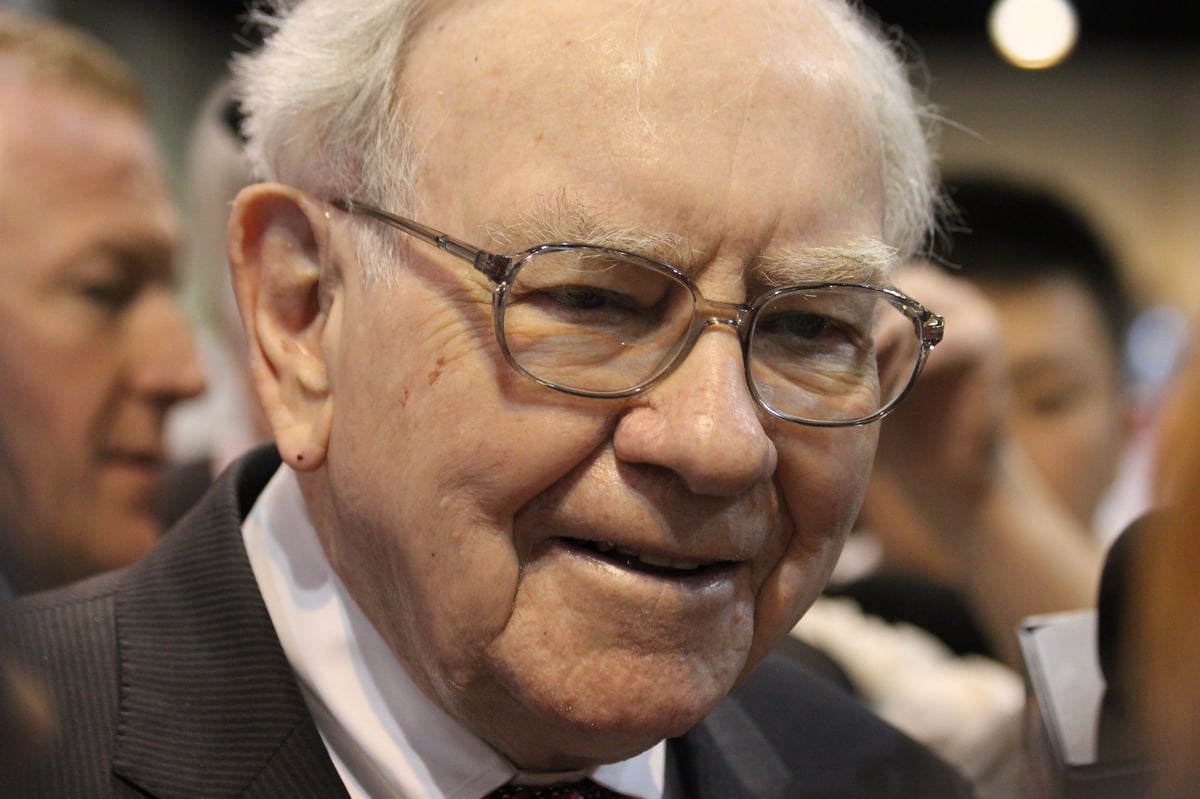
Why Buffett's S&P 500 ETF Strategy Outpaces 90% of Active Managers
Warren Buffett's decades-long advocacy for passive index investing has found powerful validation in recent performance data, which shows that the vast majority of actively managed large-cap funds consistently fail to beat the S&P 500 benchmark. With 79-90% of professionally managed funds underperforming over various time horizons, Buffett's recommendation for buy-and-hold index ETFs has become less of a suggestion and more of an indictment against the traditional active management industry.
The Berkshire Hathaway ($BRK.B) chairman's long-standing position—that most investors should forgo the complexity and costs of stock picking in favor of simple, low-cost S&P 500 index funds—continues to resonate with both retail and institutional investors. This shift represents a fundamental realignment in how Americans approach wealth building, challenging decades of conventional wisdom that professional stock selection justifies the fees charged by active managers.
The Performance Gap Widens
The data supporting passive index investing has become increasingly difficult to ignore. Research consistently demonstrates that between 79-90% of actively managed large-cap funds underperform the S&P 500 across different measurement periods. This isn't a recent phenomenon—it's a persistent pattern that has held true across bull markets, bear markets, and sideways corrections.
Key metrics illustrating the performance divide include:
- 79-90% of large-cap active managers underperform benchmarks
- Performance gaps persist across various time horizons
- Index funds offer dramatically lower fee structures than active management
- Consistency of underperformance suggests systematic, not cyclical, disadvantage
What makes this data particularly damning is its consistency. Over 10-year, 15-year, and 20-year periods, the percentage of underperforming active managers remains stubbornly high. This suggests that the underperformance isn't attributable to short-term market dislocations or temporary manager incompetence, but rather reflects structural challenges inherent to active management itself.
Market Context: The Active Management Crisis
The active management industry faces an existential crisis as investors increasingly recognize that paying premium fees for underperformance represents poor capital allocation. The S&P 500 index, comprising approximately 500 of America's largest publicly traded companies, has become the de facto benchmark against which all other investment vehicles must compete.
Several factors explain why active managers struggle to beat the index:
Fee Drag: Active managers charge 1-2% annually or more, compared to 0.03-0.20% for index ETFs. This cost structure makes beating the index significantly harder before any alpha generation occurs.
Market Efficiency: Modern markets incorporate information so quickly that traditional stock-picking advantages have largely evaporated. Professional analysts crowd the same research reports, attend the same conferences, and speak with the same company management.
Benchmark Construction: The S&P 500 itself has evolved into a highly efficient portfolio of mega-cap stocks. As the index increasingly dominates market returns, beating it becomes progressively more difficult.
Talent Limitations: While exceptional investors exist, they're rare enough that most investors can't reliably identify them in advance. Worse, even when identified, their funds often close to new investors or underperform during subsequent periods.
This performance backdrop has driven massive capital flows from active to passive strategies. Exchange-traded funds (ETFs) tracking the S&P 500—including VOO, IVV, and SPY—now command hundreds of billions in assets under management. The ecosystem of index funds offers unprecedented accessibility, with expense ratios approaching zero for some providers.
Investor Implications: Why This Matters
For individual investors, the implications of this data are profound and multifaceted. Buffett's recommendation isn't merely a suggestion—it's a mathematically grounded strategy backed by decades of empirical evidence. The message is clear: for most investors, especially those without specialized expertise or unlimited time to research securities, attempting to beat the market through active stock selection represents a losing proposition.
The case for index investing strengthens when considering:
- Time Value: Passive investing requires minimal ongoing management, freeing time for other pursuits
- Psychological Benefits: Buy-and-hold strategies reduce the emotional decision-making that often leads to poor timing
- Tax Efficiency: Index funds generate fewer taxable events than actively traded portfolios
- Diversification: A single S&P 500 fund provides exposure to 500 large-cap companies
- Predictability: Past underperformance of active managers suggests future underperformance
For those considering whether to allocate capital to actively managed funds, the data suggests such allocations should be approached cautiously. The mathematical probability of selecting a manager who will beat the index—net of fees—approaches coin-flip odds. Over extended periods, the odds become progressively worse.
Institutional investors, particularly pension funds and endowments, have increasingly recognized this reality. The largest investors in the world have systematically reduced active management allocations while increasing passive index exposure. This institutional shift validates Buffett's long-standing thesis and has contributed to the democratization of low-cost index investing for retail investors.
The Future of Wealth Building
Buffett's advocacy for S&P 500 index ETFs represents more than just investment advice—it reflects a fundamental truth about market efficiency and the limits of stock-picking in modern capital markets. As data continues to accumulate, the case for passive index investing grows stronger, not weaker.
For long-term investors seeking wealth accumulation without constant market-timing stress or exorbitant fees, the path forward appears clear: establish a disciplined contribution schedule to low-cost S&P 500 index funds and maintain that strategy through market cycles. The evidence suggests this approach will outperform the overwhelming majority of alternative strategies pursued by professional investors charging for their expertise.
The revolution Buffett has championed—moving from active stock picking to passive index investing—has largely won. The remaining question isn't whether index investing works, but rather why anyone would pay for underperformance when the data so conclusively demonstrates that passive strategies deliver superior results for most investors.