
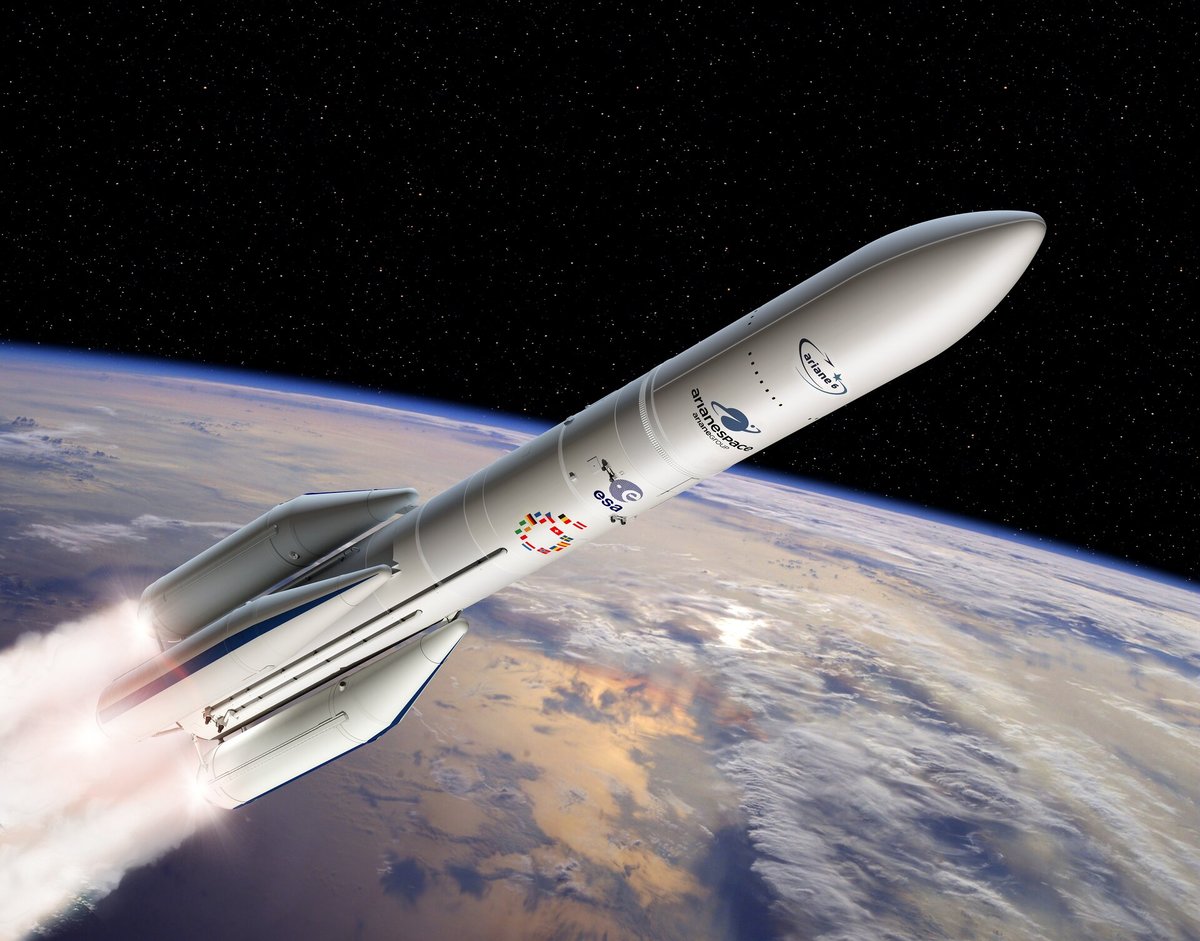
Europe's Ariane 6 Faces SpaceX Reality: $96M Price Tag Masks Subsidy Dependence
Europe's newest heavy-lift rocket, Ariane 6, launched at $96 million per flight, but industry analysis reveals the spacecraft cannot genuinely compete with SpaceX's Falcon 9 without sustained government support. While the headline pricing appears competitive, the underlying economics tell a starkly different story: SpaceX's estimated $15 million per-launch operational costs generate approximately 86% gross profit margins, whereas Ariane 6 requires $410 million in annual government subsidies just to maintain its current pricing structure. This fundamental disparity underscores a critical shift in the global space industry and raises questions about the long-term viability of traditional government-backed launch providers in an era dominated by private space innovation.
The Price-Performance Gap: Numbers Don't Tell the Full Story
At first glance, Ariane 6's $96 million per-launch price point appears to position Europe's ArianeSpace as a viable alternative in the commercial launch market. However, this figure obscures a troubling financial reality that extends far beyond the stated cost per mission.
SpaceX's competitive advantage rests on fundamentally different unit economics:
- Estimated operational costs: $15 million per Falcon 9 launch
- Estimated gross margin: ~86%
- Cost structure enables aggressive pricing and rapid market expansion
- Vertical integration reduces supply chain inefficiencies
- Reusability drive continuous cost reduction
Ariane 6's actual financial picture reveals structural challenges:
- Published launch price: $96 million
- Annual government subsidies required: $410 million
- Subsidy dependency: Essential to maintain current pricing
- Limited reusability capabilities compared to competitors
- Higher manufacturing and operational overhead
The $410 million annual subsidy requirement represents the true cost of keeping Ariane 6 competitive. Without this government support—funded by European taxpayers—the rocket's actual commercial price would need to increase substantially, likely pricing it out of the competitive market entirely. This creates a dependency loop where Europe's space industry remains viable only through continued public funding, a structural weakness that rivals do not face.
Market Context: The Changing Landscape of Commercial Space
The launch services market has undergone seismic shifts over the past decade, fundamentally altering competitive dynamics and exposing structural vulnerabilities in traditional providers.
The reusability revolution, pioneered by $TSLA-led SpaceX, has transformed industry economics. When Falcon 9 first demonstrated reliable first-stage booster recovery in 2015, it opened a pathway to dramatically lower per-launch costs. By 2024, SpaceX has completed hundreds of booster reuses, with some rocket cores flying more than a dozen missions. This operational cadence generates the learning curves and manufacturing efficiencies that drive costs toward the estimated $15 million floor.
Europe faced a different calculus. Ariane 6 was designed and developed during an era when reusability remained largely theoretical. The program's architecture reflects traditional expendable rocket design principles, with each vehicle representing a complete loss after flight. Development costs—ultimately borne by European governments through the European Space Agency and national space agencies—totaled billions of euros. To justify these sunk costs and maintain industrial capacity, governments committed to subsidizing commercial operations.
The broader competitive landscape now includes:
- SpaceX ($TSLA): Dominant market share with Falcon 9 and Starship in development
- Blue Origin (Amazon-backed): New Glenn under development, New Shepard operations ongoing
- Relativity Space: 3D-printed rockets targeting lower costs
- Axiom Space and emerging commercial providers: Fragmenting traditional launch market share
- China's space industry: State-backed competitors offering alternative capacity
In this environment, Ariane 6 entered the market already disadvantaged by structural economics. The rocket's development timeline meant it incorporates design decisions made before the reusability revolution fully demonstrated its potential. Transitioning to reusable architecture would require years of additional development and billions in capital investment—investment that European governments appear reluctant to authorize given fiscal pressures elsewhere.
Investor Implications: Government Support as Structural Weakness
For investors and market analysts, the Ariane 6 situation illuminates critical vulnerabilities in government-dependent space ventures and raises broader questions about the future of traditional aerospace contractors.
The dependency on $410 million annual subsidies creates several risks:
Political risk: Subsidy levels depend on political will and budget priorities. If European governments face fiscal pressures—debt reduction mandates, social spending demands, or shifting strategic priorities—space budgets could face cuts. Unlike commercial ventures that can adjust costs through operational improvements, subsidy-dependent programs lack this flexibility.
Competitive obsolescence: SpaceX's cost structure enables price cuts and margin expansion simultaneously. Each successful reuse reduces operational costs further. Ariane 6 has no equivalent pathway. Even with subsidies maintained, the company cannot match SpaceX's pace of improvement without fundamentally redesigning its vehicle—a multi-billion-euro undertaking.
Market share erosion: As SpaceX, Blue Origin, and emerging competitors capture increasing percentages of commercial launch demand, the addressable market for Ariane 6 contracts. Fewer launches mean less revenue spread across fixed government subsidies, worsening the subsidy-per-launch ratio and increasing political pressure to reduce support.
Industrial capacity utilization: Ariane 6 production rates depend on launch demand and government procurement. If commercial demand disappoints, capacity utilization falls, raising per-unit costs and requiring larger subsidies to maintain affordability. This creates a vicious cycle.
For European defense and security industries reliant on domestic launch capabilities, however, the Ariane 6 subsidy represents strategic spending rather than commercial investment. European governments value assured access to space for military reconnaissance, communications, and strategic positioning—a valid rationale, but one distinct from commercial viability.
The core investor insight: Ariane 6 competitiveness depends entirely on continued government funding and SpaceX's pricing decisions. If SpaceX reduces prices further (leveraging improved economics), or if European governments reduce subsidies, Ariane 6's market position deteriorates rapidly. Traditional aerospace contractors with significant Ariane exposure face structural headwinds regardless of technical performance.
The Subsidy Question: Long-Term Sustainability
The $410 million annual subsidy requirement raises fundamental questions about long-term policy sustainability. European governments face competing priorities: aging populations requiring increased healthcare spending, climate transition investments, defense spending amid geopolitical tensions, and public debt reduction following pandemic-era spending surges.
Space budgets, while politically popular in some quarters, lack the existential urgency of healthcare or defense. Over time, pressure to reduce subsidies could intensify. Yet removing or substantially reducing support would make Ariane 6 uncompetitive within months, threatening the European space industrial base.
This dilemma explains why SpaceX holds implicit pricing power over Ariane 6's viability. If Elon Musk's company maintains prices at current levels, Ariane 6 survives. If SpaceX drops prices to $50 million or lower—operationally feasible given 86% margins—European governments would face impossible choices: increase subsidies further or watch their launch capability fade.
Closing: A Sector at an Inflection Point
The Ariane 6 story represents a broader reckoning in the space industry. Traditional, government-funded launch providers built for an era of scarcity and strategic importance now compete against commercial ventures optimized for efficiency and innovation. The $96 million price tag creates an illusion of competitiveness that masks fundamental economic reality: Europe's newest rocket cannot survive in open market competition without $410 million in annual government life support.
This outcome does not reflect technical failure—Ariane 6 is an engineering achievement. Rather, it reflects the structural advantages of private innovation operating at scale, where cost improvements compound across hundreds of missions and billions in operational data. Until European providers either secure equivalent private capital (unlikely given regulatory constraints) or convince governments that subsidies represent acceptable strategic spending (politically precarious), Ariane 6 will remain dependent on government goodwill and SpaceX's pricing forbearance.
For investors in traditional aerospace, the lesson is clear: incumbency provides no protection in rapidly evolving markets. For European policymakers, the question becomes whether the strategic value of domestic launch capacity justifies indefinite subsidies. And for SpaceX, it confirms that operational excellence and innovation create structural advantages competitors cannot easily replicate—even with government backing.