
Nvidia Partners With Oklo on Nuclear Power: Can AI Unlock the Data Center Energy Crisis?
Nvidia and Oklo have announced a strategic collaboration with Los Alamos National Laboratory to accelerate nuclear reactor development using artificial intelligence tools and advanced simulation technologies. The partnership represents a pivotal moment in addressing one of the most pressing constraints on AI infrastructure expansion: the staggering energy demands of modern data centers. By deploying Nvidia's computing expertise to expedite fuel research and reactor design validation, the alliance aims to bring viable advanced nuclear power solutions to market faster—potentially transforming how the AI industry solves its electricity bottleneck.
The move underscores the growing urgency among tech giants to secure clean, reliable power sources as AI model training and inference consume ever-increasing amounts of electricity. While the collaboration validates Oklo's technology roadmap and demonstrates genuine strategic momentum, the pre-revenue startup still faces substantial execution risks and multiyear regulatory hurdles that could test investor patience.
The Strategic Partnership and Its Scope
The collaboration leverages Nvidia's unmatched position in high-performance computing and AI simulation to accelerate Oklo's mission of deploying advanced nuclear reactors. Specifically, the partnership will focus on:
- Fuel research acceleration: Using AI to optimize nuclear fuel designs and predict performance characteristics
- Reactor design validation: Employing Nvidia's simulation capabilities to test and refine reactor designs before physical construction
- Regulatory pathway support: Streamlining documentation and analysis required for nuclear regulatory approval
The involvement of Los Alamos National Laboratory—one of America's premier nuclear research institutions—adds significant credibility to the initiative. The lab brings decades of nuclear engineering expertise and computational resources that complement Nvidia's cutting-edge AI infrastructure.
This partnership is particularly noteworthy because it addresses a fundamental constraint on AI growth. Data centers running large language models and training AI systems consume enormous amounts of power. Google, Microsoft, Meta, and other hyperscalers are racing to secure electricity supplies, with some facing challenges to maintain expansion timelines. Advanced nuclear reactors, which produce zero-carbon baseload power with minimal land footprint, represent an attractive solution—but their development has historically moved at a glacial pace.
By applying Nvidia's simulation and AI capabilities, the partnership could shorten design-to-deployment timelines from decades to years, fundamentally changing the economics and feasibility of nuclear expansion for the tech sector.
Market Context: The Nuclear-AI Nexus
The announcement arrives at a critical inflection point in energy markets. The artificial intelligence boom has created unprecedented demand for electricity:
- Data center power consumption is projected to double or triple over the next five years as AI adoption accelerates
- Carbon-free baseload power is becoming a competitive advantage and regulatory requirement for major tech companies
- Advanced nuclear technologies have gained mainstream credibility, with both Democratic and Republican administrations supporting nuclear expansion
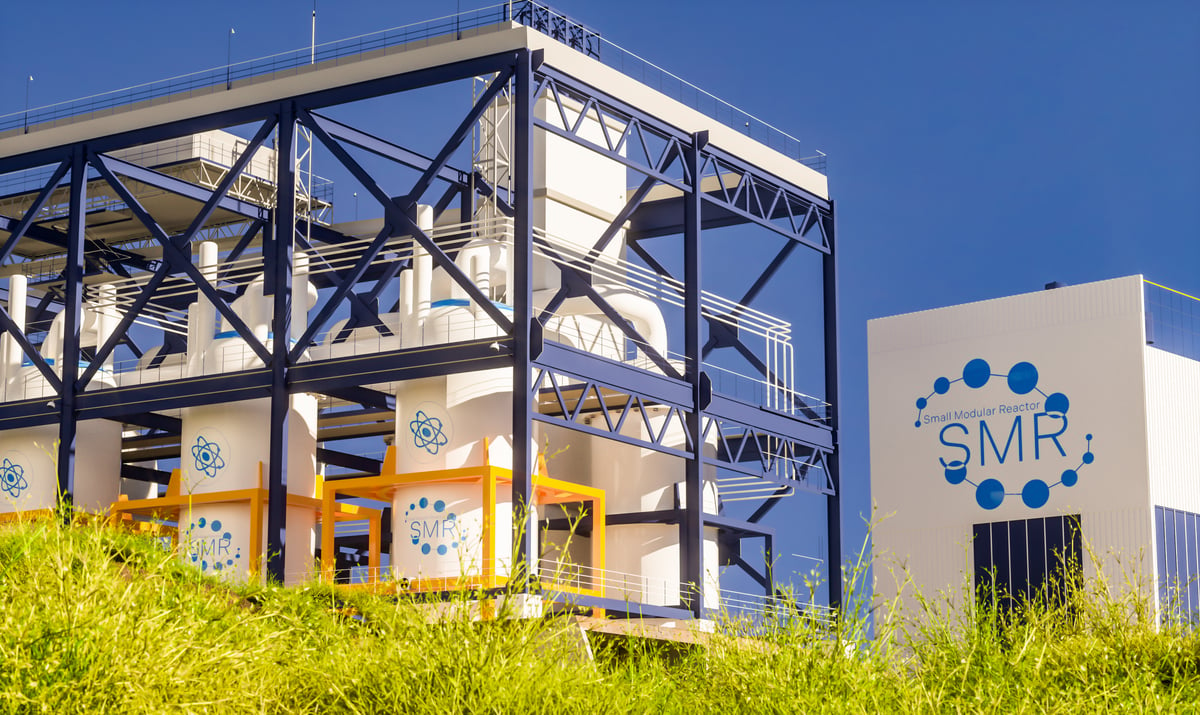
- Regulatory momentum is shifting in favor of smaller modular reactors (SMRs), with the Nuclear Regulatory Commission (NRC) streamlining approval processes
Oklo competes in the crowded advanced reactor space alongside companies like X-energy, TerraPower (backed by Bill Gates), and others pursuing modular reactor designs. However, Oklo's focus on accelerator-driven systems and its partnership with a tech giant gives it differentiation. Nvidia's involvement signals that the semiconductor-to-nuclear axis is becoming real infrastructure strategy, not just speculation.
For Nvidia ($NVDA), the partnership represents both enlightened self-interest and market positioning. As the company faces questions about whether AI demand can sustain current valuations, securing energy supply for future data centers becomes existential. By helping solve the energy bottleneck, Nvidia removes a potential constraint on its core business—computing power for AI.
The broader market context includes significant tailwinds: congressional support for nuclear energy, corporate power purchase agreements with nuclear developers, and recognition that meeting climate targets and AI growth simultaneously requires massive nuclear expansion. The International Energy Agency estimates that advanced nuclear capacity must increase sixfold to meet net-zero climate goals while powering the AI revolution.
Investor Implications: Promise and Peril
For investors evaluating this partnership, several critical questions emerge:
The Bull Case:
- Validation and credibility: Nvidia's participation and Los Alamos's involvement validate Oklo's technical approach and derisking the company's long-term value proposition
- Acceleration of timelines: AI-powered simulation could compress multi-year development cycles, bringing revenue forward
- Massive TAM: If advanced nuclear becomes the power solution for hyperscalers, the addressable market is enormous
- Strategic moat: Early partnerships with dominant companies like Nvidia create competitive advantages and customer lock-in
The Bear Case:
- Pre-revenue status: Oklo has no revenue, making it a pure bet on execution across technical, regulatory, and commercialization phases
- Regulatory timeline uncertainty: Even with streamlining, nuclear projects face multiyear NRC review processes; timelines are rarely predictable
- Capital intensity: Nuclear reactor projects require billions in construction capital, introducing financing risk
- Execution risk: Moving from design to deployed reactors involves dozens of failure points; partnership with Nvidia does not guarantee success
- Competitive pressure: Multiple advanced reactor companies are pursuing similar strategies; consolidation may be inevitable
Market Implications: The announcement likely benefits the broader advanced nuclear sector, supporting stock valuations for Oklo and competitors while reinforcing the narrative that nuclear is central to AI infrastructure. For energy markets, the partnership signals that corporate demand for zero-carbon power is now driving nuclear development—a structural shift with decade-long implications.
For Nvidia, the partnership is largely symbolic and strategic—it costs relatively little while positioning the company as thinking beyond chip sales into infrastructure. However, it also acknowledges the company's recognition that power constraints could limit AI growth, a concern some investors hadn't fully priced in.
The Road Ahead
The partnership announcement represents genuine progress, but investors should temper expectations. Oklo remains years away from commercial reactor deployment, regulatory approval, and revenue generation. The multiyear timelines typical of nuclear projects mean investors will need patience and tolerance for setbacks.
However, the collaboration between Nvidia and Oklo with Los Alamos validates the strategic thesis: AI's energy demands are so large that solving them requires innovation across sectors, including nuclear power. For the tech industry, securing reliable, clean power is becoming as important as computing power itself.
The next critical milestones will be regulatory submissions, construction timelines, and power purchase agreements with hyperscalers. If Oklo can translate Nvidia's computational advantages into faster regulatory approval and design validation, the partnership could genuinely be transformative. If regulatory timelines remain unpredictable or construction hits typical nuclear delays, the announcement may ultimately prove more symbolic than material.
For investors, the partnership is a positive signal but not a guarantee. Oklo's valuation and Nvidia's stock should be evaluated on independent merits, with the partnership viewed as one positive factor among many. The real test will come when designs move from simulation to steel and concrete.