
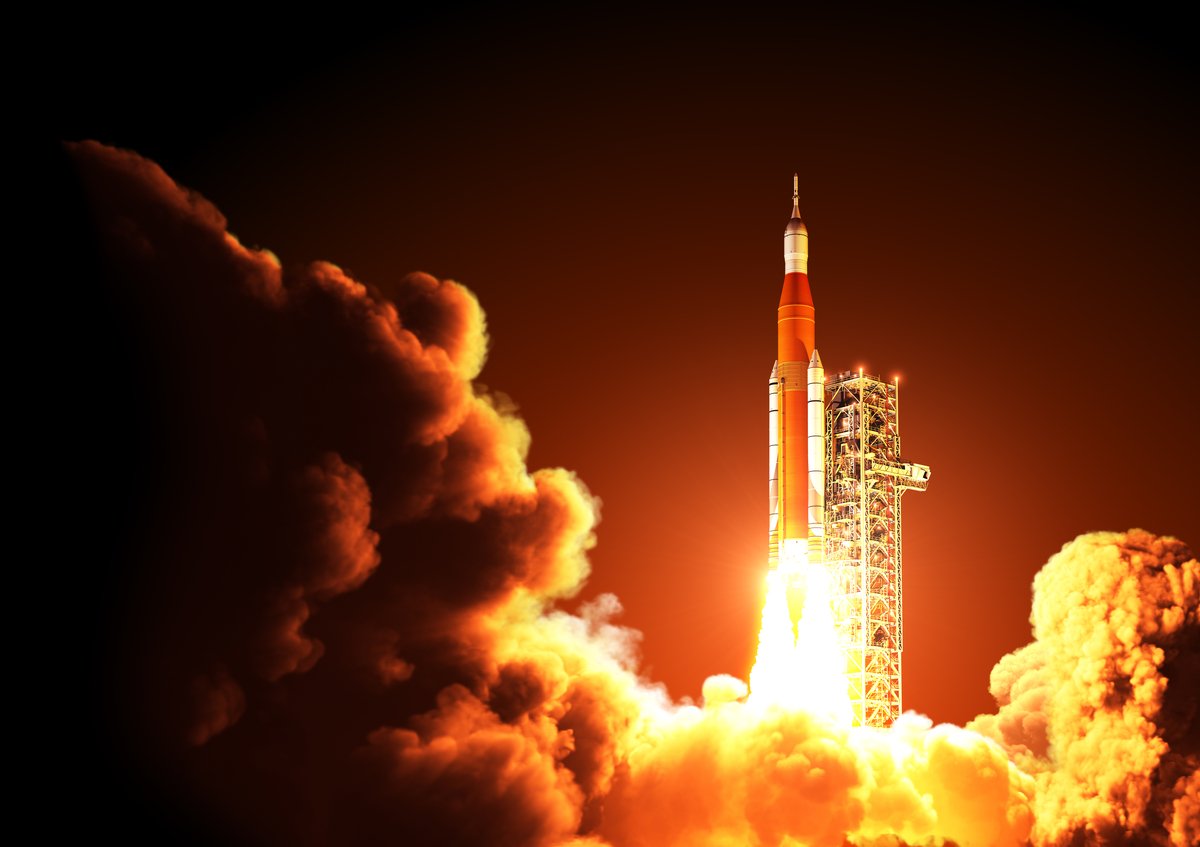
SpaceX IPO Could Unleash $75B Spending Wave: Here's How $NVDA and $TSLA Win
SpaceX's long-anticipated initial public offering could reshape the aerospace and artificial intelligence sectors, with the space exploration company expected to raise between $50 billion and $75 billion in capital. The massive infusion of cash would give Elon Musk's rocket company unprecedented financial firepower to accelerate its most ambitious initiatives, from scaling Starship production to launching space-based AI data centers. For investors, this development signals a major shift in how cutting-edge technology gets funded and deployed—and two technology giants stand to capture disproportionate gains from the resulting spending spree.
The Capital Deployment Strategy
The timing of SpaceX's IPO matters significantly in the current market environment. With valuations in the aerospace and space technology sectors reaching new heights, and institutional investor appetite for growth-stage private companies showing no signs of abating, the company has chosen an opportune moment to go public. The projected $50-75 billion raise would represent one of the largest IPOs in recent memory, ranking among the most significant capital raises in technology sector history.
Based on the company's strategic priorities, capital deployment is expected to focus on several critical areas:
- Starship scaling: Accelerating production capacity and launch cadence for the fully reusable super-heavy rocket system
- Space-based AI infrastructure: Developing and deploying satellite networks capable of hosting artificial intelligence workloads in orbit
- Manufacturing expansion: Building new production facilities to support increased output across multiple programs
- Technology development: Advancing propulsion systems, materials science, and autonomous landing capabilities
The breadth of these initiatives means that SpaceX's capital deployment will ripple across the broader technology ecosystem, creating substantial business opportunities for suppliers and partners.
Market Winners: Nvidia and Tesla Emerge as Primary Beneficiaries
Among the most notable winners from SpaceX's spending spree will be Nvidia Corporation ($NVDA) and Tesla ($TSLA), companies already positioned at the forefront of AI infrastructure and advanced manufacturing.
Nvidia's strategic positioning rests on its dominance in specialized processors essential for artificial intelligence applications. As SpaceX pursues its vision of space-based AI data centers, the company will require massive quantities of high-performance AI chips—precisely the products where Nvidia commands the market. The space-based AI infrastructure component represents an entirely new market vertical, distinct from terrestrial data centers. Deploying AI computation in orbit would require specially designed, radiation-hardened versions of Nvidia's chips, creating a niche but potentially lucrative product category. Given Nvidia's current market capitalization exceeding $3 trillion and its established relationships across the cloud and AI infrastructure sectors, the company is uniquely positioned to fulfill SpaceX's chip requirements.
Tesla ($TSLA) stands to benefit from multiple dimensions of SpaceX's capital deployment. First, SpaceX has demonstrated interest in Megapack energy storage systems, which Tesla manufactures and which would be essential for distributed power management across expanded manufacturing facilities and launch operations. Second, Tesla's manufacturing expertise and Gigafactory model directly align with SpaceX's need to scale production capabilities rapidly. Third, and most significantly, Tesla's robotics division and autonomous vehicle technology could prove invaluable as SpaceX seeks to automate its manufacturing processes and logistics operations.
The connection extends further through xAI, Elon Musk's artificial intelligence venture. As xAI develops large language models and AI infrastructure, Tesla benefits from technological advancements that enhance its own AI capabilities for autonomous driving, manufacturing optimization, and fleet management.
Market Context: The Aerospace and AI Convergence
The convergence of space technology and artificial intelligence represents one of the most significant technological megatrends of the current decade. The commercial space sector has undergone radical transformation since SpaceX's founding, evolving from a government-dominated industry to one increasingly driven by private capital and commercial competition.
SpaceX's competitors include Blue Origin, Axiom Space, and emerging rocket manufacturers, yet none command comparable market position or capitalization. The broader context reveals:
- Growing demand for satellite-based internet and data services across developing markets
- Accelerating adoption of AI infrastructure requiring massive computational capacity
- Space-based sensing becoming increasingly critical for Earth observation, climate monitoring, and logistics
- Government support for commercial space initiatives through procurement contracts and policy frameworks
The AI sector itself continues its explosive growth trajectory, with major technology companies investing tens of billions annually in infrastructure, chips, and software. Nvidia's dominant market position in AI processors has created a structural advantage that extends across industries—from cloud computing to robotics to autonomous systems.
Investor Implications and Market Dynamics
For equity investors, SpaceX's IPO and subsequent capital deployment creates several important considerations:
Direct beneficiaries: $NVDA and $TSLA represent the most obvious plays on SpaceX's spending. Both companies have established track records, significant scale, and strategic alignment with SpaceX's core initiatives. Nvidia's exposure comes through AI chip supply contracts, while Tesla's opportunity spans multiple product categories and technological domains.
Supply chain dynamics: Beyond the two primary beneficiaries, a broader ecosystem of suppliers across semiconductors, materials, manufacturing equipment, and energy systems will experience incremental demand. This multiplier effect creates value throughout adjacent sectors.
Capital market implications: A $50-75 billion IPO would represent a significant capital reallocation event, potentially drawing investor attention away from other high-growth sectors. The announcement and execution of SpaceX's public offering could establish new market benchmarks for valuation multiples in aerospace and advanced manufacturing.
Long-term strategic value: Unlike traditional capital deployment, SpaceX's projects target multi-decade revenue streams. Space-based AI infrastructure, in particular, could generate recurring revenue for decades once operational, creating a business model unlike traditional aerospace contractors.
Risk considerations: Investors should recognize that space technology remains inherently risky, with development and deployment timelines that can extend beyond projections. Weather delays, technical challenges, and regulatory hurdles could impact the pace of capital deployment and ultimate returns.
Looking Forward: A New Era of Space-Driven Technology Competition
SpaceX's IPO marks a watershed moment in the commercialization of space technology and its integration with artificial intelligence infrastructure. The $50-75 billion capital raise will fund projects that could reshape how computational power reaches every corner of the planet and beyond.
For Nvidia and Tesla, this represents validation that their core technology platforms—AI processors and advanced manufacturing, respectively—remain central to humanity's technological future. As SpaceX deploys this capital rapidly across its ambitious agenda, both companies stand to capture meaningful revenue and accelerate their own strategic objectives.
The broader message for investors: the convergence of space, AI, and advanced manufacturing is creating unprecedented opportunities for companies positioned at the intersection of these technologies. SpaceX's IPO and resulting spending spree will serve as an accelerant for this transformation, making it one of the most significant capital deployment events in technology sector history.