
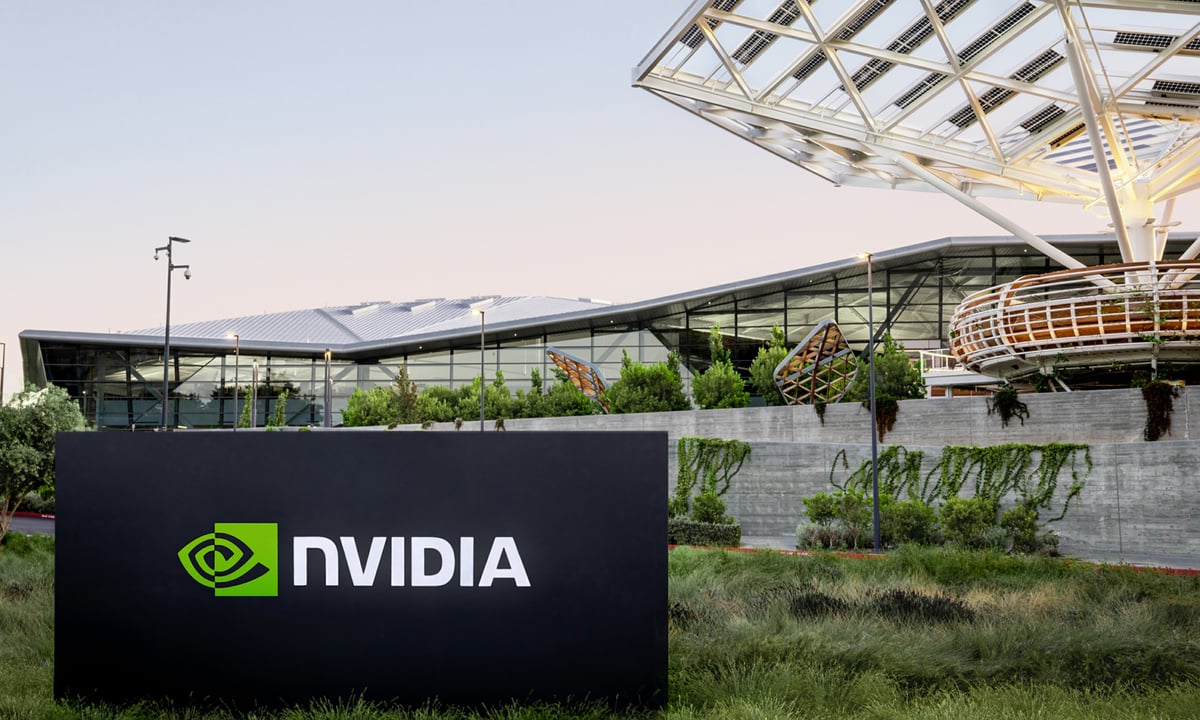
Nvidia's Earnings Paradox: Why Stock May Dip Despite Expected Beat
Nvidia ($NVDA) is set to report first-quarter earnings on May 20, with Wall Street analysts projecting robust results that would underscore the chipmaker's dominance in artificial intelligence infrastructure. The consensus forecast calls for $78.8 billion in revenue and $1.77 in earnings per share—figures that would demonstrate continued strength in demand for the company's GPU processors powering the generative AI boom. Yet despite this bullish outlook, a striking historical pattern suggests investors should approach the announcement with caution: Nvidia's stock has declined after 7 of its last 10 earnings reports, even when the company beat expectations.
This seemingly paradoxical dynamic—strong beat expectations followed by stock declines—reveals a nuanced reality about how markets price in semiconductor earnings and investor expectations. For seasoned traders and long-term investors alike, it raises a critical strategic question: Should you buy $NVDA ahead of May 20, or wait for a potential post-earnings pullback?
The Earnings Expectations and Historical Pattern
Analysts' projections for Nvidia's Q1 results reflect confidence in the company's AI-driven growth trajectory:
- Revenue forecast: $78.8 billion
- EPS forecast: $1.77
- Historical track record: Beat expectations on 3 of last 10 earnings reports, yet stock declined on 7 of 10 occasions
This performance data creates an intriguing disconnect. In traditional market dynamics, beating analyst expectations typically triggers positive sentiment and stock appreciation in the days following earnings. Nvidia's recent pattern, however, defies this conventional wisdom. The phenomenon suggests that by the time earnings are announced, the market has already priced in exceptionally bullish expectations—and the actual results, while strong, may fail to exceed those already-elevated valuations.
The semiconductor sector has experienced unprecedented momentum tied to AI infrastructure buildout, with $NVDA at the epicenter of this technological shift. The company's dominance in GPU manufacturing for data centers and AI applications has created a situation where positive sentiment is already baked into stock valuations well ahead of quarterly results. This sets the stage for a "buy the rumor, sell the news" dynamic that has repeated throughout recent earning cycles.
Market Context: AI Boom Meets Valuation Reality
Nvidia's current market position exists at the intersection of extraordinary technological opportunity and elevated investor expectations. The company has benefited from:
- Sustained demand for AI infrastructure across cloud providers and enterprise customers
- Limited competition in high-performance GPU markets
- Pricing power that has expanded gross margins
- Revenue growth accelerated by generative AI adoption
However, this exceptional positioning has also driven significant stock appreciation that may have outpaced even strong earnings growth. The semiconductor sector operates in cyclical patterns, and the current AI cycle—while undeniably significant—has attracted massive capital flows and attention from retail and institutional investors alike. When earnings are finally announced, investors must reconcile the stock's current valuation against the magnitude of projected growth.
Comparable technology companies have experienced similar dynamics during prior adoption cycles. The telecommunications infrastructure boom and subsequent cloud computing wave both featured companies that beat expectations but saw stock declines, as the market reassessed whether current prices reflected reasonable valuations relative to future growth prospects.
Furthermore, Nvidia's May 20 earnings will occur amid broader market sensitivity to technology sector valuations, Federal Reserve policy trajectories, and macroeconomic conditions. These external factors can amplify post-earnings volatility independent of the company's actual financial performance.
Investor Implications: Timing and Strategy
For investors considering $NVDA positions, this earnings pattern carries significant strategic implications:
Buying Before May 20 Purchasing Nvidia stock ahead of the May 20 announcement bets that strong results will exceed even current elevated expectations, or that positive sentiment will persist regardless of a near-term pullback. This approach suits investors with:
- Long-term investment horizons (3+ years)
- Conviction that AI infrastructure demand justifies valuations
- Tolerance for potential 5-15% post-earnings volatility
Waiting for a Post-Earnings Pullback Historical data supporting a potential decline after earnings suggests an alternative strategy: accumulating shares at lower prices following the announcement. Given that 7 of the last 10 earnings reports resulted in stock declines, disciplined investors might:
- Monitor earnings results and market reaction on May 20
- Identify support levels established in post-earnings selling
- Build positions at lower valuations with reduced near-term downside risk
The optimal approach depends on individual investment objectives, portfolio risk tolerance, and conviction levels regarding Nvidia's long-term AI dominance. Institutional investors and hedge funds have shown increasing sophistication in managing these earnings-related volatility spikes, often using options strategies to capture potential dislocation between fundamental strength and technical weakness.
It's worth noting that even if the stock declines post-earnings, such a move wouldn't necessarily reflect deteriorating fundamentals—rather, it would likely represent a rational recalibration of valuation multiples after a substantial rally preceding the announcement. In this scenario, lower entry prices would offer attractive opportunities for long-term accumulators.
Looking Ahead: Beyond May 20
Nvidia's May 20 earnings report will provide critical data points about AI infrastructure demand, customer spending patterns, and the company's ability to meet supply expectations. Regardless of immediate stock price reactions, investors should focus on guidance, gross margin trends, and commentary about the competitive landscape and demand sustainability.
The semiconductor sector's trajectory over the next 12-24 months will depend heavily on whether AI adoption continues accelerating at current rates, whether new competitors erode Nvidia's market share, and whether valuations eventually expand or contract. The May 20 earnings announcement won't determine these questions definitively, but it will provide valuable signals about the current state of the AI buildout.
For investors evaluating $NVDA, the historical pattern of post-earnings declines shouldn't be interpreted as fundamental weakness. Instead, it reflects the reality that market expectations have run ahead of even strong quarterly results. Whether you buy before or after May 20 should ultimately depend on your investment timeline, conviction about Nvidia's competitive position, and assessment of whether current valuations offer adequate margin of safety for your portfolio's risk profile.