
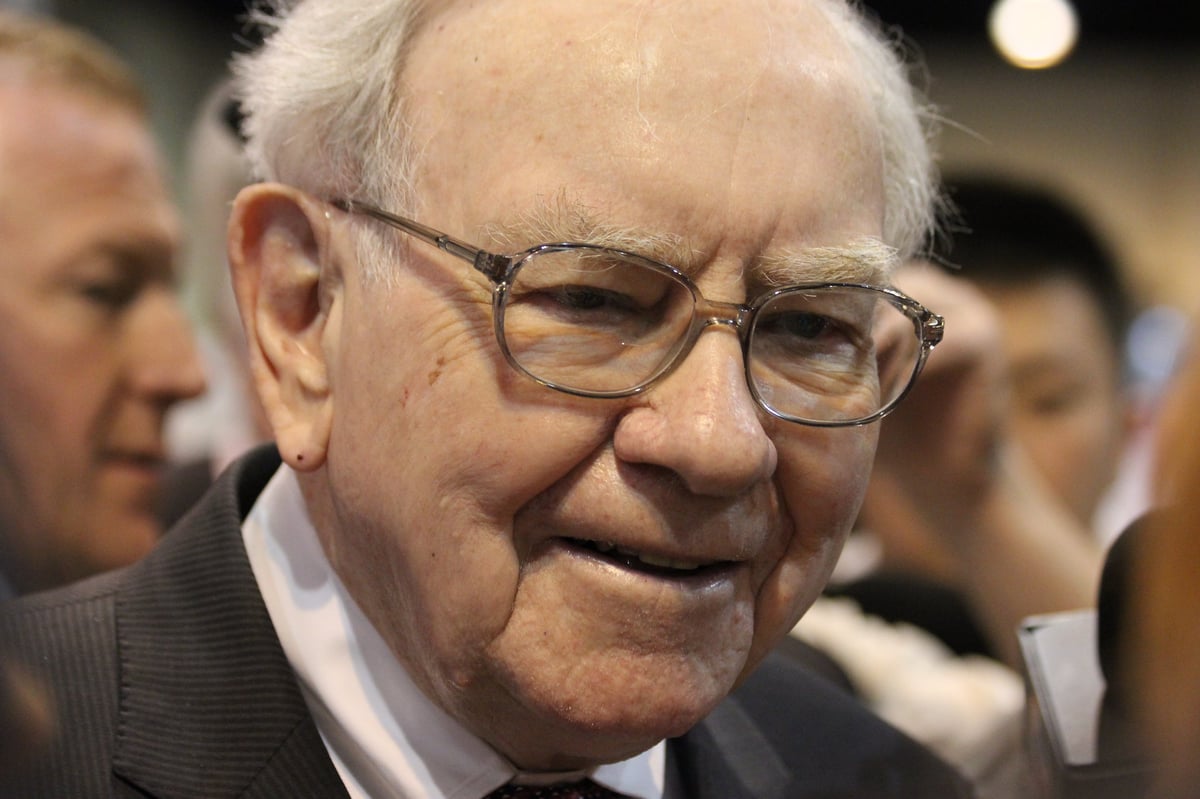
Three Buffett-Backed Stocks Shine as Market Volatility Tests Investor Resolve
As equity markets navigate persistent uncertainty and macroeconomic headwinds, investors increasingly turn to time-tested holdings in Warren Buffett's legendary portfolio for stability and long-term value creation. Three stocks stand out as particularly compelling defensive positions: Visa, the global payments colossus; VeriSign, the internet's domain name gatekeeper; and The Coca-Cola Company, the world's beverage icon. These companies represent the kind of durable competitive advantages and reliable cash generation that have defined Buffett's investment philosophy for decades.
The Case for Defensive Excellence
Visa ($V) epitomizes the structural shift reshaping global commerce. As the world accelerates its transition from cash to electronic payments, Visa captures value across virtually every transaction, collecting fees from financial institutions, merchants, and payment networks worldwide. The company's competitive moat remains formidable—merchants have little incentive to abandon an embedded payments infrastructure, while the network effects of its global acceptance create self-reinforcing competitive barriers.
VeriSign ($VRSN) operates one of the most defensible business models in existence: the registry for all .com and .net domain names. With approximately 170 million registered domains under its purview, VeriSign functions as a near-monopoly in critical internet infrastructure. The company benefits from:
- Predictable, recurring revenue from annual domain renewals
- Minimal competition in its core business segments
- Pricing power granted through regulatory frameworks
- High operating leverage and exceptional cash generation
The Coca-Cola Company ($KO) represents dividend aristocracy at its finest. With more than six decades of consecutive dividend increases, the beverage giant has proven its ability to generate reliable cash flows across economic cycles. The company's global distribution network, iconic brand portfolio, and pricing power provide insulation against inflationary pressures and demand fluctuations.
Market Context: Why These Names Matter Now
The investment landscape has shifted dramatically over the past eighteen months. Rising interest rates, persistent inflation, and recessionary concerns have triggered a rotation from high-growth, speculative positions toward stable, cash-generative businesses. The so-called "Magnificent Seven" technology stocks have ceded leadership to more defensive sectors as investors reassess risk-reward dynamics.
Visa, VeriSign, and Coca-Cola represent three distinct economic moats operating across different industries, yet they share critical characteristics that appeal to cautious investors:
Structural Demand: Visa's growth tracks global commerce expansion and the inexorable shift toward cashless payments. VeriSign's revenues correlate with internet usage and domain proliferation. Coca-Cola's demand proves remarkably resilient across economic conditions—consumers maintain beverage consumption even during downturns.
Pricing Power: All three companies can raise prices without proportional demand destruction. Visa increases transaction fees gradually; VeriSign has embedded pricing mechanisms; Coca-Cola has consistently passed inflation to consumers.
Capital-Light Economics: These businesses require relatively modest capital expenditure compared to manufacturing-heavy competitors, freeing cash for shareholders through dividends and buybacks.
In contrast to high-volatility growth stocks or leveraged financial institutions vulnerable to credit cycles, these holdings offer investors a form of portfolio ballast. The broader market's elevated valuations and uncertainty about future earnings growth create an environment where Buffett-style value investing—focusing on durable competitive advantages and reasonable prices—regains relevance.
Investor Implications and Forward Outlook
For income-focused investors, these three stocks address distinct portfolio needs:
Growth with Stability: Visa offers earnings growth tied to global economic expansion and payment volume increases, while maintaining the defensive characteristics of financial services infrastructure.
Pure Cash Return: VeriSign generates substantial free cash flow with minimal reinvestment requirements, making it ideal for investors seeking yield without equity risk.
Proven Resilience: Coca-Cola's combination of dividend income and brand-driven pricing power appeals to retirees and conservative allocators.
The broader implication extends beyond these three holdings: after years of chasing growth at any price, institutional and individual investors increasingly recognize that boring, reliable businesses with durable competitive advantages deserve portfolio space. Visa, VeriSign, and Coca-Cola represent this philosophical return to fundamentals.
Moreover, these stocks maintain relevance across multiple macroeconomic scenarios. If inflation moderates and growth accelerates, Visa benefits directly from commerce expansion. If recession materializes, defensive characteristics shield valuations. If interest rates stabilize, dividend yields on Coca-Cola become increasingly attractive relative to fixed-income alternatives.
Buffett's decades-long track record stems partly from identifying precisely these kinds of businesses—ones that compound value reliably over twenty, thirty, or fifty-year horizons rather than delivering spectacular short-term gains. In today's volatile environment, where many investors struggle with market timing and trend-chasing, that proven formula deserves renewed consideration.
As markets digest competing signals about economic trajectory, corporate earnings, and monetary policy, investors would be wise to examine whether their portfolios contain sufficient allocation to these kinds of durable, competitive-advantage-driven businesses. Visa, VeriSign, and Coca-Cola offer a foundation for that shift—not as exciting alternatives to the latest technology darlings, but as reliable compounders likely to reward patient capital over time.