
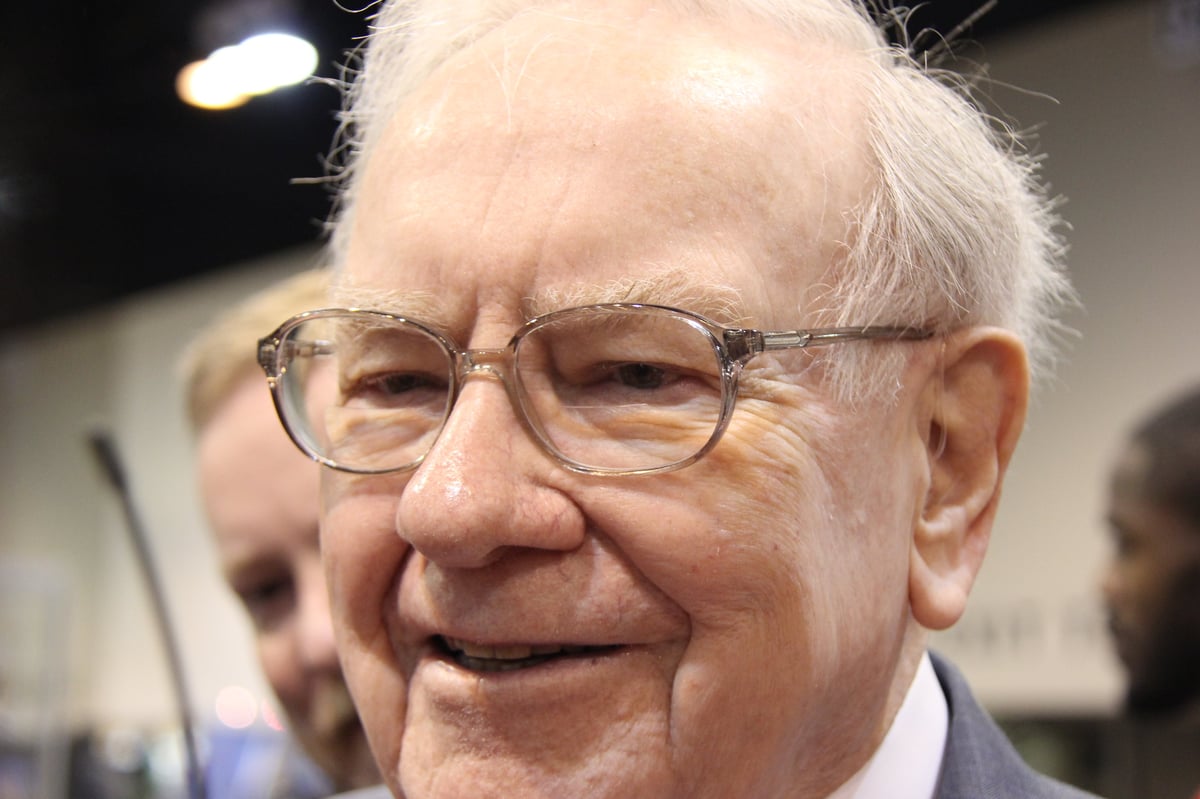
Buffett's Strategic Accumulation Signals Confidence in Domino's Pizza
Warren Buffett's Berkshire Hathaway has quietly built a significant position in Domino's Pizza, accumulating a 9.9% stake through deliberate purchases spanning six consecutive quarters, with the most recent acquisition occurring at $417 per share. This methodical investment approach reflects the legendary investor's characteristic discipline and suggests he sees substantial value in the pizza delivery giant—a company that has rewarded patient shareholders with remarkable long-term returns despite operating in a competitive, mature industry.
The timing and scale of Berkshire's accumulation underscore a calculated bet on Domino's ability to sustain growth in an economic environment fraught with uncertainty. For investors analyzing this move, Buffett's endorsement carries significant weight, as his investment selections have historically preceded periods of substantial shareholder value creation. The question for market participants is whether this represents yet another insight from the world's most successful investor, or whether headwinds facing the company could derail its trajectory.
The Compelling Financial Case for Domino's Stock
Domino's Pizza presents a financial profile that explains Berkshire's interest. The company has delivered:
- 21% average annual gains over the past 15 years, a figure that vastly outpaces broader market returns and demonstrates consistent capital appreciation
- A 2.4% dividend yield, providing income alongside equity upside
- A forward price-to-earnings ratio of 17, representing a substantial discount to its five-year average P/E of 26
- Valuation metrics suggesting the stock trades at a meaningful discount to historical norms
This valuation gap is particularly noteworthy. When a high-quality company trades significantly below its historical average multiple, it often signals market pessimism or temporary headwinds that sophisticated investors like Buffett view as temporary. The 9.9% stake accumulated by Berkshire Hathaway at these depressed valuations represents a conviction play that Domino's fundamental business strength will reassert itself.
The company's business model—built on asset-light franchising with a global network of delivery-focused restaurants—has proven resilient through multiple economic cycles. Domino's generates substantial free cash flow, which supports both the dividend and ongoing shareholder buybacks, creating a virtuous cycle of capital return that appeals to value-oriented investors.
Market Context: Headwinds and Competitive Challenges
The GLP-1 Drug Wildcard
Despite the compelling fundamentals, Domino's faces a novel competitive threat that markets are only beginning to price into valuations. GLP-1 weight-loss drugs—including Ozempic and Wegovy—have exploded in popularity and are reshaping consumer food consumption patterns across the industry. These medications, which suppress appetite and drive significant weight loss, represent an unprecedented challenge to the restaurant industry, particularly to delivery-focused and fast-casual concepts.
The rising adoption of GLP-1 drugs could fundamentally alter demand for pizza and other high-calorie delivery foods. While Domino's management has begun addressing product innovation and menu diversification, the scale of demand destruction from these pharmaceuticals remains uncertain. This uncertainty likely contributes to the stock's discounted valuation relative to historical norms and represents the primary risk to Buffett's thesis.
Inflation and Operating Pressures
Beyond pharmaceutical competition, Domino's contends with structural inflation pressures affecting labor costs, commodity prices, and delivery logistics. While the company has demonstrated pricing power, there remains a ceiling to how much price increases consumers will tolerate before trading down or reducing frequency. The balance between maintaining margins and preserving volume remains delicate, particularly in an economic environment where consumer confidence shows signs of strain.
Why This Matters for Investors
Buffett's accumulation of a 9.9% stake in Domino's carries multiple layers of significance for equity investors:
Signal of Valuation Opportunity: The investment suggests that a sophisticated investor with tremendous resources sees Domino's trading at attractive entry points. For retail investors, this serves as a potential signal that the company's current discount to historical multiples may be overdone.
Long-Term Conviction Play: The six-quarter accumulation pattern indicates patient capital and a long-term outlook. Berkshire Hathaway is not trading Domino's stock; it's building a permanent holding, suggesting confidence that current headwinds are cyclical rather than secular.
Dividend Growth Potential: The 2.4% yield provides current income while the company's strong cash generation offers room for dividend growth. Buffett's preference for dividend-paying equities aligns Domino's well with his portfolio philosophy.
Risk Tolerance Indicator: The decision to accumulate despite GLP-1 risks suggests Buffett believes either these risks are overblown or that Domino's will successfully navigate them through innovation and market adaptation. His willingness to make concentrated bets despite identified risks has historically proven prescient.
Looking Forward: The Catalyst Question
The critical question facing Domino's shareholders is whether the company's strong fundamental business—featuring 21% annualized returns over 15 years—will reassert its dominance as GLP-1 adoption reaches equilibrium and inflation moderates. Buffett's investment suggests he believes this is likely, though the timeline and magnitude of any rerating remain uncertain.
The current valuation at 17x forward earnings versus the 26x five-year average leaves substantial room for multiple expansion if growth accelerates and risk perceptions shift. For investors with a multi-year horizon and tolerance for near-term volatility, Domino's Pizza—blessed with Berkshire Hathaway's endorsement and trading at a meaningful valuation discount—presents the kind of asymmetric risk-reward opportunity that has historically defined wealth creation in equity markets. Whether this proves to be Buffett's ultimate millionaire-maker or a cautionary tale about overlooking emerging headwinds will determine the investment's legacy.