
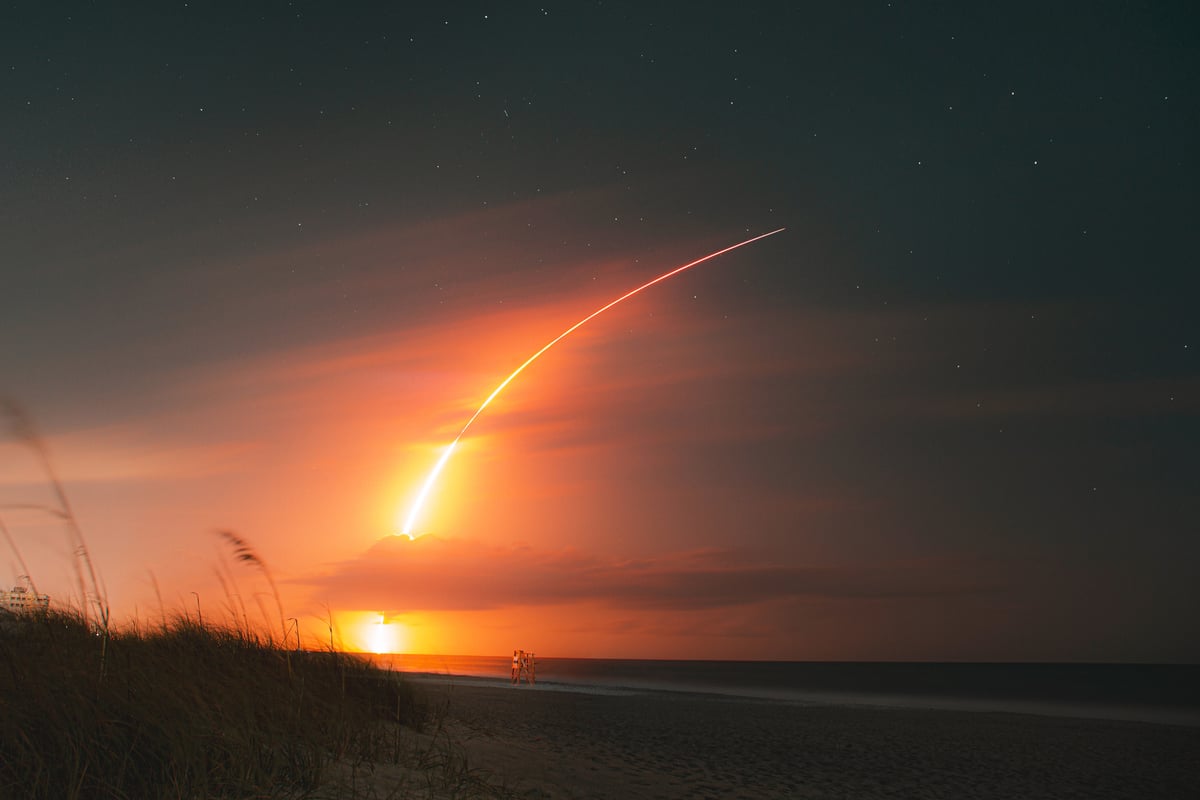
SpaceX Prepares Historic Multi-Asset IPO as Competition Intensifies
SpaceX is preparing for a landmark initial public offering that will bundle three distinct business units into a single public entity: Starlink, X (formerly Twitter), and xAI. The offering represents one of the most significant tech IPOs in recent memory, given the combined valuations and growth trajectories of these ventures. However, financial analysts are sounding alarm bells about a critical threat lurking in the satellite broadband market—Amazon's ambitious Leo satellite constellation is rapidly approaching commercial viability, potentially disrupting what has been SpaceX's extraordinarily profitable satellite internet business.
The concern centers squarely on Starlink, which has emerged as SpaceX's crown jewel from a profitability standpoint. According to recent disclosures, Starlink achieved remarkable financial metrics in 2025, generating $10.4 billion in revenue while maintaining extraordinary 60% operating margins. For context, these margins far exceed those of traditional broadband providers and rival some of the most profitable software companies globally. This exceptional profitability has made Starlink a key valuation driver for the broader SpaceX IPO and represents the financial foundation that will support the company's ambitious plans for Mars exploration and other ventures.
The Amazon Threat: Scale and Timeline
Amazon's entry into satellite broadband, however, represents a material competitive threat that could fundamentally reshape the economics of orbital internet service. The e-commerce giant has already achieved significant milestones in its Project Kuiper initiative:
- 300 Leo (Low Earth Orbit) satellites currently in orbit
- Plans to deploy 600 satellites by end of 2026 to launch commercial service
- A clear trajectory toward full constellation deployment and revenue generation
- Substantial capital reserves to sustain competitive pricing throughout the ramp-up phase
The timing of Amazon's commercial launch is particularly significant. By reaching 600 satellites by the end of 2026, Amazon will have sufficient orbital capacity to begin offering competitive satellite broadband services to consumers and businesses. This would put Amazon in direct competition with Starlink, which currently maintains market dominance largely due to first-mover advantage and the absence of viable alternatives.
What makes this competitive threat especially acute for SpaceX is the price pressure it may trigger. Amazon, with its massive balance sheet and willingness to subsidize competitive services to capture market share, could aggressively undercut Starlink's pricing. In satellite broadband markets, once price competition begins, it can be devastating to operating margins—particularly for companies like Starlink that have built financial models around premium pricing justified by monopolistic market conditions.
Market Context: A Shifting Satellite Broadband Landscape
The satellite broadband market has evolved dramatically over the past decade. Once dismissed as uneconomical due to latency issues and high deployment costs, advances in launch technology and orbital mechanics have transformed low Earth orbit constellations into viable commercial ventures. SpaceX effectively pioneered this market with Starlink, capturing hundreds of thousands of subscribers globally and establishing itself as the de facto standard for satellite broadband.
However, the market is now attracting heavyweight competitors beyond Amazon. The broader investment community has recognized the strategic importance of global broadband connectivity, particularly for underserved rural and remote regions. This has created a "gold rush" mentality in satellite broadband development, with multiple well-capitalized entrants racing to deploy competing constellations.
Amazon's entry differs materially from smaller competitors due to its:
- Existing customer relationships through Amazon Web Services (AWS) and retail operations
- Financial capacity to absorb years of operating losses while scaling the business
- Integration potential with existing AWS infrastructure and corporate connectivity services
- Brand recognition and distribution advantages in both consumer and enterprise segments
The threat extends beyond direct price competition. Amazon could leverage its massive logistics and fulfillment network to offer bundled services combining Project Kuiper satellite broadband with other Amazon services, creating friction for customers considering switching to Starlink. Additionally, enterprise customers may prefer dealing with a single vendor for critical connectivity infrastructure, potentially steering corporate and government contracts toward Amazon.
Investor Implications: IPO Valuation at Risk
For investors considering the SpaceX IPO, the Amazon competitive threat raises several important questions about valuation and long-term returns:
Margin Compression Risk: The 60% operating margins that make Starlink financially attractive today could face significant pressure once Amazon begins commercial service. Even a modest 10-15 percentage point margin compression would materially impact the financial profile that SpaceX is presumably using to justify its IPO valuation.
Growth Deceleration: SpaceX may be forced to invest heavily in capital expenditures to expand Starlink's constellation faster and more extensively than originally planned, redirecting capital away from more profitable activities and reducing available cash flow for shareholders.
Valuation Multiple Uncertainty: The traditional approach to valuing satellite broadband companies has relied on comparable multiples to wireless carriers and internet service providers. However, if margin compression becomes evident, the multiples assigned to SpaceX's equity could contract significantly post-IPO.
Synergy Reduction: One of the selling points of bundling Starlink, X, and xAI together is potential operational synergies. However, if Starlink's financial profile deteriorates due to competition, it may drag down valuations for the entire company, including less-threatened divisions like xAI.
Forward Outlook: A Competitive Market Takes Shape
The satellite broadband market is transitioning from monopoly conditions to genuine competition. While SpaceX's first-mover advantage remains substantial, and Starlink maintains superior technology and service quality metrics compared to emerging competitors, the arrival of Amazon's well-capitalized Project Kuiper constellation represents an inflection point.
Investors evaluating the SpaceX IPO should carefully scrutinize management's assumptions about pricing, subscriber growth, and margin sustainability over the next 3-5 years. The company's ability to maintain pricing power and profitability in the face of Amazon's entry will be critical to determining whether current IPO valuations prove justified or represent a peak in SpaceX's financial trajectory. The coming years will reveal whether Starlink's exceptional profitability proves durable or represents a temporary window of monopolistic pricing before competition reshapes the economics of satellite broadband delivery.