
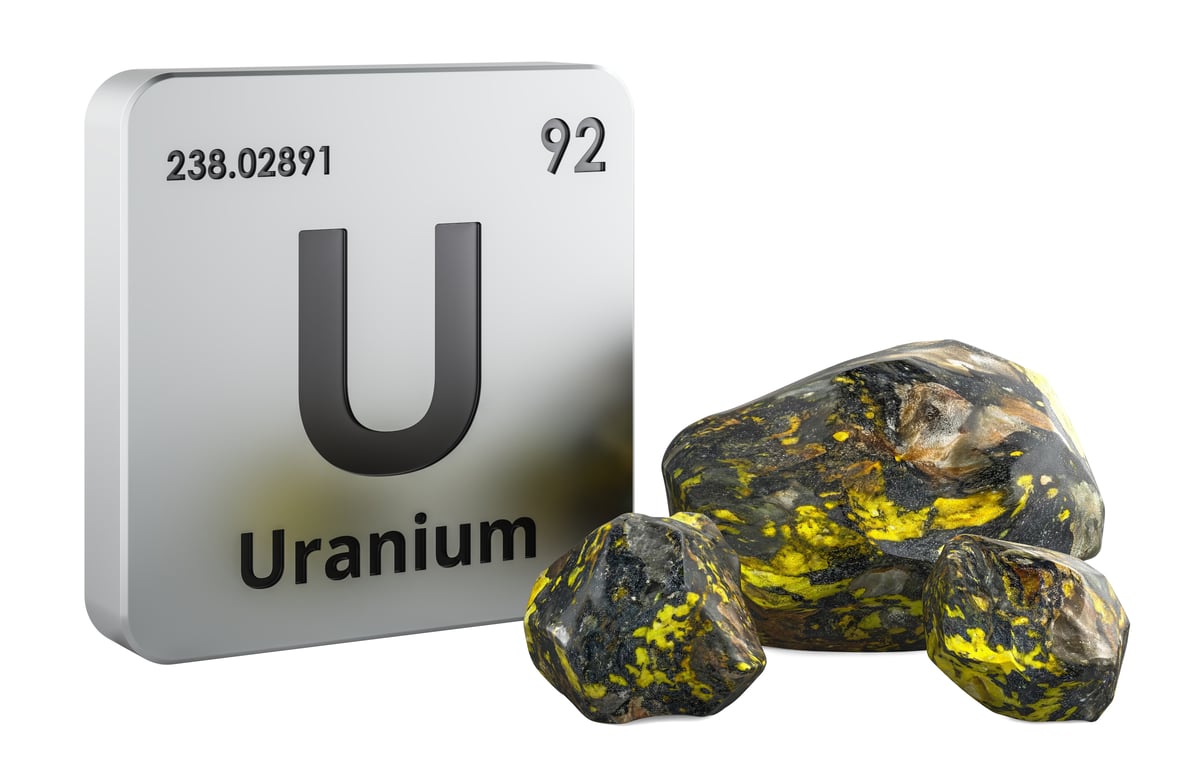
Cameco's Nuclear Moment: Why $CCJ Emerges as Top Energy Play
Cameco Corporation ($CCJ) is capturing investor attention as the premier energy stock in a market undergoing a fundamental shift toward nuclear power. The world's second-largest uranium miner has positioned itself at the epicenter of a global nuclear renaissance, driven by 75 reactors currently under construction and 120 more planned worldwide. Recent financial performance and strategic supply agreements underscore why analysts are increasingly bullish on the company's prospects amid accelerating geopolitical demand for clean nuclear energy.
Exceptional Financial Performance and Strategic Positioning
Cameco delivered a powerful earnings report that demonstrates the strength of its underlying business model. The company reported 88% year-over-year earnings per share growth in the first quarter of 2026, a remarkable achievement that reflects both operational excellence and favorable market dynamics for uranium producers. This growth trajectory is particularly noteworthy given the company's already substantial position within the global uranium supply chain.
The company recently secured a landmark $1.9 billion uranium supply agreement with India, one of the world's most significant nuclear energy adopters. This multi-year contract represents far more than a single commercial transaction—it demonstrates Cameco's ability to compete at the highest levels for long-term nuclear fuel supply relationships and signals confidence from major economies in the company's delivery capabilities. India's commitment reflects broader global recognition that nuclear power will play a critical role in meeting future energy demands while addressing climate change imperatives.
Cameco's operational footprint spans the entire nuclear fuel cycle, providing the company with diversified revenue streams and resilience against commodity price volatility. This integrated positioning—from mining through fuel processing—distinguishes the company from pure-play uranium miners with narrower operational scope.
The Global Nuclear Resurgence Reshaping Energy Markets
The backdrop for Cameco's growth extends far beyond favorable quarterly earnings. The global energy landscape is experiencing a dramatic pivot toward nuclear power, driven by multiple converging factors:
- Construction pipeline: 75 new reactors actively under construction globally
- Future projects: 120 additional reactors planned across multiple continents
- Climate imperatives: Nuclear power remains the largest source of zero-carbon electricity worldwide
- Geopolitical realignment: Major economies reassessing energy independence and nuclear capacity
This construction surge represents the most significant expansion of nuclear capacity in decades. For comparison, previous nuclear buildouts occurred in the 1970s and 1980s, making the current momentum historically significant. The shift reflects recognition from governments and utilities that achieving net-zero carbon targets requires substantial nuclear deployment alongside renewable sources.
Key markets driving this expansion include Asia-Pacific regions where rapidly growing economies are investing heavily in nuclear infrastructure. India, China, and other developing nations recognize nuclear energy as essential for balancing growing electricity demand with climate commitments. Meanwhile, developed markets like the United States and European nations are extending reactor lifespans and exploring advanced reactor designs that could expand nuclear's role further.
This geopolitical shift toward nuclear energy creates a structural tailwind for uranium producers. Unlike cyclical commodities vulnerable to temporary demand shocks, the nuclear fuel cycle benefits from multi-decade power purchase agreements and government-backed energy policy commitments.
Market Context and Competitive Landscape
The uranium sector has historically been fragmented and cyclical, with prices volatile and dependent on reactor utilization rates and political sentiment. However, current dynamics differ materially from previous cycles. Energy markets are transitioning as traditional fossil fuel investments face regulatory headwinds and environmental pressure, creating genuine structural demand for nuclear alternatives.
Cameco competes primarily against Kazatomprom, the world's largest uranium producer, and various mid-tier miners. However, Cameco's integrated business model and North American operations provide advantages including operational stability, geopolitical risk mitigation, and access to Western capital markets. The company's supply agreements with institutions like India represent competitive victories that validate its market position.
The uranium spot price and long-term contract premiums have strengthened substantially as buyers recognize tightening supply-demand dynamics. With reactor construction accelerating and uranium inventories drawn down from peak historical levels, the market structure appears to favor producers like Cameco holding substantial reserves and production capacity.
Additionally, Cameco's North American operations reduce geopolitical risks that plague competitors in Central Asia and Kazakhstan, where regulatory environments and government relationships introduce uncertainty absent in mature Western democracies.
Investor Implications and Forward Outlook
For equity investors, Cameco's convergence of strong financial performance, strategic supply agreements, and structural market tailwinds creates a compelling thesis. The 88% year-over-year EPS growth suggests the company is moving beyond cyclical recovery into a sustainable earnings expansion phase as new reactor capacity drives incremental uranium demand.
The $1.9 billion India supply agreement provides revenue visibility and cash flow certainty that typically commands valuation premiums in energy markets. Multi-year contracts with creditworthy counterparties reduce commodity price exposure and allow management to plan capital investments with confidence.
Investors should monitor several key metrics as proxies for thesis validation:
- Quarterly earnings growth maintaining momentum despite potential uranium price normalization
- New supply agreements signed with utilities and governments
- Production volume expansion supporting higher absolute earnings
- Capital allocation decisions regarding dividends and shareholder returns
The nuclear energy thesis appears materially different from previous commodity cycles. Rather than temporary demand spikes, the global nuclear buildout reflects policy commitments spanning decades, creating genuine secular growth for uranium producers positioned to supply expanding reactor fleets.
Cameco's position as the world's second-largest uranium producer, combined with superior financial performance and strategic supply relationships, positions the company to benefit disproportionately from this structural shift. While all energy investments carry risks, the confluence of factors supporting nuclear energy expansion and Cameco's operational excellence creates an asymmetric risk-reward profile favoring equity investors at current valuations.