
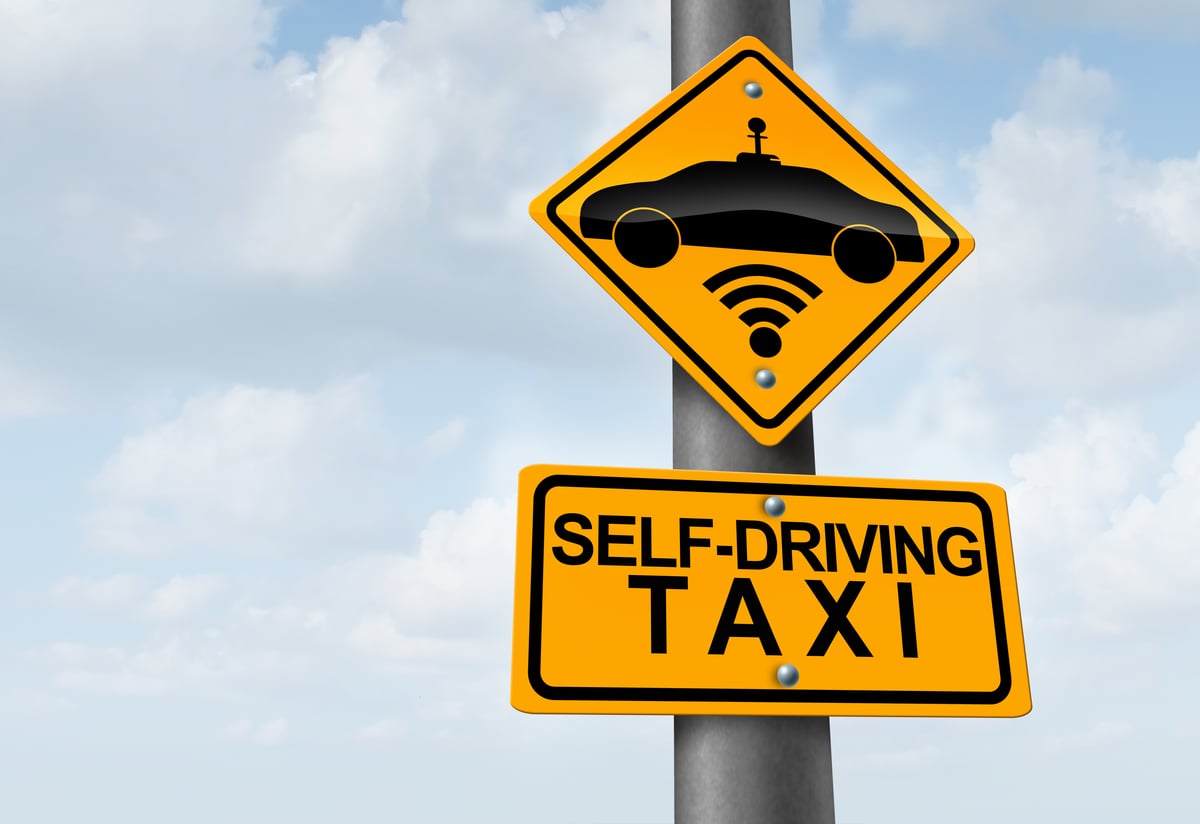
Tesla's Robotaxi Bet: Fundamentals Strengthen as Nationwide Rollout Extends to 2026
Tesla ($TSLA) is plotting a more measured expansion of its Robotaxi service than initially anticipated, with the autonomous vehicle rollout now targeted to reach a dozen states by the end of 2026—a slower cadence than earlier projections suggested. Yet beneath this more gradual deployment timeline lies an important development for investors: the electric vehicle manufacturer's underlying financial performance has meaningfully improved from the doldrums of late 2025, featuring 16% revenue growth and robust profitability metrics in the first quarter of 2026. This divergence between slowed robotaxi ambitions and accelerating core business performance presents a nuanced investment thesis that requires careful examination of both the company's execution track record and current market valuation.
Strategic Repositioning and Q1 2026 Financial Turnaround
The robotaxi expansion timeline adjustment represents a recalibration of expectations rather than an outright retreat. Tesla initially envisioned more aggressive geographic scaling, but the company now plans to methodically expand its autonomous vehicle service across twelve states by year-end 2026. This more conservative approach mirrors broader industry dynamics, where autonomous vehicle deployment has proven technically and operationally more complex than many advocates anticipated.
What makes the revised robotaxi timeline more palatable to investors is the compelling improvement in Tesla's core business metrics:
- 16% year-over-year revenue growth in Q1 2026
- Significant enhancement in profitability metrics across the quarter
- Demonstrated operational efficiency gains in manufacturing and delivery
- Strengthened balance sheet positioning relative to late 2025 levels
These financial improvements suggest that while the company recalibrates its autonomous vehicle ambitions, its bread-and-butter automotive and energy business continues firing on multiple cylinders. The 16% revenue expansion outpaces broader electric vehicle market growth rates, indicating Tesla's continued market share consolidation and pricing power despite intensifying competition from traditional automakers launching EV lineups.
Market Context: Balancing Visionary Ambitions with Current Realities
Investors in Tesla have long confronted a fundamental question: to what extent should the company's valuation reflect transformative long-term possibilities like robotaxis, full self-driving capabilities, and humanoid robots versus its current, demonstrable profitability and market position? The 2025 selloff that preceded the Q1 2026 recovery highlighted this valuation tension, with skeptics questioning whether autonomous vehicle timelines would slip and the core business could sustain growth momentum.
The robotaxi expansion timeline now addresses one concern directly—the company is being transparent about realistic deployment cadences rather than making promises it cannot immediately fulfill. Within the competitive landscape, Tesla faces mounting pressure from:
- Waymo, which has aggressively expanded autonomous ride-hailing services in select markets
- Traditional automakers like General Motors ($GM) and Ford ($F) developing autonomous capabilities
- Chinese EV makers capturing market share in price-sensitive segments
- Regulatory scrutiny over autonomous vehicle safety and deployment standards
The dozen-state robotaxi expansion by end of 2026 positions Tesla as a meaningful player in autonomous vehicle deployment without overstretching operational and regulatory capacity. Meanwhile, the company's 16% revenue growth and improving profitability demonstrate that the core EV and energy storage businesses remain robust growth engines independent of robotaxi success.
Investor Implications: Reassessing Risk and Return
For shareholders and prospective investors, the Q1 2026 financial improvement meaningfully strengthens the investment thesis compared to sentiment at year-end 2025. The company enters an uncertain period regarding autonomous vehicle deployment with a demonstrably stronger financial foundation—higher revenues, improved margins, and operational momentum.
The investment case hinges partly on an assessment of Elon Musk's track record as a technologist and entrepreneur. Musk's history with Tesla, SpaceX, and previous ventures shows a pattern of ambitious timelines that frequently slip but ultimately deliver transformative products and services. The robotaxi pushback reflects learned realism rather than fundamental abandonment of autonomous vehicle ambitions.
Key considerations for investors evaluating $TSLA at current levels include:
- Near-term catalysts: Continued profitability improvements in core auto and energy businesses provide baseline value support
- Medium-term drivers: Robotaxi expansion to a dozen states by end of 2026 offers incremental revenue opportunities and operational learnings
- Long-term optionality: Full self-driving and humanoid robot development continue in background, representing pure optionality
- Valuation context: Significantly improved Q1 2026 fundamentals versus late 2025 suggest the stock may have better risk-reward characteristics now
- Competitive dynamics: Waymo, legacy automakers, and Chinese competitors remain formidable threats in autonomous vehicle and EV markets
The rough 2025 performance may have sold off speculative excess while leaving intact the company's core business strength and long-term technological optionality. This creates a more balanced risk-return profile than existed when sentiment hit nadir in late 2025.
Looking Ahead: Execution and Transparency
The robotaxi rollout extending to a dozen states by end of 2026 establishes a crucial near-term benchmark for Tesla's autonomous vehicle ambitions. Investors will scrutinize whether the company hits this target and what the economics of robotaxi operations reveal about profitability potential. Success here could validate the autonomous vehicle model; delays would further erode confidence in Musk's timeline optimism.
Meanwhile, the demonstrated 16% revenue growth and improved profitability metrics suggest Tesla has successfully navigated the 2025 downturn. The company is proving it can operate profitably even as it invests heavily in technology development and geographic expansion. For investors weighing $TSLA exposure, the company's current financial positioning provides more concrete fundamentals to hang valuation onto compared to the speculation-heavy environment of late 2025. Whether that justifies current valuations depends on individual assessments of robotaxi potential, competitive positioning, and Musk's execution credibility on ambitious technological promises.