
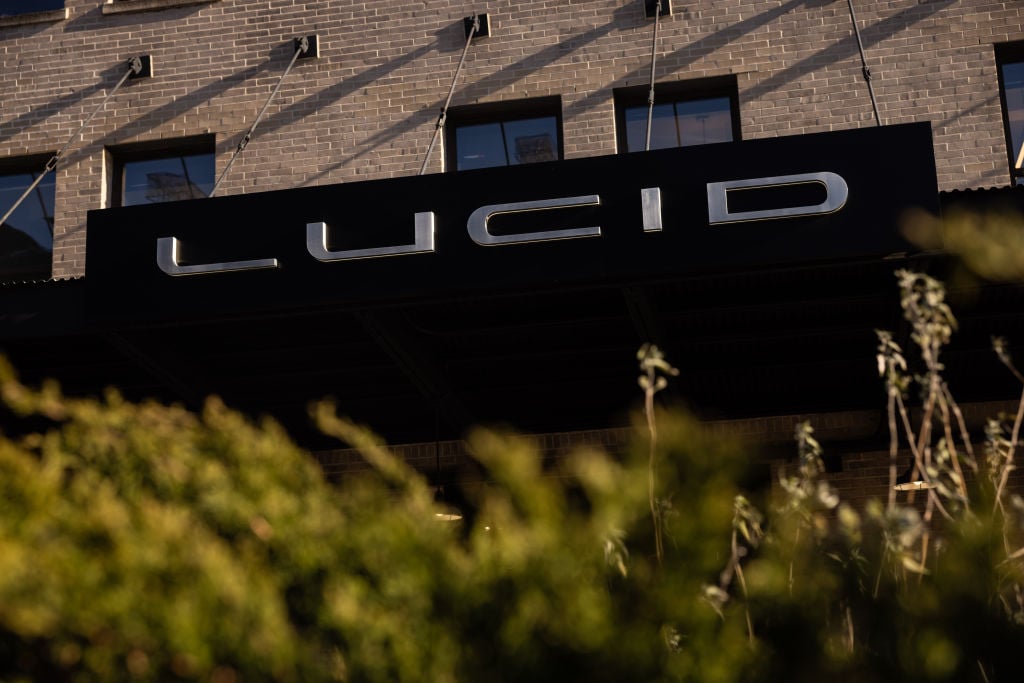
A Dramatic Collapse From EV Darling to Distressed Asset
Lucid Group ($LCID) has become one of the most dramatic cautionary tales in the electric vehicle sector, with its stock plummeting 99% from its 2021 all-time high to trade under $7 per share. While such a precipitous decline might tempt value investors searching for a bargain-basement entry point into the EV revolution, the underlying financial realities paint a far grimmer picture than surface-level valuations suggest. The company's ongoing struggle to achieve profitability, coupled with massive ongoing cash burn, signals that this stock remains fundamentally broken rather than fundamentally undervalued.
The Financial Crisis Beneath the Surface
Lucid's financial trajectory tells a story of a company in acute distress. In the first quarter alone, the company reported operating losses of $989 million, a staggering figure that underscores the scale of the company's operational challenges. Perhaps more concerning than the operating loss is the negative free cash flow of $1.44 billion during the same period—a metric that reveals the company is consuming cash at an alarming rate while simultaneously failing to generate revenue sufficient to offset those expenditures.
These figures are not anomalies or temporary setbacks typical of early-stage manufacturing companies. Rather, they represent the steady-state reality of a business that has failed to achieve the production targets and cost efficiencies necessary to approach breakeven operations. The free cash flow figure is particularly troubling because it indicates that even if Lucid were profitable on an operating basis, the company would still be burning through its cash reserves at an unsustainable pace.
Key financial metrics illustrate the severity of the situation:
- Q1 operating loss: $989 million
- Q1 negative free cash flow: -$1.44 billion
- Stock decline from peak: 99%
- Current trading price: Below $7 per share
Restructuring Efforts and Strategic Pivots
To be fair to management, Lucid has acknowledged its predicament and is implementing a series of corrective measures. The company has announced workforce reductions and cost-cutting initiatives designed to stem the rate of cash depletion. Additionally, the company is shifting its strategic focus toward more affordable midsize electric vehicles, recognizing that its initial market positioning in the ultra-premium segment was far too narrow to sustain a large-scale automotive manufacturer.
A potentially significant development is Lucid's partnership with Uber, which includes an order commitment for 35,000 vehicles alongside a $200 million investment from the ridesharing platform. This partnership provides several potential benefits: it offers Lucid a large, committed customer base; it provides additional capital to extend the company's runway; and it signals validation from a major technology company regarding Lucid's vehicle quality and reliability.
However, these positive developments must be weighed against the company's current cash burn rate and timeline to profitability. A $200 million injection provides only weeks or months of operational funding given the company's rate of cash consumption. The 35,000 vehicle order from Uber, while substantial, represents multi-year production targets that the company must execute against without assurance of success.
Market Context and Competitive Landscape
Lucid operates within a brutally competitive EV market dominated by established giants with far superior manufacturing scale, capital resources, and established customer bases. Tesla ($TSLA) continues to command the EV market with its scale advantages and pricing power. Traditional automakers including General Motors ($GM), Ford ($F), and Volkswagen have committed enormous capital to EV transitions and are leveraging existing dealer networks, brand recognition, and manufacturing expertise to compete.
Meanwhile, newer EV startups face a fundamentally altered market environment compared to the hype cycle of 2020-2021. Capital is tighter, investor skepticism has grown, and the path to profitability has proven longer and more capital-intensive than early projections suggested. Lucid entered this challenging environment with premium positioning that limited addressable market size and a manufacturing footprint insufficient to achieve the economies of scale necessary for viability.
The company's pivot toward more affordable vehicles is strategically sound, but execution risk remains enormous. Shifting from ultra-premium to mass-market EVs requires different supply chain relationships, manufacturing processes, and quality control standards. Lucid will be attempting this transition while simultaneously managing acute financial stress—a combination that historically produces poor outcomes.
Why This Stock Remains Problematic for Investors
From an investment perspective, the $7 stock price creates a psychological trap. When a stock has fallen this far from its peak, investors prone to contrarian thinking may convince themselves that mean reversion is inevitable. However, mean reversion requires that the underlying business fundamentals eventually stabilize and improve. In Lucid's case, the path to stabilization remains unclear.
The company faces several interlocking challenges that create genuine uncertainty about long-term viability:
- Cash runway: At current burn rates, the company requires continuous capital infusions to survive
- Manufacturing scale: Achieving profitable unit economics requires far higher production volumes than Lucid currently achieves
- Market positioning: The transition from premium to mass-market requires rebuilding brand perception and supply relationships
- Competitive intensity: Both established and emerging competitors are better capitalized and further along their profitability curves
Investors who purchase $LCID at current prices are essentially making a bet that management will successfully navigate all these obstacles simultaneously while working with limited financial cushion. That is not a bargain—it is a high-risk speculation on a company whose survival depends on executing a complex turnaround amid capital scarcity.
The Uber partnership provides some near-term relief and validation, but does not fundamentally resolve the underlying cash burn problem or manufacturing challenges. Additional capital raises will likely be necessary, and further dilution of existing shareholders should be anticipated.
The Honest Answer: Wait for Evidence of Stabilization
The honest assessment is that Lucid stock at current prices remains a trap rather than a bargain. While the company has taken meaningful steps toward cost reduction and strategic refocusing, these efforts are in early stages and their success remains unproven. The massive cash burn, ongoing losses, and capital requirements create genuine solvency risk that justifies investor caution.
Value investors would be better served waiting for evidence that Lucid's restructuring efforts are actually working—demonstrated through quarterly results showing improving cash burn trajectories, growing production volumes, and narrowing losses. Until such evidence emerges, the bargain price tag reflects real risk rather than genuine opportunity. For a company burning $1.44 billion in free cash flow quarterly, even a sub-$7 stock price can prove expensive if the underlying business model remains broken.