
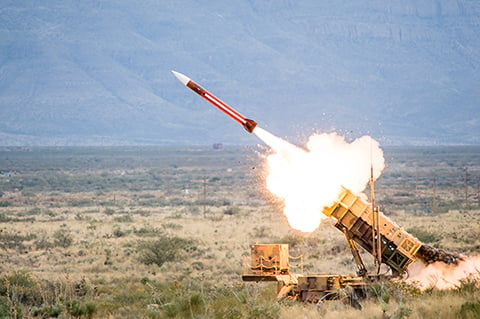
Qatar's $4B Patriot Missile Buy Signals Major Defense Windfall for RTX, Lockheed
In the aftermath of a 39-day conflict with Iran, Qatar has requested approval to purchase $4 billion worth of advanced Patriot air-defense missiles, marking a significant defense procurement that underscores the geopolitical tensions roiling the Middle East. The substantial order—designed to replenish air-defense stocks depleted during Iranian counterattacks—represents a major commercial opportunity for U.S. defense contractors RTX Corporation ($RTX) and Lockheed Martin ($LMT), who will serve as principal contractors on the deal.
The Scale and Specifics of Qatar's Defense Expansion
The Qatari government's missile acquisition request encompasses 200 PAC-2 missiles and 300 PAC-3 missiles, totaling 500 units across the two variants of the Patriot air-defense system. This represents a substantial rearmament initiative that reflects Qatar's strategic reassessment following the recent armed conflict with Iran.
One of the most striking financial aspects of this procurement is the dramatic shift in missile pricing compared to pre-conflict orders:
- Current wartime pricing: Approximately $8 million per missile
- Pre-war pricing: Approximately $4 million per missile
- Price increase: Doubling of unit costs amid heightened regional demand and supply constraints
This doubling of unit costs translates directly to enhanced profit margins for RTX and Lockheed Martin, the two primary contractors managing production and delivery. The PAC-3 variant, in particular, represents one of the most advanced air-defense systems in the U.S. arsenal, featuring phased-array radar and hit-to-kill guidance systems designed to counter modern aircraft and missile threats.
Market Context: Defense Sector Dynamics in a Volatile Region
Qatar's military spending surge reflects broader geopolitical realignments in the Middle East, where multiple nations are bolstering air-defense capabilities amid escalating regional tensions. The 39-day Iran war has prompted regional powers to reassess their defensive postures and accelerate procurement timelines that might otherwise have taken years to navigate through approval and congressional review processes.
The defense industry has witnessed sustained momentum throughout 2024, driven by multiple factors:
- Renewed great-power competition and NATO expansion concerns
- Ongoing regional conflicts in the Middle East
- Supply chain normalization supporting higher production volumes
- Elevated geopolitical risk premiums enabling premium pricing
For RTX and Lockheed Martin, this represents the type of high-margin, large-scale government contract that drives significant earnings accretion. Both contractors maintain robust backlogs in missile systems and air-defense platforms, and this Qatari order exemplifies continued international demand for advanced U.S. defense capabilities.
The pricing structure—nearly double pre-conflict rates—reflects both increased demand from regional customers concerned about Iranian capabilities and the limited production capacity for advanced missile systems. This dynamic typically favors established prime contractors with existing manufacturing infrastructure and proven delivery capabilities.
Investor Implications: Earnings Uplift and Strategic Positioning
For shareholders in RTX and Lockheed Martin, this Qatar procurement carries multiple strategic implications. First, the $4 billion aggregate contract value represents material revenue addition, particularly when viewed against the companies' quarterly guidance and annual forecasts. Even accounting for production costs and supply chain expenses, the doubling of unit pricing creates outsized profit margins that will flow directly to operating income.
Second, this deal signals sustained appetite for U.S. defense exports among Middle Eastern allies despite regional instability. Qatar, as a strategically important nation hosting major U.S. military installations, represents a reliable customer base for advanced systems. The willingness to authorize a $4 billion purchase on an expedited timeline suggests confidence in the long-term U.S.-Qatar security relationship.
Third, from a broader portfolio perspective, the missile systems segment represents one of the highest-margin divisions within both contractors' business models. Patriot systems, in particular, have demonstrated decades of operational reliability and continuous modernization, creating recurring revenue streams as customers refresh and upgrade existing inventories. This procurement cycle—driven by actual combat experience—tends to accelerate future orders as neighboring states recognize the operational relevance of these systems.
The contract also carries implications for supply chain management and production capacity. With both RTX and Lockheed Martin operating near maximum production rates on existing military programs, successful execution of this Qatar order will test manufacturing capabilities and could prompt capital expenditure announcements for expanded production facilities.
Investors should also monitor congressional approval processes, as Foreign Military Sales of this magnitude require State Department and congressional review under the Arms Export Control Act. While approval is anticipated given the strategic partnership, timing delays could impact revenue recognition and cash flow timing for both contractors.
Looking Forward: Regional Demand and Geopolitical Implications
Qatar's $4 billion Patriot procurement likely represents merely the opening salvo in a broader regional rearmament cycle. Neighboring Gulf Cooperation Council states—including the United Arab Emirates and Saudi Arabia—may similarly accelerate defense spending in response to demonstrated Iranian capabilities and renewed emphasis on air-defense modernization.
The elevated pricing structure established through this transaction could set expectations for future Middle Eastern contracts, benefiting defense contractors' margins across multiple programs. Additionally, the success of Patriot systems during the recent conflict provides compelling operational validation that will resonate throughout the defense procurement community.
For RTX and Lockheed Martin, this represents both immediate earnings opportunity and strategic positioning within the world's largest defense market. The combination of substantial contract value, elevated margins, and potential for follow-on orders positions these contractors favorably heading into 2025, contingent on execution and congressional approval of the foreign military sale.
The Qatar order ultimately reflects how geopolitical shocks translate into concrete business opportunities for U.S. defense contractors, particularly those with established products, manufacturing capacity, and strong relationships with key international customers.