
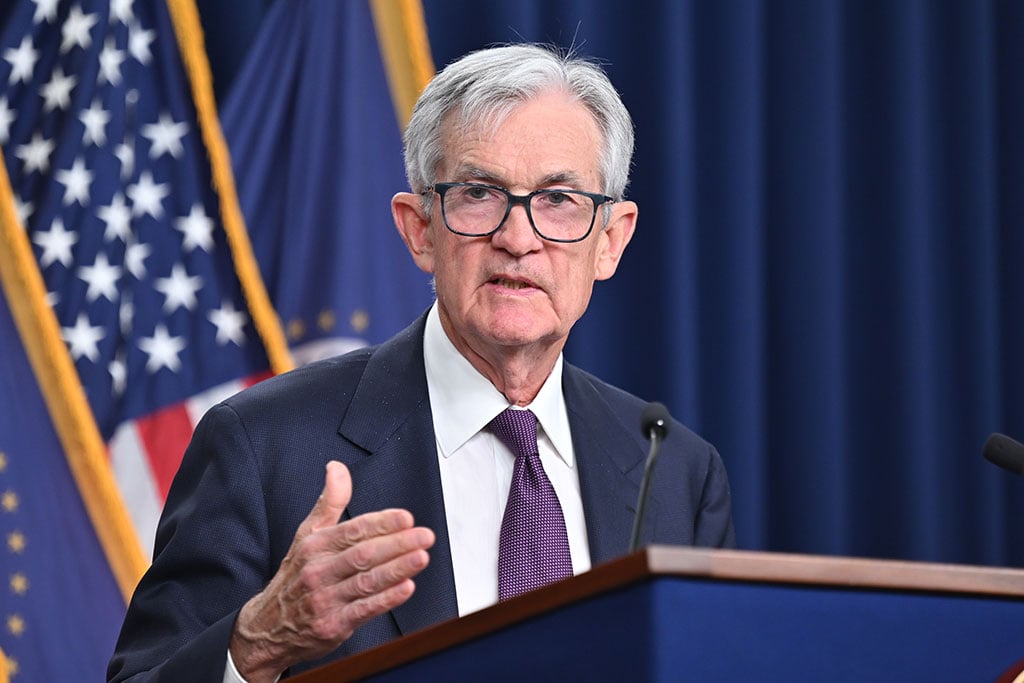
A New Era at the Federal Reserve
Kevin Warsh was confirmed as the new Federal Reserve chair on Wednesday, replacing Jerome Powell at a pivotal moment for U.S. financial markets. The transition marks a significant shift in monetary policy leadership just as inflation pressures are re-emerging and equity markets—particularly those driven by artificial intelligence enthusiasm—face fresh headwinds. Warsh, a former Fed governor with decades of experience in finance and policy, inherits an economy grappling with conflicting forces: persistent inflation, surging energy prices, and a technology-led bull market dependent on continued access to cheap capital.
The confirmation arrives amid growing economic complexity that will test Warsh's policy acumen from day one. Inflation surged to 3.8% in April, well above the Federal Reserve's 2% target, signaling that price pressures remain stubbornly elevated despite months of higher interest rates. Simultaneously, oil prices have spiked sharply, adding another inflationary wild card to an already uncertain economic landscape. These developments suggest that Warsh's tenure will not be characterized by the rate-cutting cycle that many on Wall Street have anticipated.
The Inflation Dilemma and Policy Constraints
Warsh faces an immediate credibility test regarding his monetary policy stance. Throughout his career, particularly during his time as a Fed governor and in previous economic roles, Warsh has historically advocated for lower interest rates and a more dovish approach to monetary policy. This inclination toward rate cuts aligns with the preferences of equity market investors who have benefited enormously from years of accommodative Fed policy. However, the current inflationary environment may severely constrain his ability to deliver the rate reductions markets have priced in.
The inflation reading of 3.8% represents a significant challenge to any Fed chair hoping to pivot toward easier monetary conditions. Consider the key factors pressuring inflation:
- Energy costs: Oil prices have surged, directly feeding into gasoline, heating, and transportation costs
- Wage pressures: Labor markets remain relatively tight, creating persistent wage-price dynamics
- Goods and services: Certain categories continue to show sticky price increases despite the Fed's rate hikes
- Expectations: If inflation expectations become unanchored, the Fed may need to maintain or even raise rates further
For Warsh, the question is not whether he wants to cut rates—his historical preference suggests he does—but whether economic conditions will permit such moves without compromising the Fed's inflation-fighting credibility.
Market Context: The AI Bull Market's Financing Dependency
The stakes for monetary policy decisions extend well beyond traditional inflation concerns. The spectacular rally in technology stocks, particularly those focused on artificial intelligence infrastructure and data centers, has been built largely on the foundation of exceptionally low financing costs. The megacap technology companies driving much of the bull market—firms worth tens of trillions in aggregate market capitalization—rely on cheap debt and equity capital to fund massive data center buildouts, chip manufacturing, and AI research and development.
This capital-intensive model has thrived in an environment where:
- Borrowing costs remain moderate: Companies can issue bonds at reasonable rates
- Equity valuations support capital raises: Tech stocks trading at elevated multiples make equity financing attractive
- Venture capital flows: Risk capital continues financing AI startups and infrastructure projects
- Real interest rates stay low: The spread between nominal rates and inflation expectations supports growth investing
Should Warsh feel compelled to maintain higher interest rates to combat inflation—or worse, to hike rates further if inflation accelerates—the consequences could be severe for this AI-dependent bull market. Higher financing costs would reduce the present value of future earnings for highly leveraged tech companies, compress valuations, and potentially trigger a rotation away from capital-intensive growth stories toward cheaper, more profitable alternatives.
Investor Implications and Market Expectations
For equity investors, Warsh's appointment creates both opportunities and risks. On one hand, markets have already begun pricing in the possibility of Fed rate cuts later this year, betting that Warsh's dovish inclinations will win out. Technology stocks have rallied on expectations of lower financing costs in the second half of 2025. On the other hand, the inflation data suggests these expectations may be premature.
The bond market will likely be the first indicator of whether investors believe Warsh will prioritize rate cuts over inflation control. Treasury yields, which have traded in a range suggesting mixed expectations about the Fed's path, could either fall (if investors expect rate cuts) or rise (if inflation proves sticky). Meanwhile, the equity market volatility index (VIX) may expand if investors become concerned that the Fed cannot cut rates without allowing inflation to worsen.
For specific sectors and companies:
- Tech giants ($NVDA, $MSFT, $TSLA, $META, $GOOGL) face both upside and downside scenarios depending on rate expectations
- Financials benefit from higher rates but may face headwinds if recession fears mount
- Consumer staples and utilities could outperform in a higher-rate, higher-inflation environment
- Small-cap and value stocks may rebound if investors rotate away from mega-cap tech
International markets will also be watching Warsh closely. A dovish Fed could weaken the U.S. dollar, potentially benefiting foreign stocks and commodities, while a hawkish stance might strengthen the dollar and create headwinds for exporters.
The Road Ahead: Balancing Act at the Fed
Kevin Warsh inherits an institution facing perhaps its most challenging policy environment in years. The traditional tradeoff between inflation control and growth support has returned with a vengeance. His track record suggests he would prefer to emphasize growth and lower rates, but the 3.8% inflation reading and surging oil prices may leave him little choice but to maintain a cautious stance.
The coming months will reveal whether Warsh can thread the needle—finding a way to eventually deliver rate cuts without reigniting inflationary pressures or triggering a financial crisis. Market participants should watch three key indicators: the Federal Reserve's communications about inflation expectations, oil prices and their trajectory, and the frequency and tone of Warsh's public statements. His first post-confirmation testimony to Congress and the next monetary policy decision will be crucial signals about his true policy intentions.
For now, the bull market's fate hangs in the balance. If Warsh can convince markets that rate cuts are coming while simultaneously demonstrating resolve on inflation, equities—particularly the AI-dependent technology sector—could continue their advance. But if inflation remains sticky and oil prices stay elevated, Warsh may be forced to disappoint the market's rate-cut expectations, potentially triggering a significant correction. The next twelve months will define his tenure and shape investment returns across asset classes.