
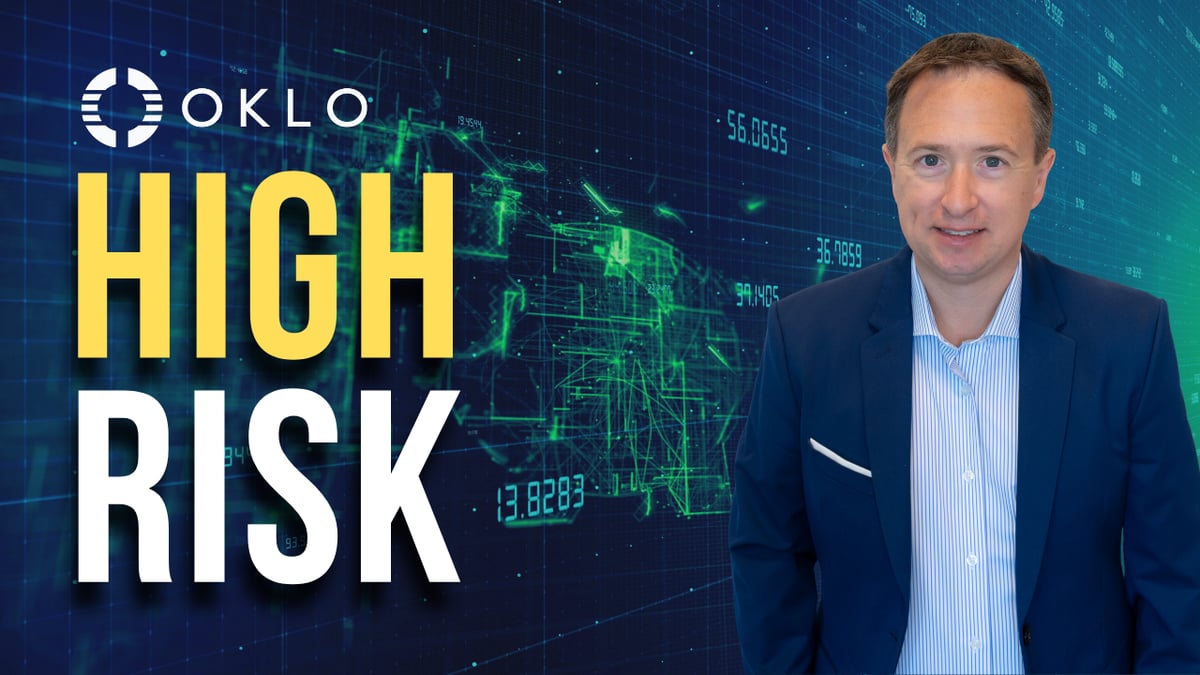
Advanced Nuclear Energy Company Caught Between AI Power Boom and Pre-Commercial Reality
Oklo Inc. finds itself at a fascinating inflection point in the energy sector. The advanced nuclear power company is perfectly positioned to capitalize on surging electricity demand from artificial intelligence data centers—a trend reshaping the entire power industry. Yet this remarkable opportunity comes with a substantial caveat: the company remains pre-commercial with a market valuation that already appears to price in years of successful execution and revenue generation. For investors, this creates a classic high-risk, high-reward scenario where the company's ability to deliver on its ambitious roadmap has become paramount to justifying current stock valuations.
The timing of Oklo's emergence couldn't be more fortuitous. Major technology companies including Microsoft, Google, and Amazon are increasingly desperate for reliable, carbon-free baseload power to fuel their expanding AI infrastructure. Traditional renewable energy sources—solar and wind—cannot provide the constant, uninterrupted electricity these operations demand. This energy crisis has suddenly made advanced nuclear power, long considered a niche energy source, into a strategic necessity for the tech industry. The convergence of AI's explosive power consumption with renewed enthusiasm for next-generation nuclear technology has created unprecedented tailwinds for companies like Oklo that can deliver innovative solutions quickly.
The Promise and the Problem: Valuation Ahead of Reality
Oklo's core business proposition revolves around developing advanced, small modular reactors (SMRs) designed specifically to provide distributed, efficient power generation. The company's technology and business model theoretically address a massive market gap: decentralized power generation that can be deployed at data centers, industrial facilities, and remote locations without the enormous capital expenditure and multi-decade timelines of traditional nuclear plants.
However, a critical disconnect exists between market enthusiasm and commercial reality:
- No revenue streams: Oklo remains entirely pre-commercial, with no operating power plants generating revenue
- Regulatory hurdles: Advanced nuclear technology still requires multiple layers of regulatory approval from entities like the Nuclear Regulatory Commission (NRC)
- Capital intensity: Developing, testing, and manufacturing advanced reactors demands massive upfront investment before any revenue materializes
- Technology execution risk: First-of-a-kind reactor designs require flawless engineering and regulatory navigation
- Valuation premium: The company's market capitalization already reflects assumptions about successful commercialization, scaling, and profitability
This creates an asymmetrical risk profile. Much of the positive news—AI power demand, regulatory openness, industry partnerships—appears already reflected in the stock price. Conversely, any setback in regulatory approval, technical challenges, or delays in commercialization could trigger significant downside pressure.
Market Context: The Nuclear Revival and Competitive Landscape
The broader energy sector is experiencing a genuine paradigm shift. For decades, nuclear power was viewed as a declining industry burdened by safety concerns, waste management issues, and economics that favored renewables. That narrative is rapidly reversing, particularly in light of AI's voracious energy appetite.
The competitive landscape surrounding Oklo includes several categories of competitors:
Traditional nuclear operators like Duke Energy, NextEra Energy, and Exelon are positioning themselves to capture AI data center demand through conventional nuclear assets and exploring small modular reactor technology.
Specialized advanced reactor companies including NuScale Power, X-energy, and Commonwealth Fusion Systems are pursuing similar SMR strategies with varying technology approaches and development timelines.
Major technology firms such as Google and Amazon are making significant investments in nuclear partnerships and direct power procurement agreements, effectively voting with their capital for nuclear's role in their energy future.
Regulatory momentum has shifted substantially in Oklo's favor. The U.S. government has increased funding for advanced nuclear research and streamlined certain regulatory pathways. The Inflation Reduction Act provides tax credits for nuclear energy production, effectively subsidizing the economics for future operators. This institutional support reduces political risk compared to previous eras when nuclear faced headwinds.
Yet this favorable backdrop doesn't eliminate execution risk. The history of advanced reactor development reveals numerous projects that faced technical challenges, cost overruns, and regulatory complications despite genuine promise. Oklo must navigate this terrain flawlessly to validate its current valuation.
Investor Implications: Execution Now Determines Value
For equity investors considering or holding Oklo shares, several critical factors deserve scrutiny:
The valuation question: Current market prices appear to assume successful commercialization, regulatory approval for multiple reactor sites, and meaningful revenue generation within the next 5-7 years. This leaves limited room for setbacks or delays. Investors should consider whether probabilities assigned to these outcomes are reasonable given pre-commercial status.
Timeline risk: Every quarter of delay in regulatory approval or technology development reduces the present value of future cash flows. Oklo faces a race against time—it must achieve meaningful milestones regularly to justify current valuations before capital markets reassess growth assumptions.
Capital requirements: The company will almost certainly require substantial additional capital raises before reaching cash-flow positivity. Future equity offerings could dilute current shareholders significantly. The funding environment for venture-backed energy companies remains strong, but this could change if market conditions deteriorate.
Sector rotation dynamics: Oklo's stock price moves heavily influenced by AI sentiment, energy sector trends, and renewable energy dynamics. It's not truly a stand-alone investment thesis but rather a leveraged bet on multiple interlocking narratives.
Conversely, investors who believe Oklo can execute successfully face potentially enormous upside. If the company successfully commercializes its reactor design and secures long-term power purchase agreements with major technology companies, the addressable market could justify valuations substantially higher than current levels. The AI power demand story is genuine and growing, and Oklo is well-positioned to benefit—if it can deliver.
Looking Forward: Proof Points Matter More Than Promises
Oklo's trajectory over the next 18-24 months will be decisive. Critical milestones include regulatory progress on its first reactor design, securing definitive power purchase agreements with major customers, and demonstrating technical progress toward commercialization. Each milestone either validates current market confidence or signals that execution challenges are mounting.
The fundamental tension remains: Oklo is neither a speculative pre-revenue startup nor an established energy operator. It occupies an awkward middle ground—recognized by the market as addressing a critical need, yet unproven in commercial execution. The company's biggest opportunity—supplying power to AI data centers in an era of nuclear revival—has already been substantially priced into the stock. The question investors must answer is whether they believe Oklo will execute better than the market currently assumes, or whether the risk-reward balance already reflects achievable probabilities. That answer will ultimately determine whether Oklo becomes a transformative energy company or a cautionary tale about paying premium valuations before proving commercial viability.