
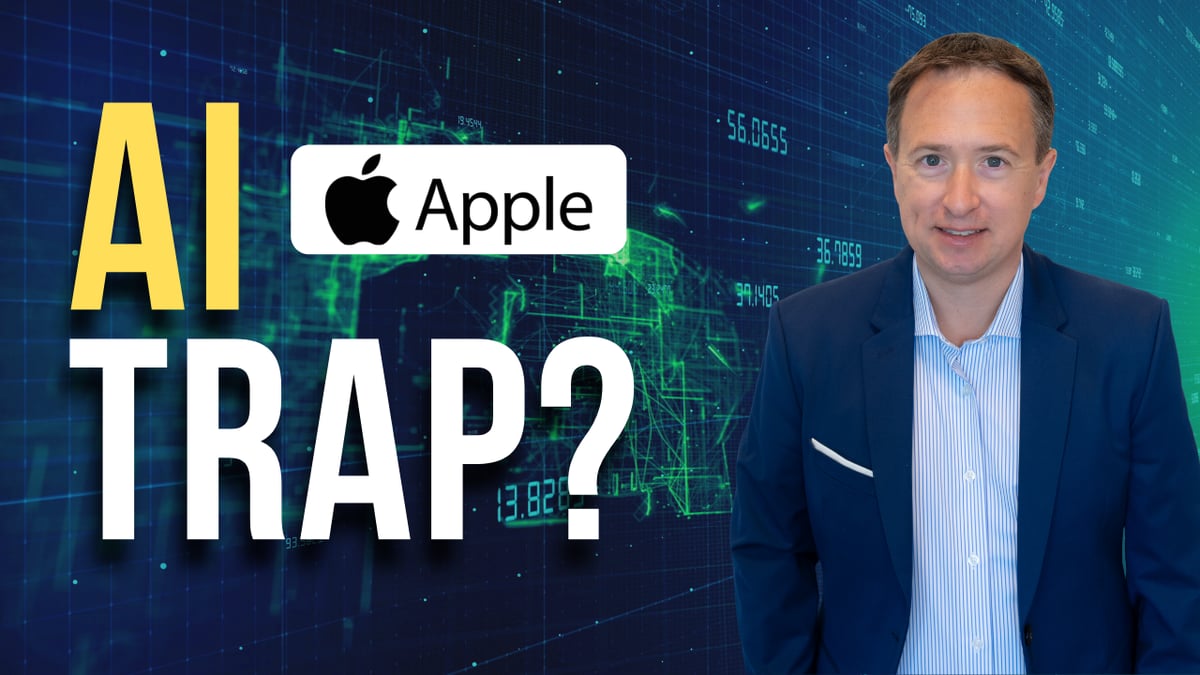
Apple's Quiet Leadership Transition Signals Market Stability
Apple is undertaking one of the most significant executive transitions in its recent history as Tim Cook steps aside from the chief executive role, passing the torch to John Ternus. The $4 trillion tech powerhouse's measured leadership change—which markets have greeted with relative calm—reflects investor confidence in the company's institutional strength and succession planning. Yet beneath this surface tranquility lie substantial questions about whether Apple can maintain its extraordinary market position amid intensifying competition, elevated valuations, and the imperative to prove its artificial intelligence capabilities.
The transition arrives at a critical juncture for the Cupertino-based company. After years of delivering consistent profits and shareholder returns, Apple now faces a convergence of challenges that will test both its new leadership and its ability to drive meaningful growth in an increasingly competitive landscape. The market's relatively muted reaction to the CEO change—rather than the turbulence that often accompanies such transitions—suggests that investors believe the company's operational excellence and strategic direction remain intact.
The Stakes: AI Catch-Up and Valuation Reality
Apple enters this leadership transition amid several formidable headwinds that will define the Ternus era:
-
AI Integration Imperative: Unlike competitors including Microsoft (which has deeply integrated OpenAI capabilities) and Google (which dominates AI search), Apple has been cautious in deploying generative AI features. The company must now demonstrate credible, differentiated AI capabilities to justify its premium position.
-
Valuation Concerns: Trading at historically elevated multiples for a mature technology company, Apple's premium valuation leaves limited margin for error. Investors are pricing in continued excellence and growth, reducing room for missteps during the leadership transition.
-
Product Cycle Dependency: The company's near-term performance hinges significantly on the success of its next major product cycle, particularly innovations that resonate with consumers and justify upgrade cycles. New hardware launches will be among Ternus's earliest and most consequential tests.
-
Market Saturation Questions: With smartphone penetration near saturation in developed markets, Apple must continue finding new revenue streams and use cases to drive growth beyond hardware sales.
Cook's tenure as CEO—which began in 2011 following Steve Jobs' death—fundamentally reshaped Apple into a services powerhouse while maintaining its premium hardware business. That transformation proved successful, with services becoming a critical profit engine and increasing customer lock-in across the ecosystem. Ternus now inherits a company that generates extraordinary cash flows but faces questions about its next phase of expansion.
Market Context: The Competitive Landscape Intensifies
The technology sector's competitive dynamics have shifted markedly since Cook assumed the CEO role. Apple no longer operates in a world where it can be a hardware-first company with services as an afterthought—the entire ecosystem must deliver differentiated value at every touchpoint.
Microsoft (through its partnership with OpenAI and integration into Windows, Office, and Azure) has aggressively positioned itself as the enterprise AI leader, while Google dominates consumer AI through search and its emerging Gemini platform. Meta, Amazon, and others have substantial AI investments competing across different segments. Meanwhile, Chinese competitors including Huawei and Xiaomi have accelerated hardware innovation, particularly in foldable devices and computational photography.
For Apple, the AI narrative is particularly crucial. The company's ecosystem advantages—tight hardware-software integration, massive installed base of premium devices, and deep user data (albeit with privacy-first positioning)—theoretically position it to deliver compelling AI features. Yet the company has been notably reticent to embrace the generative AI wave with the enthusiasm competitors have shown. This caution, while reflective of Apple's quality-first philosophy, creates a narrative risk that AI advances elsewhere will erode the company's differentiation.
Additionally, Apple's premium pricing power—historically its greatest competitive moat—faces subtle but persistent pressure. Even loyal customers are questioning whether the price-to-performance gap justifies the premium, particularly as alternatives improve and economic conditions remain uncertain.
Investor Implications: What's Priced In and What Isn't
The market's calm response to the CEO transition—evidenced by the absence of significant stock volatility—suggests that investors believe Apple's institutional depth insulates it from excessive transition risk. This reflects genuine confidence in the company's systems, its board's governance, and its proven ability to execute operationally.
However, investors should recognize that the stock's current valuation likely incorporates optimistic assumptions about Apple's future performance:
-
AI Success is Assumed: The market appears to be pricing in that Apple will successfully launch and monetize AI features that enhance its ecosystem value. If the company's AI efforts prove incremental rather than transformative, valuation compression could result.
-
Services Growth Continues: Apple's services business—which now generates $85+ billion annually and carries much higher margins than hardware—is critical to justifying current multiples. Any deceleration here would be meaningful.
-
International Expansion Remains Viable: Apple's growth in emerging markets, particularly in India and Southeast Asia, is factored into long-term growth assumptions. Geopolitical tensions, regulatory challenges, or competition could constrain this opportunity.
-
Premium Pricing Holds: The company's ability to maintain pricing power while competitors offer compelling alternatives at lower price points is implicit in current valuations.
For shareholders, the leadership transition creates a defined period in which to assess whether these assumptions remain valid. Ternus's first 12-18 months—including the next major product launch cycle and any significant strategic announcements—will provide clarity on whether Apple can sustain its extraordinary market position.
Looking Ahead: The Ternus Test
John Ternus inherits one of the world's most valuable companies at a moment of strategic inflection. The calm market response to his appointment reflects investor confidence, yet it also establishes high expectations: maintain operational excellence, deliver credible AI capabilities, drive the next product innovation cycle, and continue expanding services while navigating a complex geopolitical environment.
Apple has proven remarkably resilient across multiple technology cycles and leadership transitions. Its $4 trillion valuation reflects not just current cash generation but market confidence in its ability to innovate and monetize new opportunities. Whether the company can sustain this trajectory—particularly in an era where artificial intelligence is reshaping competitive advantage—will define the first chapter of the Ternus era and ultimately determine whether there remains "room to run" for Apple's stock.