
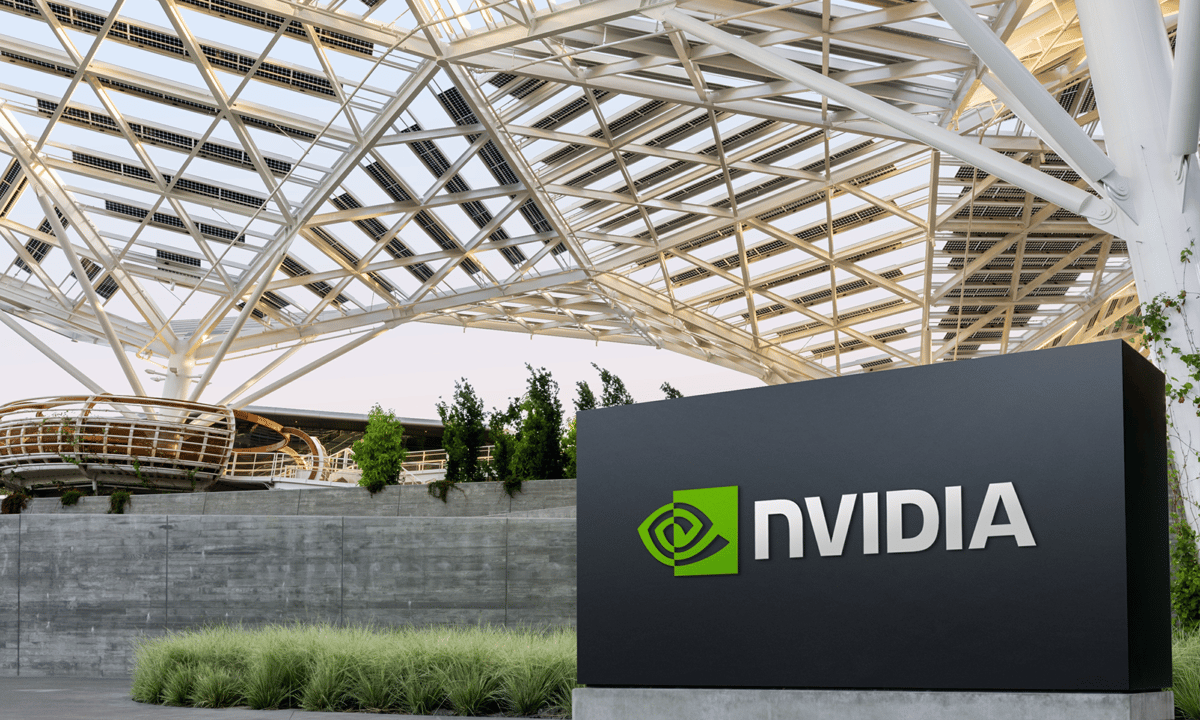
The $6 Trillion Question
Nvidia stands at an inflection point. With a market capitalization of $5.4 trillion, the AI chip giant sits tantalizingly close to entering the exclusive $6 trillion club, requiring merely an 11.5% stock surge to reach that historic valuation threshold. Yet as the company prepares for its upcoming earnings announcement on May 20, investors face a critical question: can continued euphoria around artificial intelligence propel the semiconductor leader to new heights, or has the market already priced in much of the good news?
The answer may surprise those expecting dramatic fireworks around earnings day. Despite Nvidia's impressive track record of delivering strong financial results and raising guidance—most recently doubling chip order forecasts—market participants should prepare for more measured stock movement. The real drivers of Nvidia's future value lie not in quarterly beat-and-raise cycles, but in three fundamental challenges that will define the company's trajectory over the coming years.
Strong Fundamentals Meet Structural Headwinds
Nvidia's recent financial performance has been nothing short of extraordinary. The company has consistently exceeded analyst expectations while aggressively raising forward guidance, demonstrating both the strength of AI infrastructure demand and management's confidence in sustained growth. The decision to double chip order guidance represents a particularly bullish signal, suggesting that enterprise customers—primarily the hyperscaler cloud providers—are confident enough in their AI investments to significantly expand their capital expenditures.
Key metrics supporting Nvidia's dominance include:
- Market-leading position in GPU architectures for AI training and inference workloads
- Record customer concentration and expansion among major technology giants
- Significant pricing power in a supply-constrained environment
- Sustained gross margin expansion despite competitive pressure
However, these impressive statistics mask deeper structural challenges that investors must grapple with:
AI Inference Adoption Uncertainty: While Nvidia's dominance in training large language models remains unassailable, the inference segment—where trained models are deployed to generate predictions and responses for end users—presents a more complex picture. Inference represents potentially massive volume opportunity but at lower margins than training. The pace at which enterprises and cloud providers deploy inference workloads at scale remains unclear, and any slowdown in this adoption curve could meaningfully impact Nvidia's growth trajectory.
Custom Chip Competition: Major cloud providers including Amazon, Google, and Microsoft have made substantial investments in developing proprietary chips optimized for their specific workloads. These custom silicon alternatives directly threaten Nvidia's market share in the hyperscaler segment. While Nvidia's software ecosystem and performance advantages remain significant, the long-term competitive dynamics are shifting in ways that could compress margins and limit growth.
Customer Spending Sustainability: The current AI infrastructure boom is driven by a handful of megacap technology companies making extraordinary capital expenditure commitments. The sustainability of this spending—particularly if AI monetization proves slower than expected or if returns on investment disappoint—remains a significant wild card. Any pullback in hyperscaler capital allocation could create significant headwinds for Nvidia and the broader semiconductor industry.
Market Context: The AI Infrastructure Cycle
Nvidia's current valuation reflects the market's belief that artificial intelligence represents a generational technological shift comparable to previous paradigm shifts in computing. The company's $5.4 trillion market capitalization represents approximately 20% of the entire S&P 500 market cap, a concentration of value that is historically unusual.
The semiconductor industry landscape has shifted dramatically in recent years:
- Legacy chip specialists like Intel ($INTC) have struggled to maintain competitive positioning in high-performance computing segments
- AMD ($AMD) has gained meaningful share in certain AI workloads but remains substantially smaller than Nvidia
- Arm-based architectures and alternative design approaches are gaining traction among hyperscalers
- Specialized silicon for specific AI tasks is becoming increasingly sophisticated
The broader market context suggests that while Nvidia will likely remain the dominant player in AI infrastructure for the near term, the competitive moat may be narrowing. The infrastructure cycle following major technological transitions typically sees dominant suppliers experience some erosion of market share as competition intensifies and alternatives proliferate.
Regulatory scrutiny also deserves mention. Nvidia's export control exposure, particularly regarding chips destined for China, creates uncertainty around a meaningful portion of potential revenue. Geopolitical tensions and evolving semiconductor export policies could impact growth assumptions embedded in current valuations.
Investor Implications: Tempering Expectations
For equity investors considering Nvidia exposure or evaluating portfolio positioning, several implications emerge from this analysis:
Near-term Stock Movement: The May 20 earnings announcement, while important for confirming ongoing business health, is unlikely to be a major catalyst for dramatic stock movement. Nvidia has trained the market to expect consistent execution and beat-and-raise scenarios. Only a material miss or significant forward guidance reduction would likely trigger substantial repricing. This suggests that the window for significant upside around the earnings event is narrow, and those expecting a 5-10% pop on good news should recalibrate expectations.
Valuation Considerations: At $5.4 trillion, Nvidia trades at a substantial premium to historical semiconductor industry valuations. While the AI opportunity is undeniably significant, the degree to which this is already reflected in current pricing deserves scrutiny. The incremental value to reach $6 trillion requires believing that Nvidia will maintain extraordinary growth rates for multiple years while fending off increasingly sophisticated competition.
Portfolio Risk Management: Investors with concentrated Nvidia positions should consider whether the risk-reward profile remains attractive at current valuations. The three headwinds identified—inference adoption uncertainty, custom chip competition, and customer spending sustainability—are not negligible risks, and they are not fully incorporated into many analyst models.
Broader Semiconductor Exposure: Alternative approaches to gaining exposure to the AI infrastructure opportunity may offer more attractive risk-reward profiles. Semiconductor equipment suppliers, specialty chip designers, and companies benefiting from the need for supporting infrastructure may provide diversification compared to Nvidia concentration.
Looking Ahead
Nvidia's potential ascent to $6 trillion would represent a remarkable achievement and a testament to the market's conviction around artificial intelligence's transformative potential. The company's technical excellence, market dominance, and execution track record are genuinely impressive. However, the path to that milestone is narrower than many recognize, and the longer-term competitive and structural challenges warrant serious consideration from sophisticated investors.
The May 20 earnings announcement will likely confirm that Nvidia remains a formidable business delivering exceptional results. But the real story—and the real investment opportunity or risk—lies not in quarterly earnings beats, but in Nvidia's ability to navigate the transition toward inference workloads, maintain pricing power against increasingly competitive custom silicon alternatives, and sustain the extraordinary spending commitments from its hyperscaler customer base. Those are the metrics that will ultimately determine whether Nvidia not only reaches $6 trillion, but whether it holds that valuation in the years ahead.