
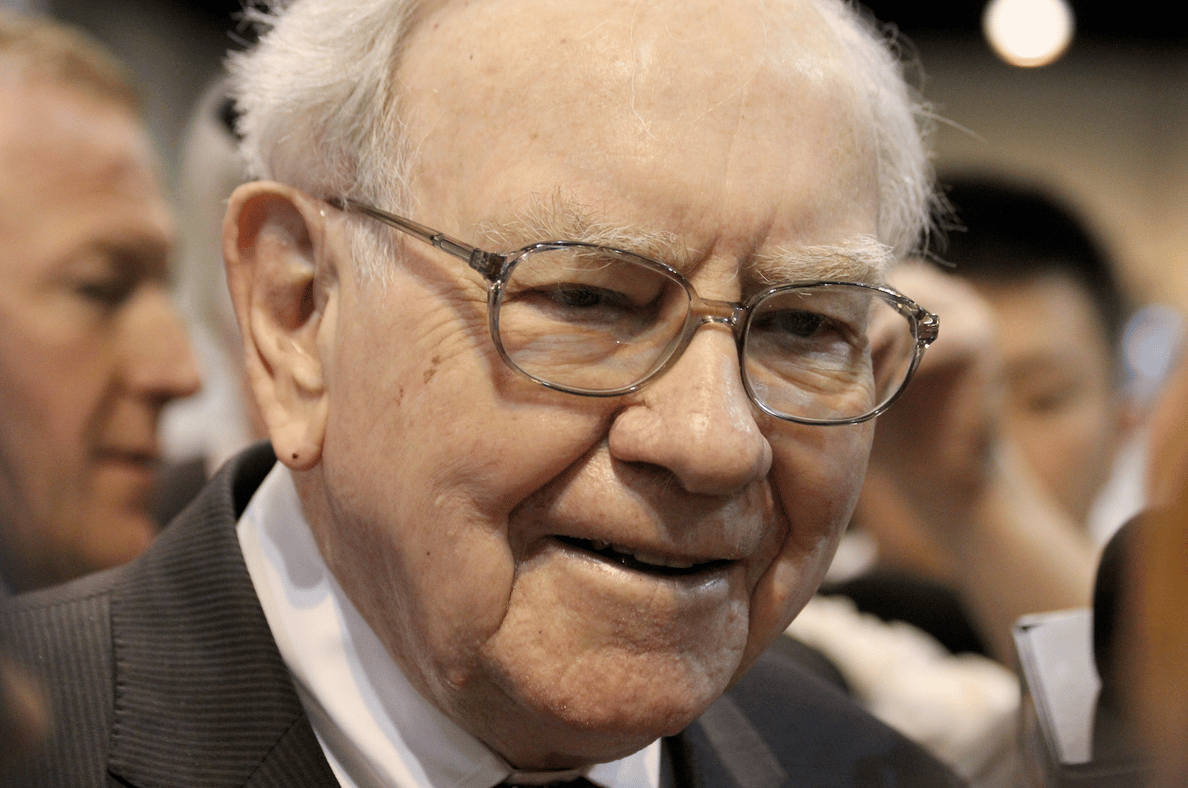
Warren Buffett's Unwavering Conviction in Three Blue-Chip Giants
Berkshire Hathaway has demonstrated remarkable patience with three cornerstone holdings that Warren Buffett has never sold: Apple Inc. ($AAPL), American Express ($AXP), and The Coca-Cola Company ($KO). These positions represent more than mere portfolio holdings—they exemplify Buffett's investment philosophy of backing enterprises with durable competitive advantages, fortress balance sheets, and proven ability to generate consistent earnings and dividend growth. For long-term investors seeking to build wealth through patient capital allocation, these three companies offer a masterclass in identifying businesses worthy of permanent portfolio placement.
The decision to hold rather than trade reflects a fundamental truth about equity investing: the best returns often come from owning exceptional businesses for decades rather than chasing short-term market movements. Each of these Berkshire Hathaway holdings possesses characteristics that align with Buffett's stated criteria for perpetual ownership—sustainable competitive moats, capable management, and shareholder-friendly capital allocation. Understanding why Buffett has maintained these positions without wavering offers valuable insights for constructing a resilient, long-term investment portfolio.
The Three Pillars of Buffett's Forever Portfolio
Apple: Technology's Most Valuable Franchise
Apple Inc. ($AAPL) represents Berkshire Hathaway's largest equity position and exemplifies the type of ecosystem-driven business that Buffett admires. The company has built perhaps the most powerful network effect in consumer technology, where device integration, software optimization, and services create increasing returns to scale. Apple's ability to command premium pricing while maintaining exceptional profit margins—despite intense competition—demonstrates the strength of its economic moat.
The investment thesis rests on several durable advantages:
- Brand loyalty and switching costs: Customers invested in the iOS ecosystem face significant friction in migrating to competing platforms
- Services revenue growth: Recurring subscription revenue provides predictable, high-margin earnings streams
- Capital efficiency: Exceptional free cash flow generation funds both shareholder returns and innovation
- Global distribution: Unmatched retail and direct-to-consumer network
American Express: The Payments Fortress
American Express ($AXP) occupies a unique position in the payments industry, operating as both card network and issuer—a vertically integrated model that competitors struggle to replicate. The company's customer base consists primarily of affluent, creditworthy individuals and corporations, creating lower credit losses and higher spending volumes than traditional credit card networks. This franchise generates reliable, recurring fee income from cardholders, merchants, and financing activities.
The enduring appeal centers on:
- Closed-loop model: Direct relationships with both cardholders and merchants create valuable data and pricing power
- Premium positioning: Focus on high-net-worth consumers and corporate clients generates superior economics
- Resilient credit quality: Conservative underwriting and affluent customer base provide downside protection during economic cycles
- Stable earnings: Merchant fees and finance charges create predictable revenue streams
Coca-Cola: The Beverage Empire
The Coca-Cola Company ($KO) operates one of the most recognizable brands globally, with distribution reaching nearly every country and consumer demographic. The company's secret formula, bottling network, and marketing prowess have created a moat that has withstood decades of competition. Coca-Cola's business model—generating significant cash flows to fuel consistent dividend increases—perfectly aligns with Buffett's preference for compounding shareholder returns.
The competitive advantages include:
- Brand ubiquity: Unmatched global recognition and consumer preference
- Distribution network: Unparalleled access to retail points of sale across diverse geographies
- Pricing power: Ability to raise prices with inflation while maintaining volume
- Dividend aristocrat status: Consistent dividend growth even through economic cycles
Market Context: Why These Holdings Matter
These three companies represent different sectors—technology, financial services, and consumer staples—yet share common characteristics that make them worthy of permanent portfolio positions. The broader investment landscape has become increasingly fragmented, with technology stocks dominating market indices and traditional sectors facing structural headwinds. Yet Buffett's refusal to sell Apple, American Express, and Coca-Cola suggests these companies have adapted successfully to changing consumer preferences and economic conditions.
The investment climate has shifted dramatically since Berkshire Hathaway established these positions. Interest rates have risen from historically low levels, making cash and bonds more attractive relative to equities. Meanwhile, artificial intelligence has disrupted technology landscapes and sparked uncertainty about traditional business models. Despite these macro shifts, the fundamental quality of these three holdings has only strengthened—each has demonstrated pricing power, profitability resilience, and ability to invest in future growth.
Competitive dynamics in each sector provide additional context:
- Technology: Apple ($AAPL) faces competition from Samsung, Google, and emerging smartphone makers, yet maintains the industry's highest profit margins and most loyal customer base
- Payments: American Express ($AXP) competes with Visa ($V) and Mastercard ($MA), but its integrated model and premium positioning provide differentiation
- Beverages: Coca-Cola ($KO) confronts competition from PepsiCo ($PEP) and thousands of regional brands, yet maintains unmatched scale and distribution
The regulatory environment has also evolved. Financial services face stricter capital requirements, technology companies encounter increasing antitrust scrutiny, and consumer staples face food safety regulations. These three companies have navigated such challenges successfully, suggesting their competitive moats remain intact despite regulatory pressures.
Investor Implications: Building Permanent Wealth
The decision to feature these three holdings as "buy and hold forever" investments carries profound implications for portfolio construction. Traditional investment wisdom emphasizes diversification and tactical rebalancing, yet Buffett's approach suggests that occasionally identifying exceptional businesses and holding them indefinitely can generate superior long-term returns. This doesn't mean avoiding diversification, but rather recognizing that some companies deserve permanent shelf space in an investor's portfolio.
For individual investors, the lesson extends beyond simply buying Apple, American Express, and Coca-Cola stock. Rather, it encourages developing a framework for identifying businesses with:
- Sustainable competitive advantages that endure across market cycles
- Strong balance sheets capable of weathering economic downturns
- Capable management teams focused on long-term value creation rather than short-term earnings manipulation
- Shareholder-friendly capital allocation through dividends, buybacks, and reinvestment
- Proven pricing power enabling companies to pass input cost inflation to customers
These characteristics reduce the need for active trading and allow investors to benefit from compound returns over decades. Apple's continued innovation, American Express's pricing discipline, and Coca-Cola's dividend growth exemplify how quality compounding works in practice.
The broader market implications suggest that investors should resist the temptation to constantly chase performance. While technology has dominated returns during certain periods and value stocks have led in others, the permanent holdings in a carefully constructed portfolio need not change frequently. Berkshire Hathaway's unwillingness to sell these positions despite numerous opportunities to redeploy capital suggests management's conviction in their ability to generate returns superior to alternative investments.
Looking Forward: The Case for Permanence
As equity markets continue to evolve and new investment opportunities emerge, the case for holding Apple, American Express, and Coca-Cola indefinitely rests not on past performance but on forward-looking fundamentals. Each company possesses the financial resources to invest in emerging technologies, adapt to changing consumer preferences, and maintain market leadership. Apple's services expansion, American Express's digital transformation, and Coca-Cola's portfolio diversification demonstrate commitment to evolution without abandonment of core competitive advantages.
For investors building long-term wealth, the three stocks championed by Buffett and Berkshire Hathaway offer a compelling foundation. They provide exposure to different economic sectors, generate both capital appreciation and income, and have proven capable of thriving across multiple economic cycles. Rather than viewing stock ownership as a temporary speculation, treating these three holdings as permanent portfolio anchors aligns with the principles that have enriched Berkshire Hathaway shareholders for decades.
The ultimate lesson isn't that these three stocks will never fall or that investors shouldn't monitor their holdings. Rather, it's that occasionally identifying truly exceptional businesses—ones with durable advantages, capable stewardship, and proven ability to create shareholder value—and committing to indefinite ownership can simplify investing while improving results. In an era of information overload and constant trading temptation, the courage to hold forever may be the most valuable investment skill of all.