
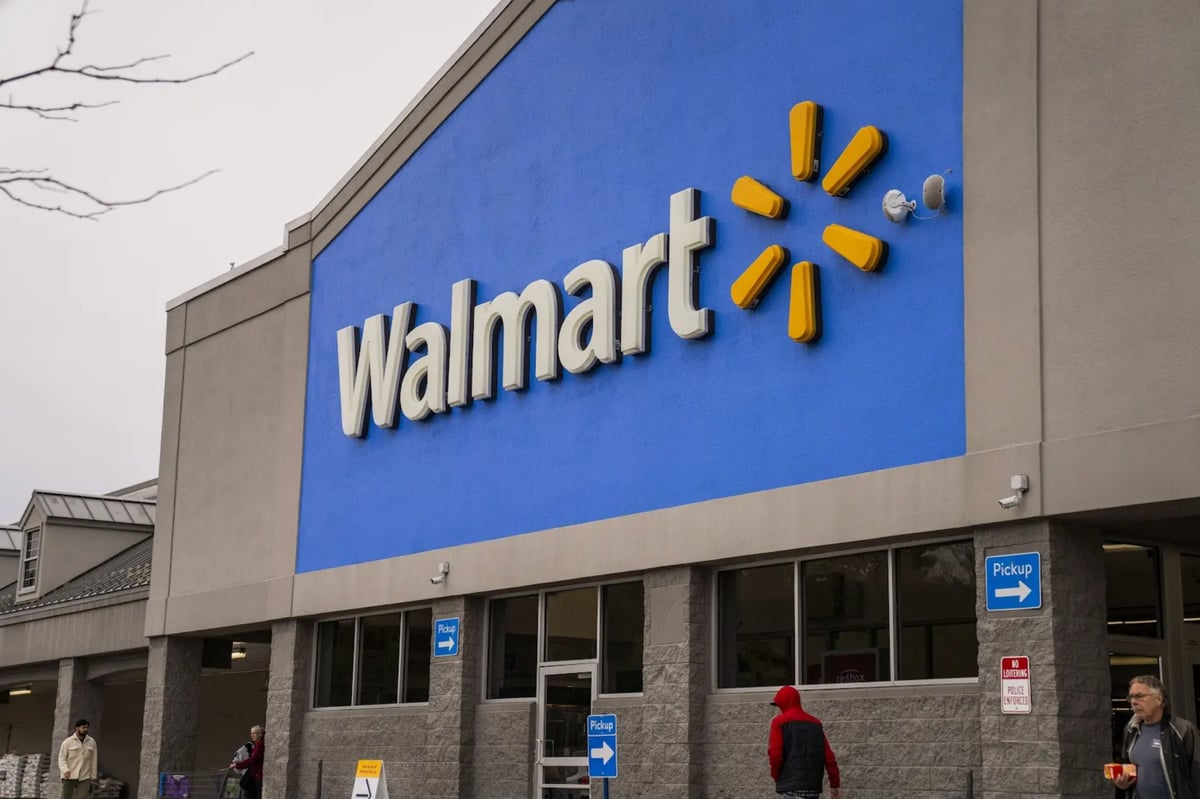
Retail Giant's Stock Tumbles Despite Impressive Financial Performance
Walmart stock experienced a significant selloff, dropping 7.22% despite delivering earnings results that exceeded Wall Street expectations. The decline underscores a fundamental truth in equity markets: strong financial performance doesn't guarantee stock appreciation when management's forward guidance raises red flags. While the retail behemoth demonstrated robust operational momentum in the first quarter, CEO John Rainey's cautionary remarks about consumer spending headwinds proved enough to trigger investor capitulation, highlighting the market's heightened sensitivity to macroeconomic risk factors even amid solid corporate execution.
The stock's decline represents a classic case of "selling the news," where investors digest impressive numbers but immediately pivot focus to potential obstacles ahead. Walmart's ability to beat expectations couldn't overcome the psychological weight of management's warning about external pressures threatening future quarters—a dynamic that reflects broader market anxiety about consumer resilience in an inflationary environment.
Strong Q1 Results Masked by Forward Guidance Concerns
Walmart delivered compelling first-quarter financial metrics that would typically buoy investor sentiment:
- Earnings per share (EPS) grew 8.2%, surpassing analyst expectations
- E-commerce sales surged 26%, demonstrating accelerating digital adoption and omnichannel strength
- Comparable-store sales showed resilience, reflecting underlying business momentum
- Tax refunds provided a temporary tailwind to consumer purchasing patterns in Q1
Yet these impressive figures couldn't shield the company from market punishment when management acknowledged the headwinds ahead. CEO Rainey's comments regarding gasoline prices represented the critical inflection point that transformed what should have been a celebratory earnings call into a cautious narrative.
The gasoline price warning carries significant implications for Walmart's core business. As one of America's largest fuel retailers, the company understands intimately how pump prices influence consumer psychology and discretionary spending. When Walmart management signals concern about this dynamic, investors recognize they're hearing from executives with direct, real-time visibility into customer behavior patterns.
Market Context: Consumer Spending Under Microscope
The market's harsh reaction to Walmart's guidance reflects a broader investment landscape where consumer spending assumptions form the foundation of equity valuations. The U.S. economy's resilience—which has surprised skeptics since 2022—depends substantially on household consumption remaining robust. Any signal that this pillar might weaken sends shockwaves through equity markets.
Walmart's position as a bellwether for consumer health makes its management commentary particularly influential. The company's operations across multiple income segments—from budget-conscious consumers to affluent shoppers—provide unparalleled insight into spending patterns across the economic spectrum. When Walmart signals caution, market participants interpret this as a sophisticated read on actual, not theoretical, consumer behavior.
The gasoline price concern specifically matters because it represents an inelastic expense. Unlike discretionary purchases that consumers can defer when economic uncertainty rises, gasoline purchases are largely mandatory—meaning price increases directly reduce purchasing power for other items. This dynamic creates a direct mathematical headwind to retail spending.
The temporary boost from tax refunds also deserves scrutiny. Investors recognize that refund-driven spending is inherently temporary and non-recurring. Once this quarterly tailwind dissipates, management suggested underlying organic consumer spending could decelerate, creating a sequential growth challenge for coming quarters.
Investor Implications: Reassessing Retail and Consumer Exposure
The market's aggressive repricing of Walmart stock carries implications extending beyond the company itself. For investors holding retail sector positions or maintaining overweight consumer discretionary allocations, Walmart's stumble functions as a cautionary signal to stress-test portfolio assumptions about consumer resilience.
The 7.22% decline despite earnings strength raises important questions:
- Valuation reset risk: If consumer growth narratives face structural pressure, retail valuations premised on continued spending acceleration may contract
- Sector rotation potential: Investor capital could migrate from consumer-facing equities toward defensive sectors or asset classes less dependent on discretionary spending
- Economic momentum indicators: Walmart's guidance effectively signals management's concern about Q2 and subsequent quarter performance, potentially preceding broader economic growth warnings
- Energy price sensitivity: Rising gasoline costs represent an explicit inflation factor that reduces effective consumer purchasing power regardless of headline income growth
For equity investors, the episode highlights the distinction between quarterly earnings beats and sustainable business trajectory. Walmart achieved impressive results, yet management's forward-looking commentary suggested these results partly reflected one-time factors rather than durable operational improvements.
Institutional investors often weight forward guidance more heavily than backward-looking earnings results, particularly from companies with credible management teams and information advantages. Walmart's willingness to issue cautious guidance despite strong current results suggests confidence in that caution—executives aren't simply being conservative out of an abundance of prudence but responding to genuine observable headwinds.
Looking Ahead: Monitoring Consumer Health
Walmart's stock decline, while sharp, reflects rational market mechanics rather than panic. The company's fundamentals remain sound, evidenced by strong earnings growth and accelerating e-commerce momentum. However, markets ultimately care about forward earnings trajectories, and management's warning clouds that outlook.
Investors should closely monitor upcoming quarters for whether Walmart's caution proves prescient or merely conservative. If consumer spending remains resilient despite gasoline price pressures, the stock could recover sharply. Conversely, if management's concerns materialize into actual spending weakness, the 7.22% decline may represent only the beginning of a broader retail sector repricing.
The episode serves as a reminder that in equity markets, managing investor expectations often proves more critical than delivering operational results. Walmart achieved the latter convincingly but faltered on the former—a lesson corporate management teams across sectors should absorb heading into their own earnings announcements.