
Corning's AI Boom: From Bargain to Pricey—Is the Rally Sustainable?
Corning, a 175-year-old manufacturer with deep roots in glass and materials science, has emerged as an unlikely beneficiary of the artificial intelligence revolution. The company's stock has surged an extraordinary 259% over the past year, driven almost entirely by explosive demand for its optical communications infrastructure—the fiber-optic cables and related technologies that form the backbone of AI data center connectivity. Yet this remarkable rally raises a critical question for investors: Has the market already priced in the upside, or does Corning have room to run?
The transformation reflects a profound shift in how the industry views critical infrastructure. As Nvidia, Meta, Google, and other tech giants continue pouring tens of billions into AI infrastructure, the demand for high-capacity fiber-optic connections has become as essential as the semiconductors themselves. Corning, which has quietly dominated the optical communications space for decades, found itself positioned at the exact intersection of this multi-year buildout.
The Numbers Tell a Compelling Story
Corning's financial results provide concrete evidence of the magnitude of this opportunity. In the first quarter of 2026, the company's net income jumped 93% year-over-year—a remarkable acceleration that underscores the intensity of demand pulling through its optical communications division. This isn't modest, single-digit growth; this is the kind of explosive expansion typically seen in companies at the early stages of transformational market cycles.
The company's optical communications business is experiencing what analysts describe as "accelerating growth," suggesting that demand is not merely sustained but actively intensifying. This trajectory matters because it indicates that the AI infrastructure buildout is not a temporary phenomenon but rather the beginning of a structural shift in how data is processed, transmitted, and stored globally.
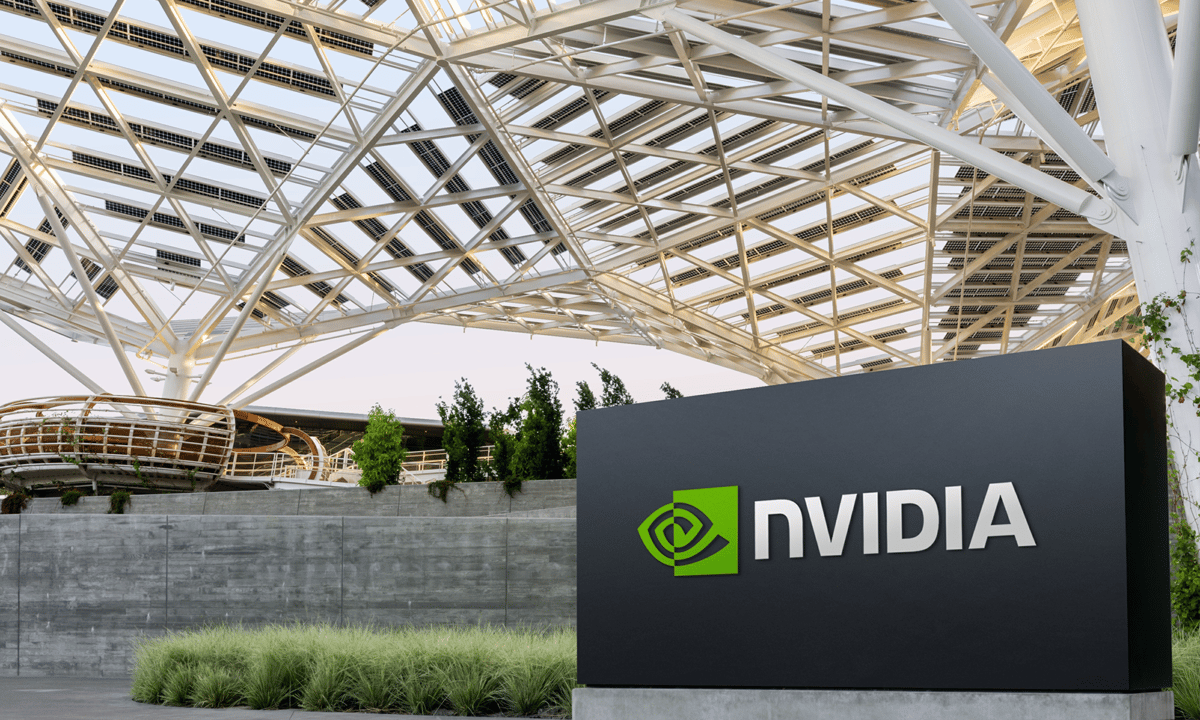
Notably, Nvidia—the dominant force in AI accelerators—has taken an active role in addressing Corning's production constraints by helping to fund and facilitate the construction of three new manufacturing facilities. This partnership is significant for multiple reasons:
- It validates Corning's critical position in the supply chain
- It demonstrates Nvidia's willingness to invest upstream to secure optical communications capacity
- It signals confidence in sustained, long-term demand rather than cyclical fluctuations
- It provides Corning with capital support during a period of rapid expansion
The Valuation Question: Bargain or Bubble?
Here lies the central tension for investors evaluating Corning at current levels. The company that traded at depressed valuations just months ago has now been repriced to reflect accelerating growth, record margins, and seemingly unlimited demand. The critical question is whether the current valuation has adequately incorporated these tailwinds or has moved ahead of reality.
Manufacturing capacity constraints represent the most material risk to the bull case. While Nvidia's involvement in building new facilities is encouraging, there remains genuine uncertainty about:
- Timeline to capacity expansion: When will these three new facilities come online, and at what production rates?
- Capital intensity: How much additional investment will be required, and what impact will that have on returns?
- Execution risk: Can Corning successfully scale production without quality degradation or cost overruns?
- Competitive dynamics: Will competitors move aggressively into this space as margins remain attractive?
These questions matter enormously. If Corning cannot satisfy demand growth because of production constraints, customers may seek alternative suppliers or develop internal capabilities. If the new facilities take longer than expected to reach full capacity, the company may miss the peak of this investment cycle. Either scenario could trigger a significant valuation reset.
Market Context: The Infrastructure Imperative
Understanding Corning's rally requires grasping the urgency of AI infrastructure investment across the technology ecosystem. The major cloud and AI companies have collectively committed to spending hundreds of billions on data centers, GPUs, and the networking infrastructure that connects them. This isn't optional spending—it's existential.
Optical fiber connectivity is the enabling technology for these buildouts. Unlike copper or wireless connections, fiber-optic cables can transmit data at the speeds and scales required for AI model training and inference at modern scales. As these systems grow in complexity and geographic distribution, fiber demand accelerates nonlinearly.
This dynamic explains why Corning, despite being a 175-year-old company, has captured the imagination of growth investors. The company operates in what amounts to a new, hyper-growth market within its traditional business. This is functionally different from its legacy glass and ceramics operations—it's a high-margin, capital-intensive, supply-constrained business with multi-year visibility.
The competitive landscape remains relatively consolidated. Corning faces competition from other optical communications manufacturers, but none commands equivalent scale or manufacturing breadth. This competitive positioning, combined with the supply-constrained environment, has historically supported premium valuations for well-managed companies.
Investor Implications: Timing and Risk Management
For equity investors, Corning's current trajectory presents a classic decision framework:
The bull case rests on sustained, multi-year AI infrastructure investment; Corning's structural position as a primary supplier; margin expansion driven by high-capacity products; and potential upside surprises from new facility capacity coming online faster than expected.
The bear case emphasizes current valuation metrics that already incorporate aggressive growth assumptions; execution risks around capacity expansion; potential competitive encroachment; and the possibility that AI infrastructure spending moderates below current market expectations.
Given these competing dynamics, many sophisticated investors are likely concluding that waiting for a better entry point or greater clarity on production constraints represents a prudent approach. This is not a rejection of Corning's long-term opportunity; rather, it's an acknowledgment that risk-reward profiles vary significantly depending on entry valuation.
Investors who already own Corning shares may reasonably maintain positions, particularly if they have conviction on multi-year AI spending trajectories. However, new investors encountering the stock at current levels should carefully evaluate whether the risk of near-term valuation compression outweighs the opportunity cost of missing incremental upside.
The fundamental story remains compelling: Corning has transformed from a stagnant industrial company into a critical infrastructure supplier for the artificial intelligence era. The 259% rally is not irrational—it reflects a genuine acceleration in demand and a multi-year tailwind. However, valuations have compressed expected returns meaningfully, and material execution risks remain unresolved. This is precisely the environment where disciplined capital allocation, careful timing, and risk management matter most.