
A Succession Signal from Berkshire's New Leader
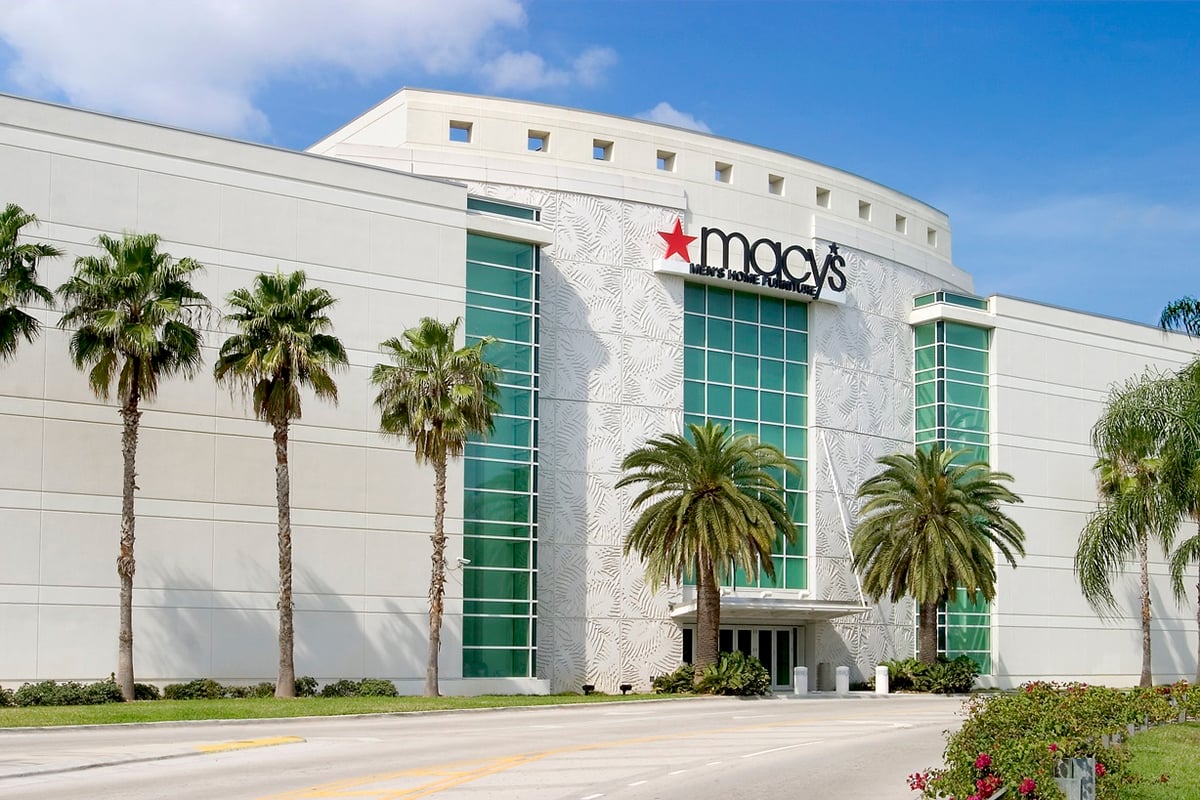
Greg Abel, the newly appointed CEO of Berkshire Hathaway, has made his first significant independent investment decision by opening a position in Macy's (ticker: $M), according to his inaugural 13F filing. The move marks one of the most closely watched portfolio decisions since Abel took the helm of Warren Buffett's legendary conglomerate, offering investors a window into how the successor intends to deploy capital and what value opportunities he perceives in the market. The acquisition of Macy's shares signals Abel's willingness to wade into deeply discounted retail assets—a sector many professional investors have fled—suggesting either exceptional conviction or a willingness to test whether the market has overcorrected on the once-iconic department store.
The Valuation Narrative: Numbers That Tell a Story
Macy's current market positioning presents a compelling arithmetic case for value-oriented investors. The department store operator is trading at just 8x trailing earnings, a valuation multiple that sits substantially below the broader market's average and reflects years of investor skepticism about brick-and-mortar retail. Beyond the earnings multiple, the company offers a 3.58% dividend yield, providing meaningful income in an environment where many stocks offer minimal yield cushion.
The fundamental thesis appears to rest on several pillars:
- Depressed valuation multiples relative to historical and sector averages
- Meaningful dividend yield providing downside income support
- Strategic turnaround initiative under new CEO Tony Springs focused on operational efficiency
- Omnichannel execution attempting to bridge digital and physical retail
- Portfolio rationalization concentrating resources on high-performing store locations
Under Springs' leadership, Macy's has embarked on a restructuring that emphasizes profitability over revenue growth, closing underperforming locations and investing in modernizing its remaining store footprint. This strategic pivot represents a departure from the traditional retail growth playbook, instead prioritizing cash generation and operational efficiency—a framework that could appeal to value investors examining the company's standalone merits.
Market Skepticism and the Value Trap Question
Despite these attractive surface metrics, Wall Street maintains cautious expectations, with consensus forecasts anticipating earnings declines in the current fiscal year. This divergence between Abel's action and professional analyst sentiment raises a critical question about whether Macy's represents genuine value or a deceptive bargain—the dreaded "value trap" that ensnares investors seeking safety in low multiples.
The retail sector backdrop has grown increasingly challenging. Consumer discretionary spending faces headwinds from persistent inflation, rising interest rates, and shifting shopping behaviors accelerated by the pandemic's digital acceleration. Department stores, once the anchors of American retail, have faced secular structural headwinds for over a decade, with brands increasingly bypassing traditional intermediaries to sell directly to consumers. Bed Bath & Beyond's recent bankruptcy highlighted the existential risks facing struggling retailers, while competitors like Nordstrom (ticker: $JWN) continue navigating comparable challenges.
Yet Abel's investment suggests a more optimistic interpretation. Berkshire Hathaway has historically excelled at identifying turnarounds before market consensus shifts, and Abel's appointment signals Buffett's confidence that his successor possesses similar pattern-recognition abilities. The Macy's position could represent Abel's first test case—demonstrating either prescience about retail's future or challenging analytical chops.
Market Context: Why This Matters Now
Abel's Macy's investment arrives at an inflection point for the retail sector. Several macroeconomic and industry factors create the backdrop:
Consumer Behavior Shifts: Department stores have lost market share to specialty retailers, fast-fashion operators, and e-commerce platforms for years. Macy's revival depends on whether it can carve out a defensible niche among the array of retail options available to modern consumers.
Operational Leverage Potential: With a leaner store base and lower fixed costs, Macy's could experience earnings upside if consumer spending proves more resilient than consensus expects or if Spring's efficiency initiatives deliver outsized results.
Private Equity Interest: The real estate-rich nature of Macy's portfolio—coupled with depressed valuations—has historically attracted activist investors and private equity interest. Any such overtures could dramatically revalue the business.
Dividend Sustainability: At 3.58%, the yield demands careful scrutiny regarding whether current earnings can support distributions. If the dividend proves vulnerable, a key pillar of the value thesis collapses.
Abel's position arrives amid broader Berkshire Hathaway activity in retail and consumer-facing businesses. The conglomerate has historically harbored skepticism about retail transformation, yet occasionally invested in companies experiencing genuine operational turnarounds. Macy's situation differs from Berkshire's more famous retail bets—it's not a high-quality, resilient brand like Apple ($AAPL) or a dominant operator like Amazon ($AMZN). Instead, it represents contrarian betting on execution and market repricing.
Investor Implications: Reading the Tea Leaves
For equity investors, Abel's move carries several interpretive layers:
Signal of Confidence in Management: Investing alongside a new turnaround CEO suggests Abel believes Springs possesses the operational competence to execute his strategic vision and that the market has insufficiently priced in the upside from improved execution.
Acknowledgment of Valuation Extremes: At 8x earnings with a robust dividend yield, Macy's has moved from typical valuation to potentially oversold. Abel's investment suggests the market may have priced in excessive negativity.
Test Case for Abel's Capital Allocation Philosophy: How this investment performs will shape investor perception of whether Abel represents continuity with Buffett's legendary stock-picking or a different approach to identifying opportunities.
Retail Sector Bottom Signal?: Berkshire's appetite for Macy's might signal that even value-focused institutional investors see limited downside and meaningful upside in select retail opportunities, potentially marking a capitulation point for negative sentiment.
Conversely, skeptics worry this represents exactly the type of "falling knife" catching that has ensnared value investors for years. A consumer slowdown, failure to execute the turnaround, or dividend cut would validate those concerns and suggest Abel's first independent investment decision underestimated structural retail headwinds.
Looking Forward: The Verdict Still Pending
Greg Abel's Macy's position arrives at a fascinating juncture in both the company's and his tenure's trajectory. The valuation mathematics are undeniably compelling—8x earnings with a 3.58% yield creates a floor below which institutional investors traditionally avoid falling. Yet markets trade on narratives as much as mathematics, and Macy's narrative remains decidedly murky. Springs' turnaround strategy must demonstrate meaningful traction before consensus shifts from skepticism to recognition.
For Berkshire shareholders and broader market observers, this investment serves as a bellwether for Abel's investment philosophy. Will he prove to be Buffett's intellectual heir, identifying value others miss? Or does Macy's represent a cautionary first chapter in his tenure? The coming quarters will provide clarity as earnings reports and operational metrics arrive. In the interim, Abel has placed a substantial bet that the market has forgotten how to value a legitimate turnaround opportunity—a distinctly Buffettian wager.